CM Himanta Reviews Sukreswar Traffic Crunch in Guwahati
Synopsis
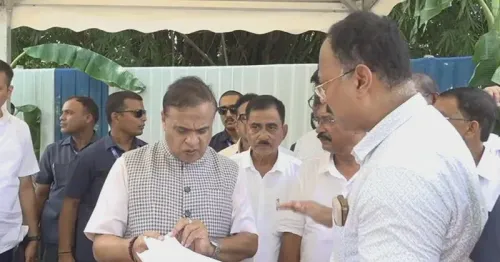
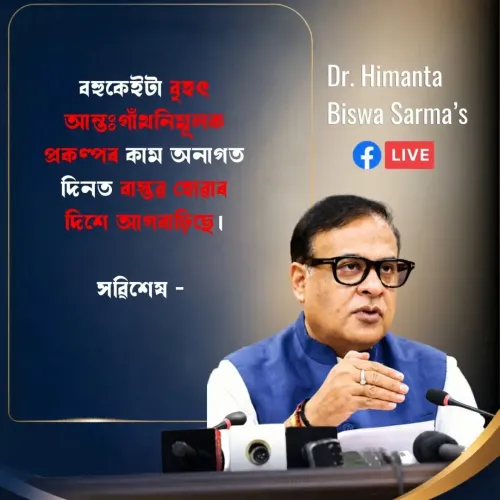
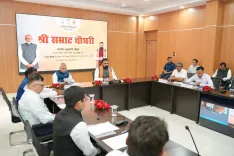
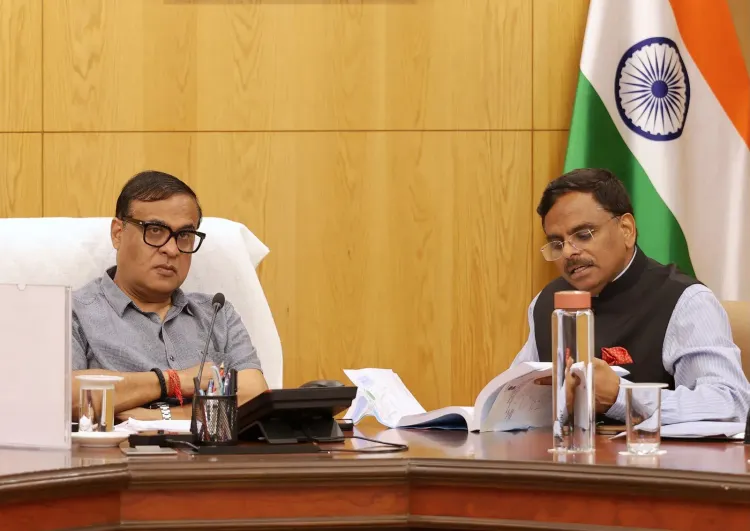
CM Himanta Biswa Sarma chaired a multi-department review on 14 November 2026 to address chronic traffic congestion at Sukreswar in Guwahati, directing coordinated action for a permanent and sustainable solution to ease commuter movement.
Key Takeaways
Himanta Biswa Sarma personally chaired the review meeting on 14 November 2026 .
Focus area is Sukreswar , a central Guwahati hotspot near the Brahmaputra riverfront and Sukreswar Temple.
The CM stressed a 'permanent and sustainable solution' — signalling a move beyond short-term fixes.
All concerned departments were directed to take coordinated measures to ease congestion.
Guwahati Smart City Mission (launched 2015) had earlier included urban-mobility components, but congestion has persisted amid rapid urbanisation.
Specific infrastructure measures — road widening, signal upgrades, parking facilities — are expected as follow-up announcements.
Guwahati's most stubborn gridlock just got top-level attention. Chief Minister Dr. Himanta Biswa Sarma chaired a high-level departmental review on Saturday, 14 November 2026, zeroing in on chronic traffic congestion at Sukreswar in central Guwahati — a bottleneck that has long frustrated daily commuters navigating the city's busiest corridor near the Brahmaputra riverfront.
What the CM directed — and why Sukreswar keeps choking
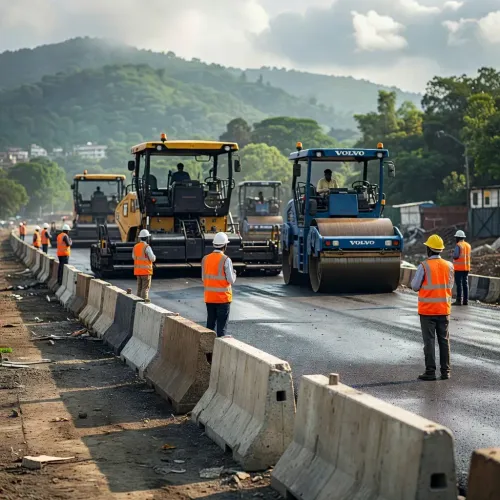
Stressing the need for a 'permanent and sustainable solution,' CM Sarma instructed all concerned departments to take coordinated measures to ease congestion and ensure smoother movement for commuters. The emphasis on inter-departmental coordination signals that the bottleneck is not a single-agency problem — road geometry, signal management, parking encroachment, and pedestrian flow all converge at this junction near the Sukreswar Temple.
Guwahati is the commercial and administrative hub of Assam, and its road network has struggled to keep pace with rapid urbanisation and steadily rising vehicle ownership. Sukreswar, sitting at the confluence of riverfront traffic, temple visitor flows, and arterial city roads, has repeatedly surfaced in civic complaints as one of the worst flashpoints.
Smart City roots and the pattern of periodic reviews
This is not the first time the state government has pulled departments into a room over Guwahati's traffic woes. The Guwahati Smart City Mission, launched in 2015, included urban-mobility and traffic-management components, yet implementation has been uneven as the city's vehicle count has outpaced infrastructure upgrades. The Assam government has periodically reviewed high-traffic zones across the capital — from Paltan Bazaar to Six Mile — reflecting a pattern where state-level political will is invoked when municipal-level fixes stall.
What makes Saturday's meeting notable is the CM's personal chair and the explicit call for a permanent fix, suggesting the government is moving beyond stop-gap signal tweaks toward structural interventions — possibly road-widening, dedicated parking facilities, or redesigned pedestrian access near the temple precinct.
What commuters and planners are watching next
The immediate deliverable will be a coordinated departmental action plan. Watchers of Guwahati's urban infrastructure will look for follow-up announcements on specifics — road-widening proposals, smart-signal upgrades, parking policy, and whether any budget line in the upcoming state plan is earmarked for the Sukreswar corridor.
Guwahati's commuters have heard promises before. The credibility of this intervention will be measured not in the meeting room but on the road.
Point of View
CM Himanta Biswa Sarma is deploying a well-tested political playbook: elevating a civic irritant to the chief-ministerial level to signal responsiveness to urban middle-class voters who commute daily. Guwahati's congestion story is also a governance stress test — the city's infrastructure has lagged behind its economic growth, and repeated departmental reviews without visible road-level change have eroded public trust in Smart City promises. If this review produces measurable, time-bound outcomes, it could become a model for the Assam government's broader urban-reform narrative heading into future electoral cycles. If it does not, the optics of yet another meeting-without-outcome will be harder to manage.
NationPress
14 Nov 2026
Frequently Asked Questions
Why is Sukreswar in Guwahati so congested?
Sukreswar sits at the confluence of riverfront traffic, Sukreswar Temple visitor flows, and major arterial roads in central Guwahati, making it one of the city's most complex and persistently congested junctions.
What did CM Himanta Biswa Sarma decide in the Sukreswar traffic meeting?
CM Sarma directed all concerned departments to take coordinated measures for a permanent and sustainable solution to ease traffic congestion and ensure smoother movement for commuters at Sukreswar.
What is the Guwahati Smart City Mission?
The Guwahati Smart City Mission was launched in 2015 and included components for urban mobility and traffic management, though congestion has persisted as vehicle ownership and population have grown faster than infrastructure.
What solutions could come out of Assam's Sukreswar traffic review?
Possible follow-up measures include road widening, smart signal upgrades, improved parking facilities near the Sukreswar Temple precinct, and potential budget allocations in upcoming Assam state plans.
How often does the Assam government review Guwahati traffic problems?
The Assam government has periodically reviewed high-traffic zones across Guwahati, reflecting a pattern of state-level political intervention when municipal-level solutions stall in the face of rapid urbanisation.