CM Himanta Updates Assam Floods: 45,000 in Relief Camps
Synopsis
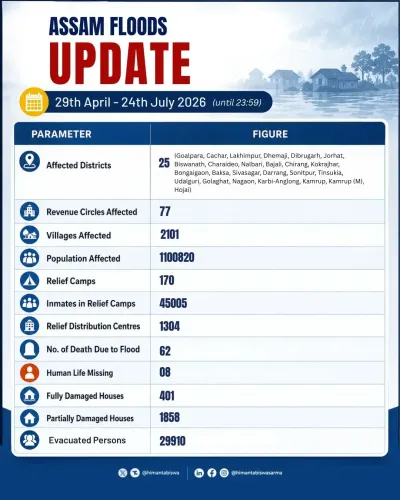
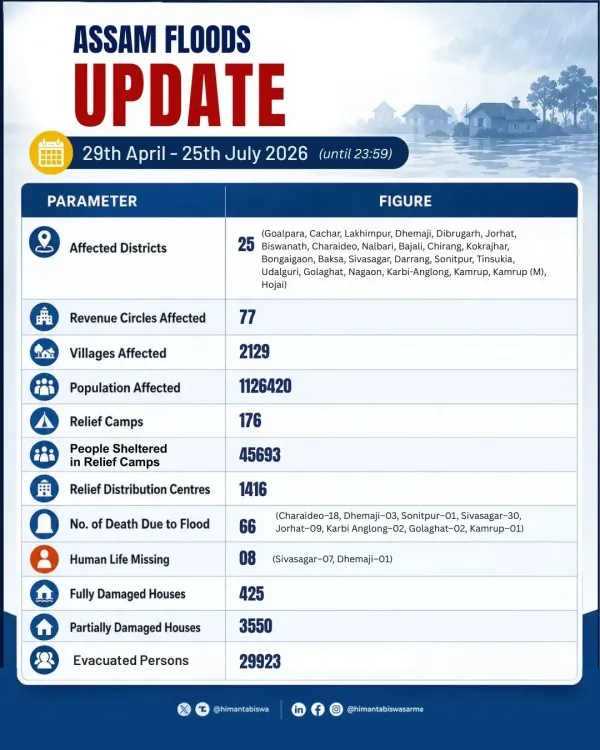
Assam Chief Minister Himanta Biswa Sarma on 26 July 2026 confirmed that floodwaters are gradually receding across the state, with 176 relief camps sheltering over 45,000 displaced residents as round-the-clock relief operations continue.
Key Takeaways
Assam CM Himanta Biswa Sarma issued a flood update on 26 July 2026 , confirming gradual recession of floodwaters in several areas.
176 relief camps are currently operational across the state.
Over 45,000 people are sheltered in these camps as of the date of the update. 'Team Assam' is working round the clock to ensure essential relief supplies reach all displaced persons.
The response operates under the framework of the Disaster Management Act, 2005 , with the Brahmaputra basin being the primary driver of annual flood risk.
Receding waters are expected to trigger a shift toward damage assessment, compensation, and rehabilitation activities.
Assam Chief Minister Himanta Biswa Sarma on Sunday, 26 July 2026, posted a flood situation update on X, stating that floodwaters are gradually receding across several areas of the state while relief operations continue without interruption.
Context
In his update, CM Sarma confirmed that 176 relief camps are currently operational across Assam, sheltering over 45,000 displaced residents. He noted that 'Team Assam' is working round the clock to ensure essential relief supplies reach all affected persons. The post, tagged #AssamFloods, is part of a series of regular public updates the Chief Minister has been issuing during the ongoing monsoon crisis.
Policy Backdrop
Assam is among India's most flood-prone states, with the Brahmaputra river and its tributaries inundating large swathes of the state nearly every monsoon season. Under the Disaster Management Act, 2005, state authorities are mandated to coordinate relief camps, aid distribution, and inter-agency response during such emergencies. The Assam government has over the years established a standing disaster response framework that is activated annually during the June-to-September flood season.
The state's flood vulnerability stems from its geography within the Brahmaputra basin, where upstream rainfall in Arunachal Pradesh and Bhutan rapidly swells river levels. Embankment breaches, erosion, and waterlogging compound the annual humanitarian toll, making relief camp operations a critical short-term lifeline for tens of thousands of residents each year.
Stakeholders and Impact
The over 45,000 people currently sheltered across 176 relief camps represent the most immediate stakeholders in the state's response. These individuals have been displaced from their homes due to flooding and depend on state-run camps for food, drinking water, medical aid, and temporary shelter. Local district administrations, the State Disaster Response Force (SDRF), and civil society volunteers form the operational backbone of 'Team Assam' referenced by the Chief Minister.
Farmers, fishermen, and rural communities in low-lying districts along the Brahmaputra and its tributaries are typically the worst affected, facing loss of livestock, standing crops, and household assets in addition to displacement. The receding of floodwaters, as noted in the update, marks a critical transition point when relief operations shift toward damage assessment and rehabilitation.
What's Next
As floodwaters recede, the state government is expected to move toward damage surveys, compensation disbursement under established relief norms, and assessment of infrastructure damage including embankments and roads. Any formal request for central assistance under the National Disaster Response Fund (NDRF) or deployment of additional central teams would typically follow a consolidated state damage report. Longer-term questions around embankment reinforcement and river management in Assam are likely to return to the legislative and administrative agenda once the immediate emergency phase concludes.
Point of View
Keeping relief operations visible at the highest political level. The figures — 176 camps and over 45,000 displaced persons — underscore the scale of an annual crisis that successive state governments have struggled to move beyond emergency response toward structural mitigation. The mention of gradual recession is an early signal that the state will soon pivot from relief to rehabilitation, a phase that historically tests administrative capacity more than the emergency phase itself. For the BJP-led government in Assam, visible and proactive flood management is also a key marker of governance credibility in a state where the monsoon crisis is a recurring political flashpoint.
NationPress
27 Jul 2026
Frequently Asked Questions
How many people are in Assam flood relief camps in July 2026?
As of 26 July 2026 , over 45,000 people are sheltered across 176 relief camps set up by the Assam government, according to Chief Minister Himanta Biswa Sarma.
Are Assam floods receding in July 2026?
Yes. CM Himanta Biswa Sarma confirmed on 26 July 2026 that floodwaters are gradually receding in several areas of Assam , though relief operations remain active.
What is Team Assam doing during the floods?
'Team Assam' refers to the collective state disaster response machinery — including district administrations, the SDRF, and relief workers — working round the clock to provide food, shelter, and essential supplies to displaced residents.
Why does Assam flood every year?
Assam floods annually due to its location in the Brahmaputra basin , where heavy monsoon rainfall in upstream regions of Arunachal Pradesh and Bhutan rapidly raises river levels, causing embankment breaches and widespread inundation.
What law governs flood relief in Assam?
Flood relief and disaster response in Assam is coordinated under the Disaster Management Act, 2005 , which mandates state authorities to set up relief camps, distribute aid, and coordinate multi-agency response during emergencies.