CM Himanta Uses Google Review Lens to Preview Assam Budget 2026
Synopsis
Assam Chief Minister Himanta Biswa Sarma used a Google-review metaphor on 19 July 2026 to preview the development outcomes his government aims to deliver through AssamBudget2026, framing fiscal policy as a promise of lived public satisfaction.
Key Takeaways
Himanta Biswa Sarma posted on 19 July 2026 imagining future Google reviews of Assam as a lens on #AssamBudget2026 goals.
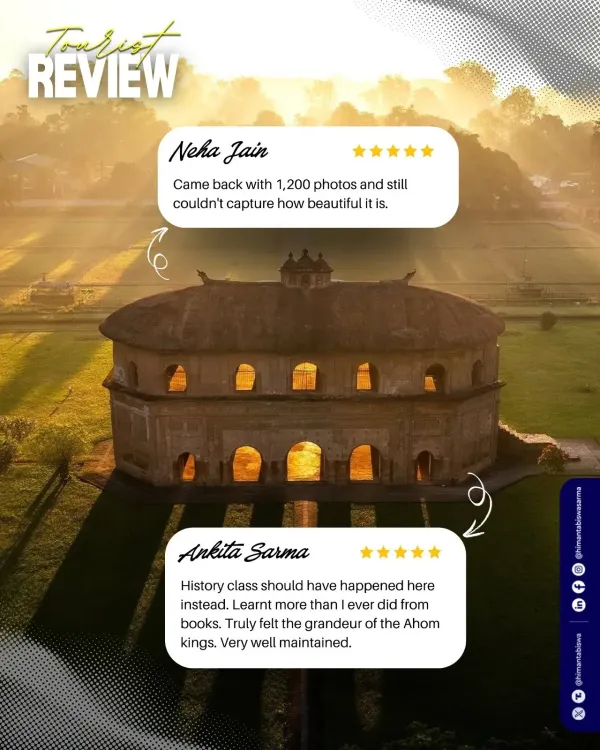
The post included 4 images simulating star-rated citizen and visitor reviews of the state.
AssamBudget2026 refers to the state's budget proposal for fiscal year 2026-27 presented by the BJP -led Sarma government.
Sarma has been Chief Minister since May 2021 , with successive budgets prioritising infrastructure, tourism, and ease of living.
The messaging targets both Assam residents and potential tourists and investors, framing budget commitments as quality-of-life outcomes.
Formal assembly scrutiny of the Assam Budget 2026-27 and rollout of flagship schemes will be the next key milestones.
Assam Chief Minister Himanta Biswa Sarma on Sunday, 19 July 2026, shared a creative social-media post imagining what future Google reviews of Assam might look like if the development goals embedded in #AssamBudget2026 were fully realised. The post, accompanied by four images, frames the state budget not as a ledger of expenditure but as a promise of lived experience for residents and visitors alike.
Context
The post asks a pointed question: 'What if tomorrow's Google reviews were written today?' The framing invites citizens to see budget allocations through the lens of everyday public satisfaction — the kind of feedback a traveller or resident might leave on a hospitality or civic-services platform. By anchoring the message in the familiar idiom of online reviews, Sarma translates fiscal policy into tangible quality-of-life outcomes.
The four images accompanying the post appear to simulate star-rated reviews praising aspects of Assam — likely covering tourism infrastructure, connectivity, cleanliness, or ease of doing business — though the specific content of those images reflects the government's aspirational targets and has not been independently verified.
Policy Backdrop
Himanta Biswa Sarma has served as Assam's Chief Minister since May 2021, steering successive state budgets that have prioritised infrastructure expansion, tourism promotion, and improvement in the ease of living. The BJP-led government in Assam has, since 2016, made the transformation of the Northeast's external image a central plank of its governance narrative.
AssamBudget2026, referring to the state's budget proposal for fiscal year 2026-27, is the latest instalment in this series. The government has consistently used budget season to project long-term development outcomes, often coupling legislative presentations with public-facing communication campaigns designed to reach beyond the assembly floor.
Assam's economy rests on tea, oil, and agriculture, but the state has been actively repositioning itself as a tourism and investment destination. Initiatives around river tourism on the Brahmaputra, wildlife circuits, and urban renewal in Guwahati have featured in recent policy cycles.
Stakeholders and Impact
The primary audience for this messaging is dual: Assam's own residents, who are being asked to see budget promises as future realities, and potential tourists and investors whose perception of the state shapes economic inflows. The Google-review metaphor is particularly calibrated for younger, digitally active citizens who rely on peer ratings when making travel and lifestyle decisions.
The tourism industry — hotels, homestays, tour operators, and transport providers — stands to benefit most directly if the budget's infrastructure and connectivity commitments translate into on-ground improvements. Civic service providers and local businesses are also implicit stakeholders in any scenario where public satisfaction scores rise.
What's Next
Attention will now turn to the formal presentation and passage of the Assam Budget 2026-27 in the state assembly, where the specific allocations behind this aspirational messaging will be scrutinised. Subsequent rollout of flagship schemes — particularly those touching tourism infrastructure and urban services — will determine whether the imagined five-star reviews translate into verifiable outcomes on the ground. The broader test for the Sarma government is whether budget communication that resonates on social media can be matched by delivery timelines that satisfy both residents and visitors.
Point of View
Recognising that external image shapes tourism and investment flows as much as infrastructure itself. By anchoring the message in a platform that younger voters use daily, Sarma is also signalling that his government understands digital-era accountability. The real political test, however, will come when actual budget allocations are debated in the assembly and measured against these aspirational benchmarks.
NationPress
20 Jul 2026
Frequently Asked Questions
What is AssamBudget2026?
AssamBudget2026 refers to the Assam state government's budget proposal for fiscal year 2026-27, presented by Chief Minister Himanta Biswa Sarma's BJP-led administration to outline development and expenditure priorities for the state.
Why did Himanta Biswa Sarma post about Google reviews?
CM Sarma used the Google-review metaphor to translate budget goals into everyday quality-of-life language, asking citizens to imagine how residents and tourists might rate Assam if the budget's development promises are fully delivered.
What are the main focus areas of Assam Budget 2026?
Based on the government's stated development direction, the budget is expected to prioritise infrastructure, tourism, connectivity, and ease of living, consistent with the Sarma government's approach since 2021. Specific allocations are subject to formal assembly presentation.
When did Himanta Biswa Sarma become Chief Minister of Assam?
Himanta Biswa Sarma became Chief Minister of Assam in May 2021, leading the BJP-led government in the state.
How does Assam's budget messaging fit the BJP's Northeast strategy?
The BJP has since 2016 emphasised visible governance gains in tourism, connectivity, and investment climate across Northeast India. Sarma's budget communication continues this pattern by linking fiscal policy to measurable public satisfaction outcomes.