Sacks Slams US AI 'Cyber Guardrails' as China Pulls Ahead
Synopsis
White House AI and Crypto Czar David Sacks on 20 July 2026 criticised American AI models for refusing cybersecurity tasks that China's Kimi K3 reportedly handles freely, warning that US 'cyber guardrails' are making American AI less competitive globally.
Key Takeaways
White House AI and Crypto Czar David Sacks posted on 20 July 2026 that Chinese AI model Kimi K3 fixed 15 critical security bugs that US models Codex and Fable declined due to 'cyber guardrails.' Sacks argued there is 'no reason to limit American models on tasks that Chinese models handle without issue.' The post directly challenges content-restriction policies at US AI labs, particularly around security-sensitive coding tasks.
The Biden-era AI Executive Order (October 2023) established safety-testing standards that shaped how US labs set model refusal thresholds.
As the Trump administration's AI policy lead, Sacks's remarks signal potential pressure on US labs to revise guardrail policies in the name of competitiveness.
Any forthcoming OSTP guidance or AI executive order on model evaluations for cybersecurity use cases will be closely watched by the industry.
White House AI and Crypto Czar David Sacks on Monday, 20 July 2026 publicly criticised American AI models for refusing to fix security vulnerabilities on safety grounds, arguing that Chinese counterparts are completing the same tasks without restriction and that US competitiveness is suffering as a result.
Context
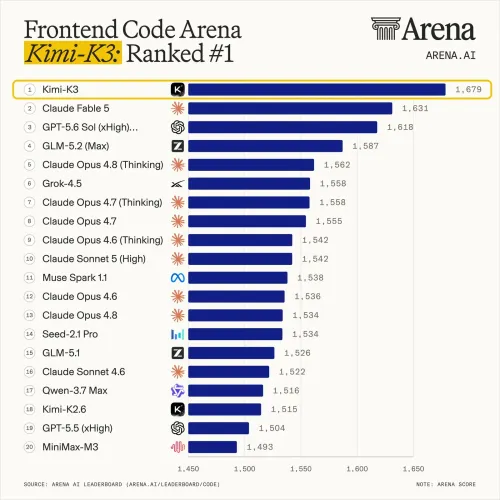
In his post on X, Sacks wrote that Kimi K3 — a large language model developed by Chinese AI company Moonshot AI — 'just fixed 15 critical security bugs that Codex and Fable refused because of cyber guardrails.' He added: 'There's no reason to limit American models on tasks that Chinese models handle without issue. We're only making ourselves less competitive.'
The statement is a direct broadside at the content-restriction policies built into frontier American AI coding tools. Codex, developed by OpenAI, is among the most widely used AI systems for code-related tasks and has publicly documented guardrails around potentially dangerous or dual-use outputs.
Policy Backdrop
The debate Sacks is wading into has a long policy lineage. The Biden administration's Executive Order on Safe, Secure, and Trustworthy AI, issued in October 2023, directed federal agencies to develop standards for AI safety testing and red-teaming — frameworks that influenced how US labs calibrated model refusals on security-adjacent tasks.
Separately, the US Department of Commerce has progressively tightened export controls on advanced AI chips and model weights to China since October 2022, a policy designed to slow Chinese AI development. Critics of that approach — and of domestic safety guardrails — argue both sets of restrictions are self-defeating if Chinese labs face lighter oversight at home and continue shipping capable models globally.
The tension between national-security rationales and commercial innovation priorities has resurfaced repeatedly: in debates over open-source model releases, chip controls, and now model-level content policies for cybersecurity use cases.
Stakeholders and Impact
US AI developers and cybersecurity researchers sit at the centre of this dispute. Security professionals who rely on AI-assisted vulnerability discovery and patch generation face a direct operational consequence if American models decline tasks that foreign alternatives complete. For enterprise and government clients, model refusals on legitimate security workflows can push procurement toward non-US systems.
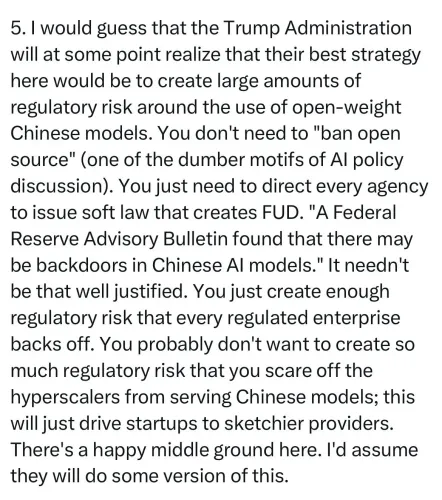
For Moonshot AI, Sacks's post — whether or not every specific claim is independently verifiable — amounts to high-profile Western validation of its Kimi model family's capabilities, at a moment when Chinese AI labs are actively competing for global developer mindshare.
The comment also carries institutional weight given Sacks's role. As the Trump administration's designated AI and crypto policy lead, his public statements signal the direction of forthcoming executive guidance on how the US government views model safety constraints relative to competitiveness imperatives.
What's Next
Observers are watching for any forthcoming Trump administration AI executive order or guidance from the Office of Science and Technology Policy (OSTP) on security-related model evaluations. If Sacks's framing prevails in internal deliberations, US labs could face pressure — formal or informal — to revise their red-teaming and refusal policies for cybersecurity tasks.
The broader implication is significant: if Washington concludes that voluntary safety guardrails are eroding American AI leadership, the regulatory mood could shift from encouraging restraint to penalising it — a reversal that would reshape how frontier models are built and deployed across the industry.
Point of View
Energy, or technology — as a drag on American primacy. The invocation of a Chinese model outperforming US counterparts on a specific, quantified task (15 security bugs) is a rhetorical move designed to make the competitiveness cost tangible and hard to dismiss. If this framing shapes forthcoming executive guidance, US AI labs could find themselves navigating a new pressure: not just avoiding harm, but proving they are not ceding ground to Beijing.
NationPress
21 Jul 2026
Frequently Asked Questions
What did David Sacks say about US AI models and China?
David Sacks, the White House AI and Crypto Czar, posted on 20 July 2026 that China's Kimi K3 model fixed 15 critical security bugs that American models Codex and Fable refused to handle due to 'cyber guardrails,' arguing this makes the US less competitive.
What is Kimi K3 and who made it?
Kimi K3 is a large language model developed by Moonshot AI, a Chinese artificial intelligence company. It is part of the Kimi family of models positioned as competitive alternatives to Western AI systems.
What are AI cyber guardrails?
AI cyber guardrails are built-in content restrictions that prevent AI models from generating outputs deemed dangerous or dual-use, such as code that could be used to exploit security vulnerabilities, even in legitimate cybersecurity research contexts.
How does this affect US AI competitiveness?
Sacks argues that if US models refuse tasks that Chinese models complete freely, American developers and cybersecurity professionals may turn to foreign AI tools, shifting market share and strategic advantage away from US companies.
What policy changes could follow Sacks's statement?
Analysts are watching for a Trump administration AI executive order or OSTP guidance that could pressure US labs to loosen model refusals on security-related tasks, potentially reversing the Biden-era approach that encouraged caution in AI safety evaluations.