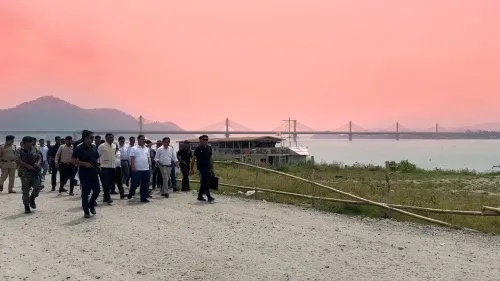
CM Himanta Vows Secular Anti-Encroachment Drive in Assam
Synopsis
Assam Chief Minister Himanta Biswa Sarma on 9 November 2026 declared that strict action against encroachers will continue regardless of religion, calling the ongoing drive 'completely secular' and rejecting allegations of discriminatory enforcement.
Key Takeaways
Assam CM Himanta Biswa Sarma reaffirmed on 9 November 2026 that anti-encroachment operations will continue in Assam.
Sarma explicitly stated that action is taken against encroachers of any religion without discrimination.
He used the term dharmnirpeksh (secular) to describe the crackdown, directly countering allegations of religious targeting.
Assam has conducted multiple eviction drives reclaiming government, forest, and tribal land since 2021 .
The drives are framed as protecting indigenous Assamese community land rights against unauthorised occupation.
Opposition parties and civil society groups have previously alleged selective enforcement, charges the government denies.
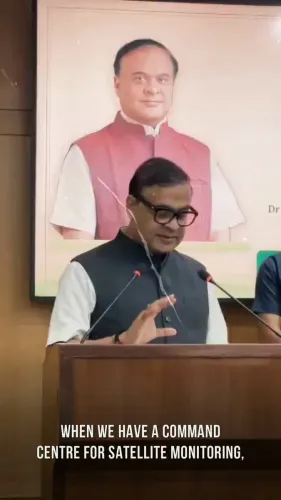
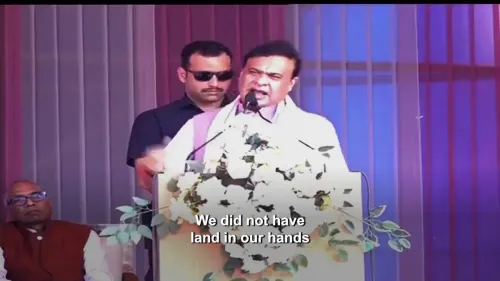
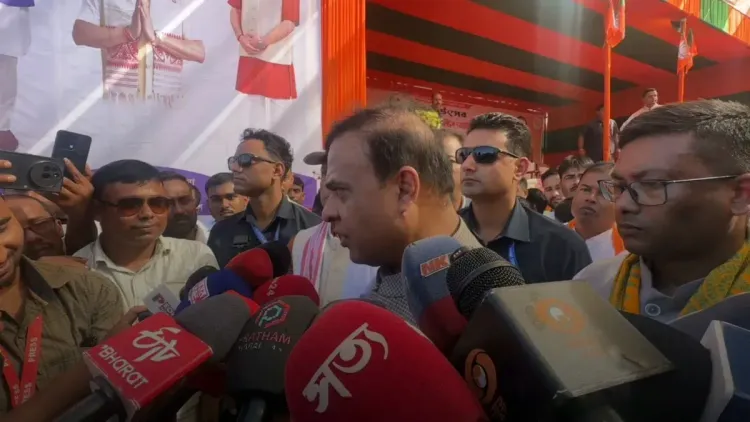
Regardless of religion, no encroacher is safe in Assam — that is the blunt message Assam Chief Minister Himanta Biswa Sarma delivered on Monday, 9 November 2026, doubling down on the state's ongoing eviction operations and rejecting accusations of selective enforcement.
Posting on X, Sarma stated in Hindi: 'असम में अतिक्रमणकारियों के खिलाफ कठोर कदम उठाए जा रहे हैं और आगे भी उठाए जाते रहेंगे, चाहे अतिक्रमणकारी किसी भी धर्म का हो।' ('Strict action is being and will continue to be taken against encroachers in Assam, regardless of which religion an encroacher belongs to.') He added that the crackdown is 'completely secular' and that no discrimination is made on the basis of religion.
A Long-Running Land Reclamation Campaign
Assam has grappled for decades with unauthorised occupation of government, forest, and tribal land — a problem successive administrations have linked to both domestic migration and cross-border immigration pressures. Under Sarma's leadership since 2021, the state government has conducted multiple eviction drives, with notable large-scale operations reported through 2022–2023, targeting encroachments across river-bank areas, reserve forests, and revenue land. The drives have reclaimed thousands of hectares for the state.
Proponents frame the operations as essential to protecting indigenous Assamese communities and their land rights. Critics — including opposition parties and civil society groups — have at various points alleged that enforcement falls disproportionately on Muslim-majority settlements, an allegation the Sarma government has consistently denied. Monday's post is a direct, public answer to that charge.
Why the 'Secular' Framing Matters Now
The Chief Minister's choice to use the word dharmnirpeksh — secular — is deliberate political signalling. By asserting that action has been and will be taken against encroachers 'of any religion', Sarma is simultaneously defending the legal legitimacy of the drives and pre-empting further opposition attacks ahead of what the government has signalled will be continued operations.
The broader pattern across northeastern governance has seen land reclamation become a defining political issue — tied not just to law enforcement, but to identity, demographic anxiety, and the rights of indigenous communities. Sarma, as convenor of the North-East Democratic Alliance (NEDA), has staked significant political capital on projecting a firm, non-partisan image on encroachment. His post draws a clear line: the law applies uniformly, and the operations will not stop.
Opposition parties and community organisations are likely to contest that characterisation, and related court petitions on eviction procedures remain an ongoing legal dimension. The government's next operational phase will be the real test of whether that secular framing holds up on the ground.
Point of View
He insulates the government from legal and political challenge while reinforcing a law-and-order image central to BJP governance in the northeast. The statement also signals continuity — these drives are not a one-off; they are a structural pillar of his administration. How courts and civil society respond to the next operational phase will determine whether the secular framing survives scrutiny.
NationPress
9 Nov 2026
Frequently Asked Questions
What did Assam CM Himanta Biswa Sarma say about encroachment?
On 9 November 2026, Sarma stated that strict action against encroachers in Assam is being taken and will continue, regardless of the encroacher's religion, calling the action completely secular.
Is Assam's anti-encroachment drive targeting a specific religious community?
The Assam government denies any religious targeting. CM Sarma explicitly stated that no discrimination is made on the basis of religion and that the crackdown applies uniformly to encroachers of all faiths.
What land does Assam's eviction drive cover?
The drives have targeted unauthorised occupation of government land, reserve forests, river-bank areas, and tribal land across the state, with large-scale operations reported from 2022 onwards.
Why do critics oppose Assam's eviction operations?
Critics and opposition parties have alleged that enforcement falls disproportionately on Muslim-majority settlements; the Sarma government has consistently denied this, asserting that the law is applied equally regardless of religion.
What is NEDA and what is Himanta Biswa Sarma's role in it?
NEDA is the North-East Democratic Alliance, a BJP-led political coalition of northeast Indian parties. Himanta Biswa Sarma serves as its convenor alongside being Chief Minister of Assam.