CM Himanta hails Modi, CRPF as Naxalism nears elimination
Synopsis
Assam CM Himanta Biswa Sarma celebrated India bringing Naxalism to the brink of elimination, crediting PM Narendra Modi's leadership and the sacrifices of CRPF jawans in a post on November 9, 2026.
Key Takeaways
Assam CM Himanta Biswa Sarma hailed the near-elimination of Naxalism as a historic moment of national joy on November 9, 2026 .
He specifically credited PM Narendra Modi's 'strong leadership' and the courage and sacrifices of CRPF jawans .
The CRPF has been the central paramilitary force deployed in anti-Naxal operations across the Red Corridor states.
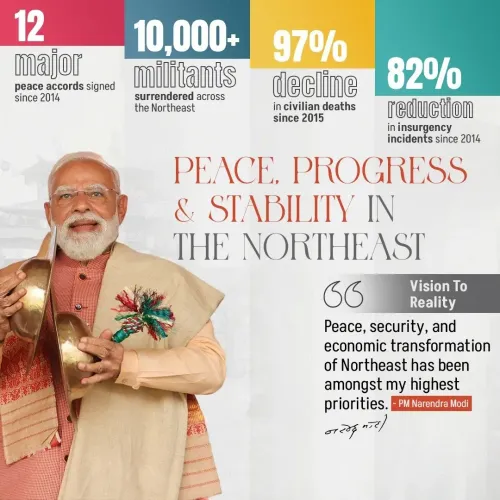
Ministry of Home Affairs data has shown year-on-year declines in Naxal violence incidents and affected districts since 2014 .
The central government's dual strategy combined intensified security operations with infrastructure and welfare delivery in affected regions.
The next benchmark: an official MHA declaration on the residual number of Naxal-affected districts remaining.
Decades of bloodshed, displacement, and loss — and now, a country standing at what its leaders are calling the edge of a historic finish line. Assam Chief Minister Himanta Biswa Sarma on Monday, November 9, 2026, took to X to mark what he described as a moment of 'great joy and happiness for each and every Indian' as the central government signals that Left-Wing Extremism has been brought to the brink of elimination.
A milestone decades in the making
The Naxalite insurgency — rooted in the 1967 peasant uprising in Naxalbari, West Bengal — spread over the following five decades across a swath of central and eastern India sometimes called the 'Red Corridor', spanning Chhattisgarh, Jharkhand, Odisha, Maharashtra, Telangana, and several other states. At its peak, the movement affected hundreds of districts, claiming thousands of lives — civilians, security personnel, and insurgents alike. The scale of the challenge made any talk of elimination seem distant.
CM Sarma specifically credited Prime Minister Narendra Modi for 'strong leadership' and the personnel of the Central Reserve Police Force (CRPF) — the primary paramilitary force deployed in anti-Naxal theatres — for their 'courage and sacrifices.' His post asked the question plainly: 'Who could have imagined that Naxalism would be brought to the brink of elimination so quickly?'
The CRPF's grinding campaign in the Red Corridor
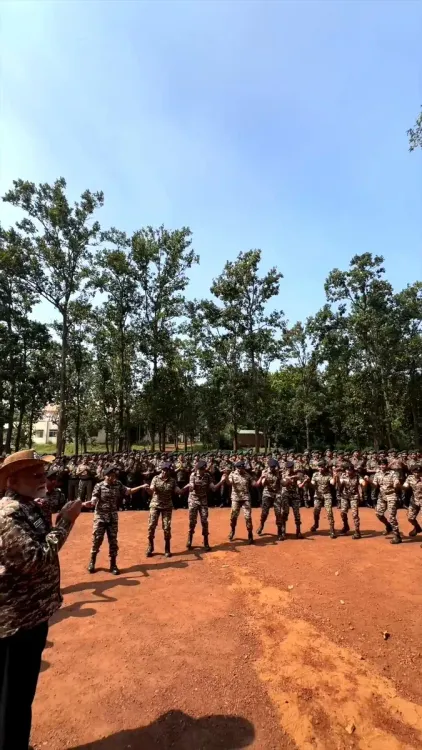
The CRPF has borne the sharpest edge of counter-insurgency in Naxal-affected zones, conducting thousands of area-domination operations, intelligence-based strikes, and jungle warfare engagements over successive years. Ministry of Home Affairs annual reports have documented a consistent, year-on-year decline in Naxal-related violence incidents, fatalities, and the number of districts classified as 'affected' since 2014. Infrastructure push — roads into previously inaccessible forest belts, banking access, mobile connectivity — ran alongside security operations as the dual-track strategy the central government championed.
The human cost on the security-forces side has been steep. CRPF jawans have lost colleagues in ambushes, IED blasts, and firefights across difficult terrain for years. CM Sarma's tribute to their 'sacrifices' gestures at that accumulated toll — a toll that now, in his framing, has helped purchase something historically significant.
Modi government's internal-security ledger
Counter-Left-Wing Extremism has been a consistent headline in the BJP-led government's internal-security narrative since 2014. Successive Home Ministers have cited shrinking 'affected-district' counts as evidence of a governance model that pairs hard security operations with welfare delivery. CM Sarma, as convenor of the North-East Democratic Alliance (NEDA) and one of the BJP's most prominent regional voices, amplifying this moment is both a political and a symbolic act — connecting the Northeast's own insurgency-to-peace arc to the broader national counter-extremism story.
The next official benchmark to watch: the Ministry of Home Affairs' annual report on Left-Wing Extremism statistics and any formal government declaration on the residual number of Naxal-affected districts still on the map.
Point of View
Making the achievement harder to dispute. Watch whether the Centre follows with a formal announcement that operationalises the 'brink of elimination' language into an official, verifiable district-count milestone.
NationPress
9 Nov 2026
Frequently Asked Questions
What did Assam CM Himanta Biswa Sarma say about Naxalism?
On November 9, 2026, CM Himanta Biswa Sarma said Naxalism has been brought to the brink of elimination in India, calling it a moment of great joy for every Indian and thanking PM Modi and CRPF jawans for making it possible.
What is the current status of Naxalism in India?
Ministry of Home Affairs data has documented a consistent decline in Naxal violence incidents, fatalities, and the number of affected districts since 2014, though an official declaration of elimination has not yet been verified.
What is the CRPF's role in anti-Naxal operations?
The Central Reserve Police Force (CRPF) is the primary central paramilitary force deployed in Naxal-affected states, conducting area-domination operations, jungle warfare, and intelligence-based strikes across the Red Corridor.
Which states were part of India's Red Corridor?
The Red Corridor historically encompassed parts of Chhattisgarh, Jharkhand, Odisha, Maharashtra, Telangana, and several other central and eastern Indian states where Naxalite influence was concentrated.
How has the Modi government tackled Left-Wing Extremism?
The BJP-led government has pursued a dual strategy since 2014: intensified security operations by the CRPF and other forces alongside infrastructure development — roads, banking access, and mobile connectivity — in previously Naxal-dominated regions.