CM Himanta Vows to Continue Assam's Anti-Drug Crackdown
Synopsis
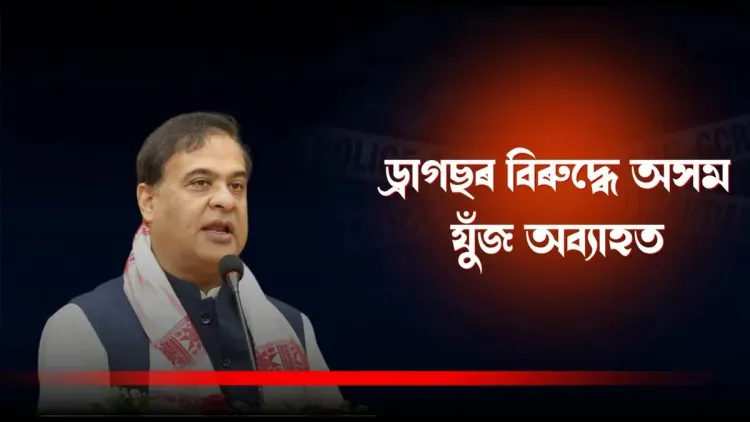
Chief Minister Himanta Biswa Sarma, addressing the Assam Legislative Assembly on 7 July 2026, vowed to sustain the state's full-force crackdown on narcotics, praised Assam Police for protecting the youth, and acknowledged Central Government and neighbouring states' support in the united fight against drugs.
Key Takeaways
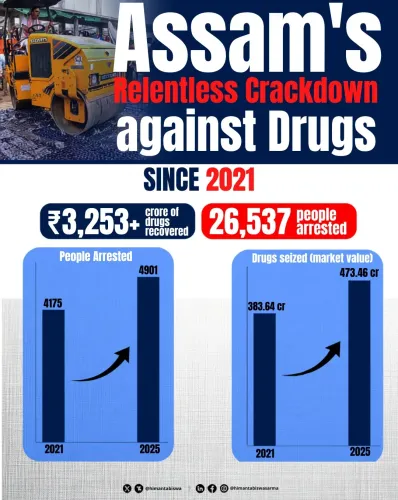
CM Himanta Biswa Sarma reaffirmed Assam's anti-narcotics crackdown will continue 'with full force' during the Assam Legislative Assembly session on 7 July 2026 .
He praised Assam Police and allied agencies for their role in safeguarding the state's youth from drug abuse.
The Chief Minister acknowledged support from the Central Government and neighbouring states in the coordinated fight against narcotics.
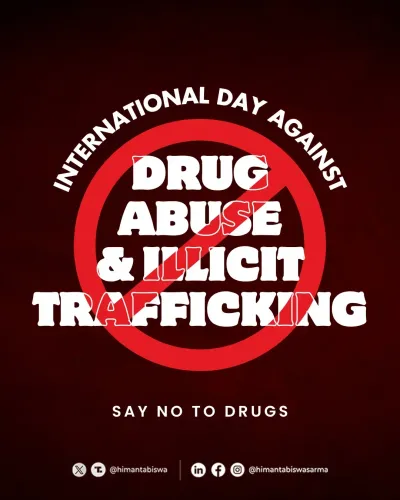
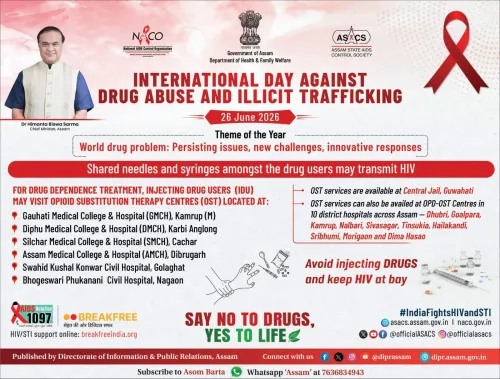
The drive is framed as a 'shared mission' under the public campaign #AssamAgainstDrugs .
Assam's enforcement framework is anchored in the NDPS Act and aligned with the national Nasha Mukt Bharat Abhiyaan launched in 2020 .
Future Assembly debates may yield formal announcements on joint operations or legislative amendments to strengthen narcotics control.
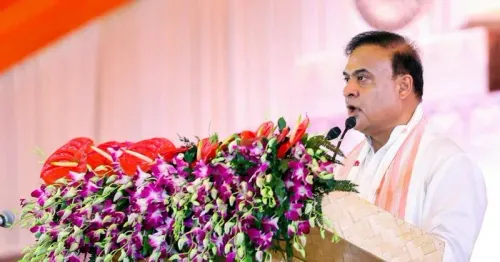
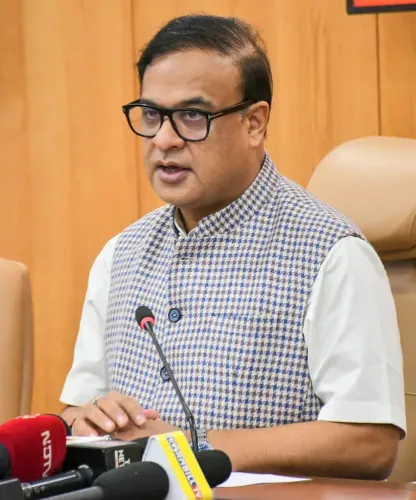
The Chief Minister's Office of Assam announced on Tuesday, 7 July 2026 that Chief Minister Dr. Himanta Biswa Sarma reaffirmed the state's commitment to an unrelenting crackdown on narcotics while addressing the Assam Legislative Assembly session, praising law enforcement agencies for their role in protecting the state's youth.
Context
Speaking on the floor of the Assam Legislative Assembly, CM Himanta Biswa Sarma declared that the fight against drugs is a 'shared mission' and that the state's enforcement drive will continue 'with full force.' He specifically lauded Assam Police and allied agencies for their tireless efforts in safeguarding the future of the state's youth. The remarks came under the hashtag #AssamAgainstDrugs, a public-messaging campaign that has accompanied the state's enforcement posture.
The Chief Minister also acknowledged support from the Central Government and neighbouring states in what he described as a united fight, signalling that the anti-narcotics effort extends well beyond Assam's administrative boundaries.
Policy Backdrop
Assam's anti-narcotics stance sits within a broader Northeast India pattern of state-central coordination against cross-border synthetic drug and opium trafficking routes. The state's enforcement framework draws on national legislation, principally the Narcotic Drugs and Psychotropic Substances (NDPS) Act, and is aligned with bilateral mechanisms with neighbouring states.
At the national level, the Ministry of Social Justice and Empowerment launched the Nasha Mukt Bharat Abhiyaan in 2020 as a demand-reduction programme targeting high-prevalence districts. Assam's ground-level enforcement and public messaging complement this supply-side and demand-side dual approach. Successive Assam governments have consistently linked local policing to these national frameworks, and CM Himanta Biswa Sarma, who took office in 2021, has made narcotics control a prominent governance priority.
Stakeholders and Impact
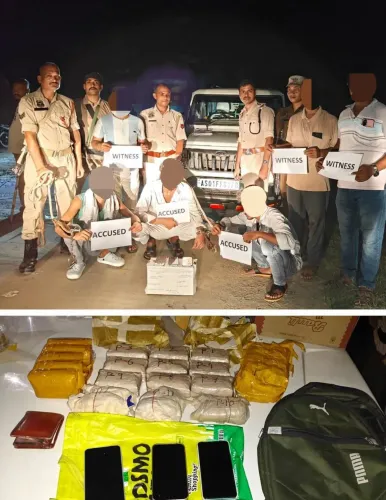
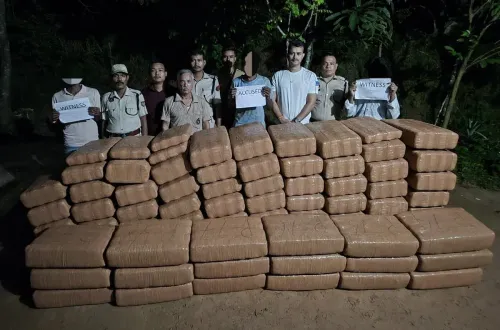
Assam Police and allied central agencies bear the operational burden of interdicting drug supply chains that run through the state's porous borders with Myanmar, Nagaland, and Mizoram. The Chief Minister's public recognition of their efforts in the Assembly serves both as institutional acknowledgement and as a signal of continued political backing for enforcement personnel.
The primary beneficiaries cited by the government are Assam's youth, who are positioned as the demographic most at risk from rising narcotics availability. Community groups, parents, and school and college administrations across the state have been drawn into the broader public-awareness dimension of the campaign. Neighbouring states, whose cooperation was explicitly acknowledged, are also stakeholders in any coordinated interdiction effort along shared trafficking corridors.
What's Next
The Assembly session itself is a key venue to watch: further debates may surface proposed amendments to state excise or narcotics legislation, or formal announcements of joint operations with central agencies and neighbouring state forces. The Chief Minister's floor statement is likely to be followed by detailed policy discussions among legislators on resource allocation for enforcement and rehabilitation infrastructure.
With the Central Government's backing explicitly invoked, observers will look for any formal bilateral or multilateral mechanisms — such as coordinated checkpoints or intelligence-sharing protocols — that may be formalised in the coming weeks as an extension of the Assembly's deliberations.
Point of View
He is building a narrative of multi-tier institutional consensus, which insulates the policy from purely partisan criticism. The move also fits a wider Northeast India pattern where state governments use anti-narcotics messaging to address both genuine public-health concerns and electoral optics around youth welfare. The Assembly setting ensures the commitment is on the legislative record, raising the political cost of any future backsliding.
NationPress
7 Jul 2026
Frequently Asked Questions
What did Himanta Biswa Sarma say about drugs in the Assam Assembly?
On 7 July 2026 , CM Himanta Biswa Sarma told the Assam Assembly that the state's crackdown on narcotics would continue with full force, praised Assam Police for protecting the youth, and acknowledged support from the Central Government and neighbouring states.
What is the #AssamAgainstDrugs campaign?
#AssamAgainstDrugs is a public-messaging initiative used by the Assam government to accompany its enforcement and awareness drive against narcotics, framing drug control as a shared societal mission focused on protecting the state's youth.
What is the Nasha Mukt Bharat Abhiyaan and how does it relate to Assam?
The Nasha Mukt Bharat Abhiyaan is a national demand-reduction programme launched in 2020 by the Ministry of Social Justice and Empowerment ; Assam's ground-level enforcement and awareness activities complement this national framework at the state level.
Which law governs drug enforcement in Assam?
Drug enforcement in Assam is primarily governed by the Narcotic Drugs and Psychotropic Substances (NDPS) Act , a central legislation under which Assam Police and allied agencies conduct operations and prosecutions.
Why is Northeast India considered a drug trafficking hotspot?
Northeast India, including Assam, sits along cross-border trafficking routes connected to Myanmar and other neighbouring territories, making it vulnerable to flows of synthetic drugs and opium that state and central agencies work jointly to interdict.