CM Himanta Welcomes Pilgrims for Ambubachi Mahayog 2026 at Kamakhya
Synopsis
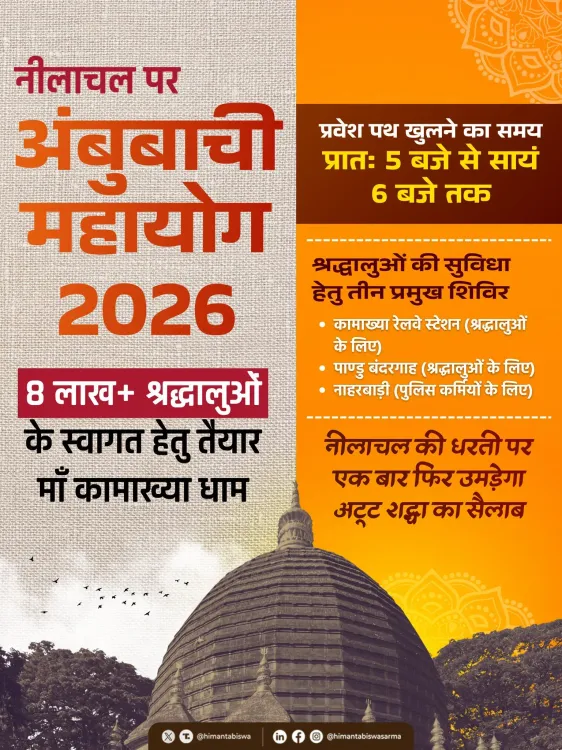
Assam Chief Minister Himanta Biswa Sarma on 17 June 2026 welcomed global devotees for Ambubachi Mahayog 2026, saying Kamakhya Dham at Nilachal Hill is adorned and ready. He extended greetings on behalf of all Assam residents, inviting pilgrims to join the divine confluence of nature and spirituality.
Key Takeaways
Assam CM Himanta Biswa Sarma publicly welcomed global pilgrims for Ambubachi Mahayog 2026 on 17 June 2026 .
The Kamakhya Dham atop Nilachal Hill, Guwahati is the venue — one of Hinduism's foremost Shakti Peethas and a major centre of Tantric worship.
Ambubachi Mahayog is an annual four-day festival marking the menstruation of Goddess Kamakhya, drawing lakhs of tantriks, sadhus and pilgrims from India and abroad.
The Sarma government has actively promoted Kamakhya as a pilgrimage-tourism destination since 2021 , integrating major festivals into the state's economic development strategy.
Local traders, the hospitality sector, and Assam's broader tourism economy stand to benefit from the annual influx of domestic and international visitors.
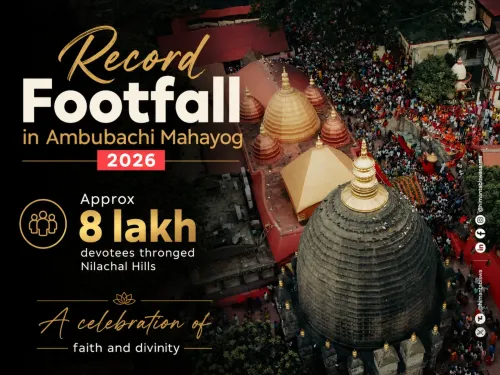
Assam Chief Minister Himanta Biswa Sarma on Wednesday, 17 June 2026 extended a warm welcome to devotees across the world ahead of the Ambubachi Mahayog 2026 festival at the revered Kamakhya Dham atop Nilachal Hill in Guwahati, declaring that the sacred shrine is ready to receive pilgrims from every corner of the globe.
Posting in Hindi on X, the Chief Minister wrote: 'पवित्र अंबुबाची महायोग 2026 में विश्वभर के श्रद्धालुओं के स्वागत के लिए नीलाचल स्थित मां कामाख्या धाम सज उठा है' — 'The sacred Maa Kamakhya Dham at Nilachal has adorned itself to welcome devotees from across the world for the holy Ambubachi Mahayog 2026.' He added that he extends a heartfelt welcome and salutation to all devotees of the Goddess on behalf of the people of Assam, and invited everyone to become part of this 'divine confluence of nature and spirituality.'
Context
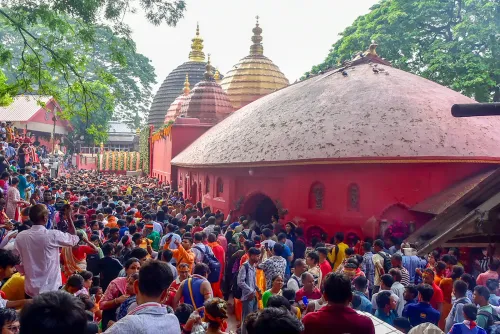
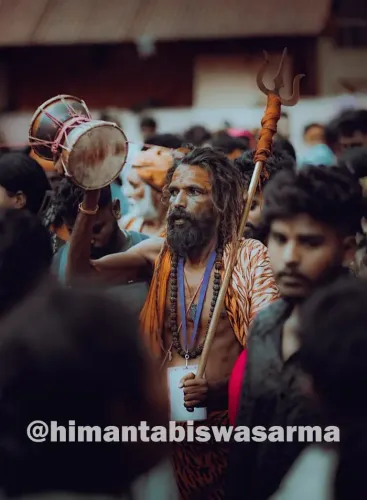
The Ambubachi Mahayog is one of Hinduism's most significant tantric observances, held annually at the Kamakhya Temple — a principal Shakti Peetha and among the most important centres of Tantric worship in the country. The festival marks the annual menstruation of Goddess Kamakhya, during which the temple remains closed for three days before reopening amid elaborate rituals. The event draws lakhs of tantriks, sadhus, and pilgrims from across India and abroad every year.
Kamakhya Temple sits atop Nilachal Hill in Guwahati, Assam, and holds a central place in the state's religious and cultural identity. The festival is widely regarded as one of the largest annual pilgrimage gatherings in northeastern India.
Policy Backdrop
Since assuming office in 2021, Chief Minister Sarma's administration has made the promotion of Assam's religious heritage sites — particularly Kamakhya — a cornerstone of its pilgrimage-tourism strategy. The state government has steadily increased its support for the Ambubachi Mela, working alongside the temple management to improve infrastructure, crowd management, and visitor facilities around Nilachal Hill.
This outreach is part of a broader effort by the Assam government to integrate major religious festivals into the state's economic development narrative, positioning Guwahati as a gateway for both domestic and international spiritual tourism. Temples such as Hayagriva Madhava and others across the state have similarly been woven into this cultural-promotion circuit.
Stakeholders and Impact
The festival's economic ripple effect is felt most directly by local traders, hoteliers, and transport operators in and around Guwahati, for whom the annual influx of pilgrims represents a significant revenue window. Tantrik practitioners and sadhus who travel from distant parts of India and abroad regard Ambubachi as a spiritually indispensable gathering, making the state's hospitality arrangements a matter of both cultural and logistical importance.
For the Assam tourism sector as a whole, a well-managed Ambubachi Mahayog reinforces the state's credentials as a pilgrimage destination capable of hosting large-scale international events, with potential long-term benefits for visitor numbers throughout the year.
What's Next
Attention will now turn to the state government's specific announcements on crowd-management plans, transport and accommodation arrangements, and any infrastructure upgrades around Nilachal ahead of the festival. High-level visits by central government dignitaries or religious leaders could further elevate the event's profile. The Chief Minister's public invitation signals that Assam is positioning Ambubachi Mahayog 2026 as a landmark in its spiritual-tourism calendar, with the potential to draw record footfall from both within India and internationally.
Point of View
' he frames the state government as the host — reinforcing a political narrative that links BJP governance with the stewardship of Hindu sacred spaces. The move also signals to the central government and international audiences that Assam is capable of managing large-scale spiritual gatherings, a soft-power argument that feeds into broader Northeast India development optics. How the administration delivers on ground-level logistics will ultimately determine whether the festival strengthens or tests that narrative.
NationPress
17 Sept 2026
Frequently Asked Questions
What is Ambubachi Mahayog 2026?
Ambubachi Mahayog 2026 is the annual four-day festival at Kamakhya Temple in Guwahati, Assam, marking the menstruation of Goddess Kamakhya. The temple remains closed for three days and reopens with elaborate rituals, drawing lakhs of pilgrims, tantriks, and sadhus from across India and abroad.
Where is Kamakhya Temple located?
Kamakhya Temple is located atop Nilachal Hill in Guwahati, Assam. It is one of the most important Shakti Peethas in Hinduism and a principal centre of Tantric worship.
What did CM Himanta Biswa Sarma say about Ambubachi 2026?
CM Himanta Biswa Sarma said that Kamakhya Dham at Nilachal has adorned itself to welcome devotees from across the world for Ambubachi Mahayog 2026. He extended a heartfelt welcome on behalf of all Assam residents and invited pilgrims to be part of this divine confluence of nature and spirituality.
When is Ambubachi Mela held every year?
Ambubachi Mela is held annually, typically in June, coinciding with the monsoon season. The exact dates vary each year based on the Hindu calendar.
How has the Assam government promoted Kamakhya Temple tourism?
Since 2021, the Assam government under Chief Minister Himanta Biswa Sarma has increased state support for the Ambubachi Mela, worked on infrastructure upgrades around Nilachal Hill, and integrated major religious festivals into the state's pilgrimage-tourism and economic development strategy.