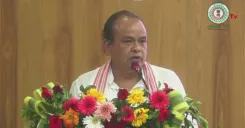
CM Himanta's 5-Year Report: Assam Ready to Lead Northeast Growth

Synopsis
The Chief Minister's Office of Assam has marked five years of the Himanta Biswa Sarma government, citing unprecedented momentum in infrastructure, investment, education and welfare, and positioning Assam as a leader of India's Northeast growth story.
Key Takeaways
The Chief Minister's Office of Assam posted a five-year governance assessment on 24 June 2026 , marking the anniversary of the Himanta Biswa Sarma -led BJP government.
Assam , with a population of over 35 million , is cited as having gained 'unprecedented momentum' across infrastructure, investment, education and welfare sectors.
The state's revised industrial and investment policies post- 2021 are aligned with the central government's Act East Policy , aimed at integrating the Northeast with ASEAN markets.
The Orunodoi women's welfare scheme, expanded after 2021 , is among the flagship social-sector programmes highlighted by the administration.
Assam assembly elections are due in 2026 , lending political significance to the timing of this official five-year review.
The Chief Minister's Office of Assam on Wednesday, 24 June 2026 marked five years of the Himanta Biswa Sarma-led government with a sweeping assessment, declaring that Assam has achieved 'unprecedented momentum' across infrastructure, investment, education and welfare and now stands ready to anchor India's growth story from the Northeast.
Context
Himanta Biswa Sarma was sworn in as Assam's Chief Minister in May 2021 after the Bharatiya Janata Party retained power in the state assembly elections. The CMO's post, published on the fifth anniversary of that government, frames the period as a transformational chapter for the state. 'Today, the state stands confident, aspirational and ready to lead India's growth story from the Northeast,' the office wrote, capturing the tone of a government presenting its governance record ahead of the next electoral cycle.
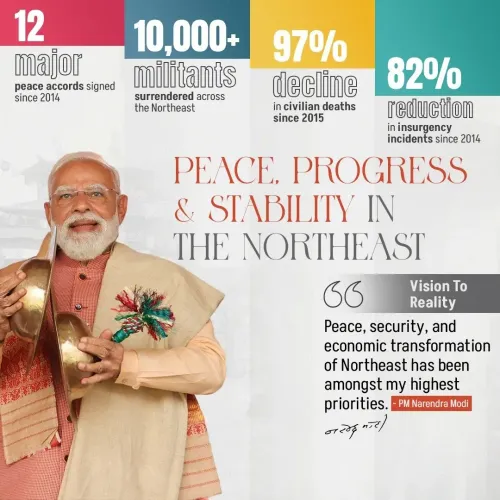
The post coincides with a period when Assam — home to more than 35 million people and strategically positioned bordering Bhutan, Bangladesh, Arunachal Pradesh, Nagaland, Manipur, Meghalaya and Mizoram — has been at the centre of the central government's push to integrate the Northeast into the national mainstream.
Policy Backdrop
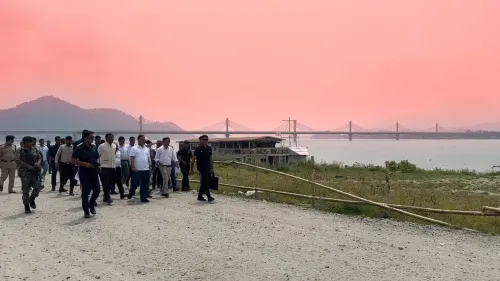
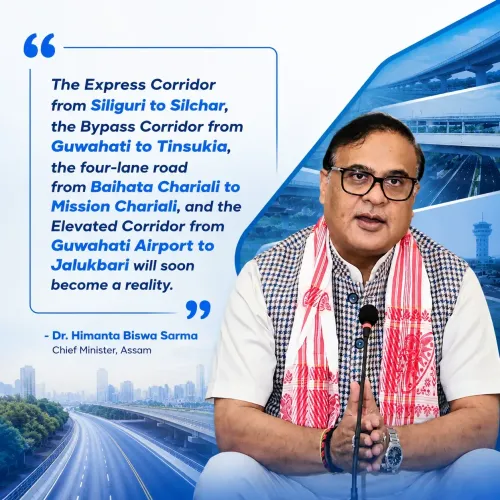
The Sarma administration accelerated road, bridge and airport projects from 2021 onwards as part of a broader connectivity agenda aligned with the central government's Act East Policy, which positions the Northeast as India's gateway to Southeast Asia and the ASEAN bloc. Investment and industrial policies in the state were also revised post-2021 to attract manufacturing and tourism projects under this framework.
On the welfare front, the Orunodoi scheme — which provides monthly direct financial assistance to eligible households, particularly women — was expanded significantly after 2021, becoming one of the flagship social-sector interventions cited by the government. Education initiatives and skilling programmes for youth have similarly been highlighted as priority areas by the administration over this period.
Stakeholders and Impact
The development narrative outlined by the CMO has direct implications for Assam's residents, particularly the state's large rural and semi-urban population that depends on government welfare programmes and improving public infrastructure. For investors and businesses, the emphasis on a revised industrial policy and the state's geographic advantage under the Act East Policy signals continued efforts to position Assam as a commercial hub for Northeast India.
Students and youth — a demographic the government has repeatedly flagged as central to its agenda — stand to be affected by education reforms and employment-linked schemes. The broader Northeast region, which has historically lagged national averages on key development indices, could benefit if Assam's stated momentum translates into spillover investment and connectivity gains for neighbouring states.
What's Next
Assam is due to hold state assembly elections in 2026, making the timing of this five-year assessment politically significant. The government is expected to continue announcing infrastructure milestones and welfare expansions in the months ahead, with new industrial policy or connectivity announcements tied to the Act East Policy likely to feature prominently. How the opposition responds to the government's self-assessment — and whether independent audits of development outcomes align with the official narrative — will shape the political conversation heading into the election season.
Point of View
Assam is also a showcase state in a region where the party has worked hard to displace entrenched regional parties, making a strong governance record politically indispensable. The real test will be whether the official account withstands scrutiny from independent assessments and the electorate as the 2026 election campaign intensifies.
NationPress
24 Jun 2026
Frequently Asked Questions
How long has Himanta Biswa Sarma been Chief Minister of Assam?
Himanta Biswa Sarma has been Chief Minister of Assam since May 2021 , when the BJP retained power in the state assembly elections. The CMO's post on 24 June 2026 marks five years of his government's tenure.
What is the Orunodoi scheme in Assam?
The Orunodoi scheme is a direct financial assistance programme for eligible households in Assam , with a focus on women beneficiaries. It was expanded significantly after 2021 under the Sarma government and is one of the state's flagship welfare initiatives.
What is the Act East Policy and how does it relate to Assam?
The Act East Policy is a central government initiative relaunched in 2014 to strengthen economic and security ties with Southeast Asia through improved infrastructure in the Northeast . Assam , given its strategic location, is a key beneficiary and is being positioned as a gateway to the ASEAN region.
When are the next Assam assembly elections?
Assam assembly elections are due in 2026 , making the current five-year governance review by the CMO politically significant as the ruling BJP looks to build its electoral narrative.
What sectors has the Assam government focused on since 2021?
According to the Chief Minister's Office of Assam , the government has prioritised infrastructure, investment, education and welfare over the past five years, alongside connectivity projects aligned with the central government's Act East Policy .