CM Himanta's #MatriPitriVandana: Assam Gives Govt Staff Leave to Visit Parents

Synopsis
Assam CM Himanta Biswa Sarma spotlighted the state's unique #MatriPitriVandana scheme, which mandates special off days for government employees to spend time with their parents — embedding a cultural value into official leave policy.
Key Takeaways
Assam's #MatriPitriVandana policy gives state government employees dedicated, mandatory leave days to spend time with their parents.
The initiative is compulsory , not voluntary — making parental bonding a formal obligation within service rules.
CM Himanta Biswa Sarma described the scheme as 'the essence of our culture,' framing it as a civilisational value, not just an HR benefit.
No comparable central government policy in India specifically earmarks leave for parental visits.
Sarma signalled ambition for the model to spread beyond Assam, saying the government is 'striving for everyone to follow it.'
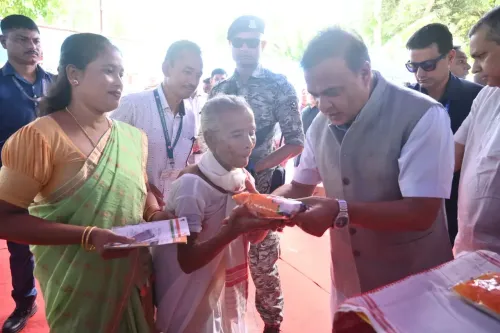
In a country where elder care is increasingly squeezed between urban migration and long work hours, Assam Chief Minister Himanta Biswa Sarma has put a cultural value on the official calendar — mandating that every state government employee take special leave to spend time with their parents.
What #MatriPitriVandana actually means for Assam's workforce
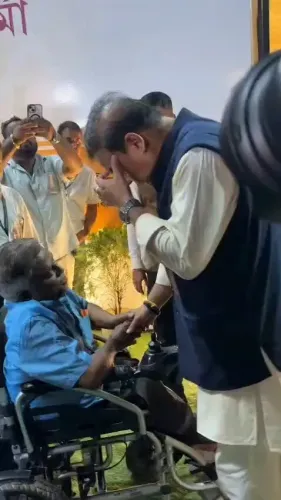
MatriPitriVandana — literally 'reverence to mother and father' — is the name Assam has given to a policy requiring government employees to take designated off days specifically for time with their parents. The initiative treats parental bonding not as a private choice but as a civic obligation, embedding it into service rules. CM Sarma framed it plainly: 'MatriPitriVandana is the essence of our culture and we are striving for everyone to follow it.'
The scheme is notable for its mandatory character. Where most welfare initiatives are voluntary or aspirational, this one converts a cultural norm into a structured entitlement — and an expectation — for the state's entire government workforce.
Why Assam's approach stands apart
India has no central leave policy that specifically earmarks time for parental visits. States routinely grant casual leave and earned leave, but the purpose is left to the employee. Assam's named initiative gives the leave a moral identity, tying it explicitly to the guru-shishya and filial traditions that underpin much of Northeastern cultural life.
For a state where many families are separated by government postings across remote districts and hill areas, the policy also carries a practical logic: a formal entitlement makes it easier for employees to plan and actually take the time, rather than deprioritise it under workload pressure.
The signal beyond Assam's borders
CM Sarma's post frames the initiative as a replicable model — 'we are striving for everyone to follow it' — suggesting the Assam government sees #MatriPitriVandana as a template worth exporting, either to other BJP-governed states through NEDA networks or as a conversation-starter for national policy. Whether other states pick up the idea will be the real measure of its reach.
As India's workforce ages and the nuclear family becomes the default unit in cities, the question of who looks after parents — and when — is moving from dining-table conversation to policy debate. Assam just put it on the ledger.
Point of View
Who has consistently used Assam as a laboratory for culturally-inflected governance experiments, the policy reinforces his brand as both a welfare administrator and a custodian of Northeastern tradition. The mandatory character of the leave is its sharpest edge: it shifts parental care from a personal responsibility that erodes under bureaucratic pressure to a protected, institutionalised right. If even a handful of other states adopt the template, it could quietly reshape how India's sprawling government workforce negotiates family duty against professional obligation.
NationPress
4 Oct 2026
Frequently Asked Questions
What is the MatriPitriVandana initiative in Assam?
#MatriPitriVandana is an Assam government scheme that gives state government employees mandatory special leave days to spend time with their parents, embedding filial duty into official service rules.
Is the MatriPitriVandana leave mandatory or optional for Assam government employees?
The leave is mandatory, not optional. CM Himanta Biswa Sarma has stated that all government employees are required to take this designated time with their parents.
Which state in India has a parental visit leave policy for government employees?
Assam is the state that has introduced such a policy, called #MatriPitriVandana, making it one of the few states to specifically earmark leave for employees to visit or stay with their parents.
What does MatriPitriVandana mean in English?
'MatriPitriVandana' translates to 'reverence to mother and father' in English, reflecting the cultural and filial values the Assam government says the initiative is designed to uphold.
Who announced the MatriPitriVandana scheme?
Assam Chief Minister Himanta Biswa Sarma is the driving force behind the #MatriPitriVandana initiative and has publicly championed it as a model for other states to adopt.