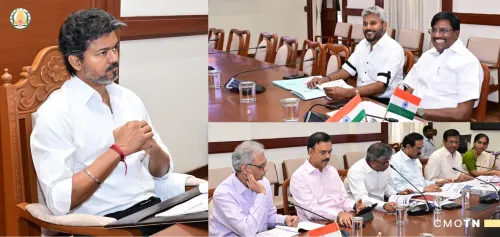
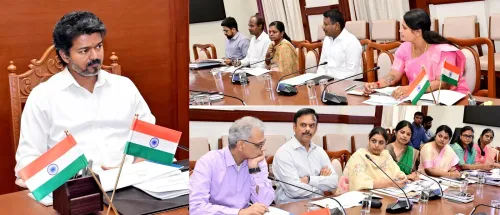
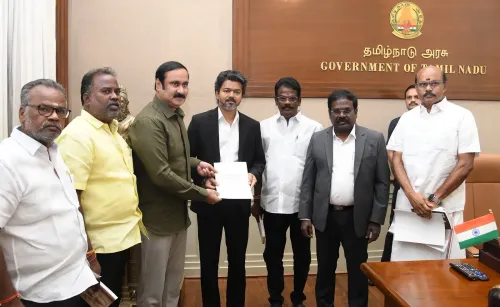
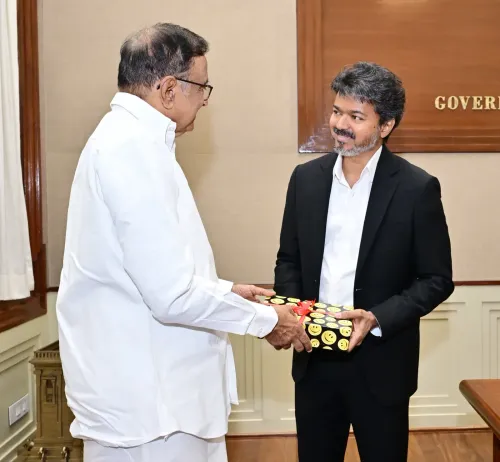
CM Joseph Vijay meets Union Minister Ramdas Athawale at Chennai Secretariat
Synopsis
Tamil Nadu Chief Minister S. Joseph Vijay held discussions with Union Minister of State for Social Justice and Empowerment Ramdas Athawale at the Chennai Secretariat on 17 July 2026, in a state-centre meeting likely covering welfare schemes and Dalit empowerment programmes.
Key Takeaways
Joseph Vijay met Union MoS Ramdas Athawale at the Tamil Nadu Secretariat, Chennai on 17 July 2026 .
Ramdas Athawale serves as Union Minister of State for Social Justice and Empowerment , overseeing SC/ST/OBC welfare schemes.
The meeting follows a pattern of state-centre coordination on implementation of Post-Matric Scholarships and the SC/ST (Prevention of Atrocities) Act .
Key stakeholders include Dalit communities, OBC welfare groups , and state social welfare departments across Tamil Nadu.
Follow-up announcements on central scheme fund releases or joint review meetings are anticipated.
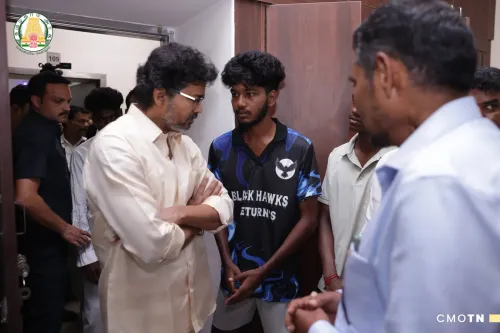
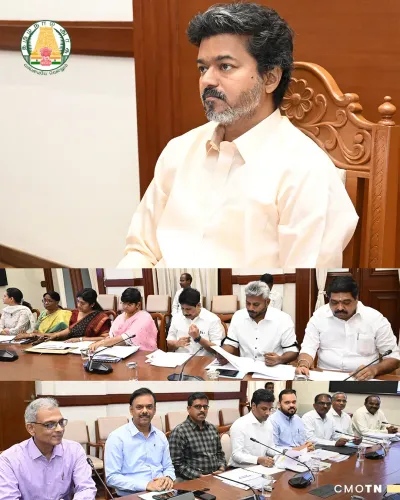
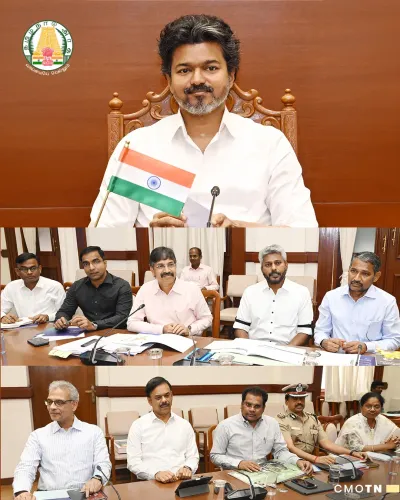
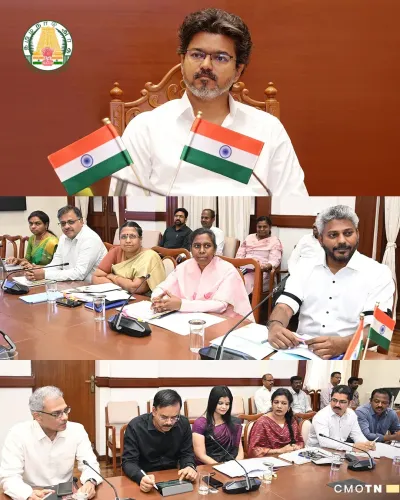
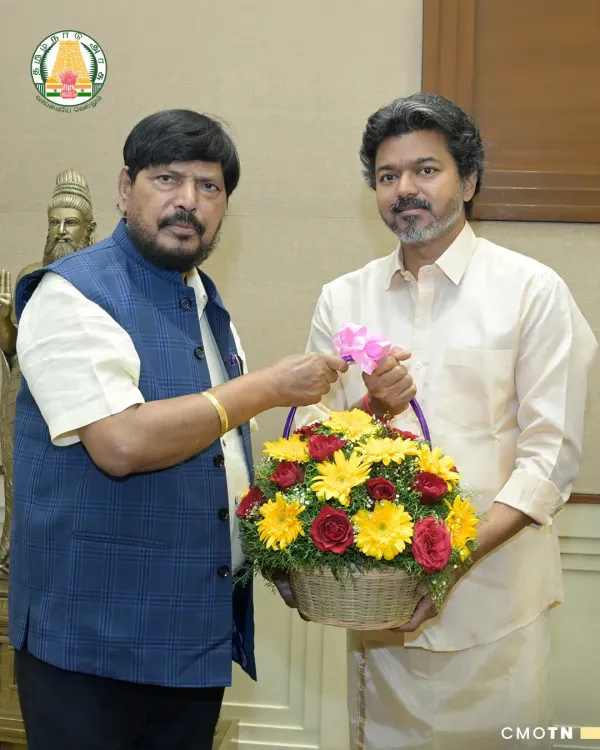
The Chief Minister's Office of Tamil Nadu announced on Friday, 17 July 2026 that Chief Minister S. Joseph Vijay met Union Minister of State for Social Justice and Empowerment Ramdas Athawale at the Tamil Nadu Secretariat in Chennai for a bilateral discussion.
Context
The meeting, held at the Tamil Nadu Secretariat — the administrative nerve centre of the state government in Chennai — brought together the state's top executive and a key central minister overseeing welfare programmes for Scheduled Castes, Scheduled Tribes, and Other Backward Classes. The CMO's post confirmed the visit with the Tamil-language caption: 'மாண்புமிகு தமிழ்நாடு முதலமைச்சர் திரு.ச.ஜோசப் விஜய் அவர்களை இன்று தலைமைச் செயலகத்தில், மாண்புமிகு ஒன்றிய சமூகநீதி மற்றும் அதிகாரமளித்தல் துறை இணை அமைச்சர் திரு. ராம்தாஸ் அத்தாவலே அவர்கள் சந்தித்துப் பேசினார்' ('The Union Minister of State for Social Justice and Empowerment, Mr Ramdas Athawale, met and held discussions with the Hon'ble Chief Minister of Tamil Nadu, Mr S. Joseph Vijay, at the Secretariat today').
Policy Backdrop
Ramdas Athawale, a long-standing leader of the Republican Party of India (Athawale) faction, has been a consistent advocate for Dalit welfare and reservation policies at the national level. The Ministry of Social Justice and Empowerment administers flagship central schemes including Post-Matric Scholarships for marginalised students and the implementation framework of the Scheduled Castes and Scheduled Tribes (Prevention of Atrocities) Act. Since 2016, Athawale has conducted multiple state-level review meetings to assess how these central programmes are being implemented on the ground.
Tamil Nadu has historically maintained active engagement with the Ministry on questions of reservation entitlements and welfare fund disbursements for marginalised communities. State-centre coordination meetings of this nature typically address the convergence of central scheme funding with state-run programmes, pending fund releases, and implementation bottlenecks at the district level.
Stakeholders and Impact
The primary beneficiaries of outcomes from such high-level meetings are Dalit communities, OBC welfare groups, and the state's social welfare departments, which act as the implementation machinery for centrally sponsored schemes. Any decisions on accelerating scholarship disbursements or strengthening atrocity-prevention mechanisms would directly affect millions of beneficiaries across Tamil Nadu's districts.
The meeting also carries political significance: coordination between a state government and a Union Minister signals an active channel of communication between Chennai and New Delhi on social justice priorities, which are constitutionally shared responsibilities.
What's Next
Officials and welfare groups will watch for follow-up announcements, particularly on pending central scheme fund releases or the scheduling of joint review committees after Minister Athawale returns to Delhi. The outcome of this meeting could shape the pace of implementation of social welfare programmes across the state in the months ahead.
Point of View
Hosting a Union Minister at the Secretariat signals an intent to maintain functional ties with the Centre regardless of party affiliations. Athawale's track record of state-level reviews suggests this visit may be part of a broader national tour to assess scheme implementation. The real measure of the meeting's impact will be whether it translates into faster fund releases or policy adjustments for Tamil Nadu's marginalised communities.
NationPress
17 Jul 2026
Frequently Asked Questions
Why did Ramdas Athawale meet Tamil Nadu CM Joseph Vijay?
Union Minister of State for Social Justice and Empowerment Ramdas Athawale met Tamil Nadu CM S. Joseph Vijay at the Chennai Secretariat on 17 July 2026 for discussions, likely covering the implementation of central welfare schemes for Scheduled Castes, Scheduled Tribes, and OBC communities in the state.
Who is Ramdas Athawale?
Ramdas Athawale is the Union Minister of State for Social Justice and Empowerment in the central government and a long-standing leader of the Republican Party of India (Athawale) faction, known for his advocacy of Dalit welfare and reservation policies.
What is the Ministry of Social Justice and Empowerment responsible for?
The Ministry of Social Justice and Empowerment administers welfare programmes for Scheduled Castes, Scheduled Tribes, and Other Backward Classes, including Post-Matric Scholarships and implementation of the SC/ST (Prevention of Atrocities) Act.
Where was the meeting between CM Vijay and Athawale held?
The meeting was held at the Tamil Nadu Secretariat in Chennai, the administrative headquarters of the Tamil Nadu state government, on 17 July 2026.
What could be the outcome of the CM Vijay and Athawale meeting?
Possible outcomes include decisions on releasing pending central scheme funds, scheduling joint review committees, or strengthening implementation of social welfare programmes for marginalised communities across Tamil Nadu.