CM Karnataka Hails Mysore Dasara 2026 Jamboo Savari
Synopsis
The Chief Minister's Office of Karnataka marked Vijayadashami 2026 by celebrating the Mysore Dasara Jamboo Savari procession — Goddess Chamundeshwari's elephant procession — as a spectacular expression of Kannada culture, devotion, and four centuries of living tradition.
Key Takeaways
The Chief Minister's Office of Karnataka posted on October 22, 2026 to mark the Mysore Dasara 2026 Jamboo Savari on Vijayadashami.
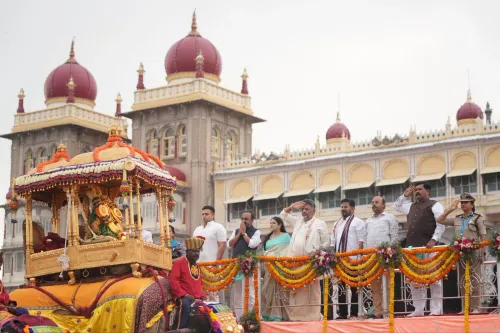
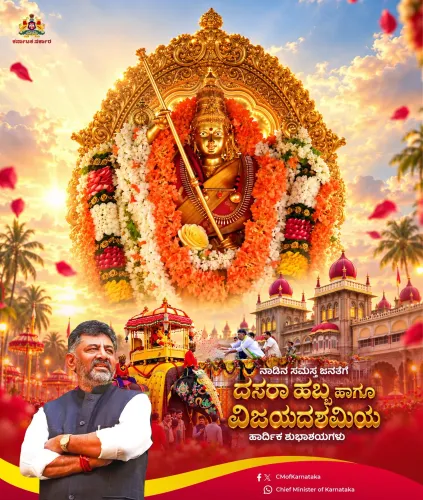
The Jamboo Savari features the idol of Goddess Chamundeshwari carried atop a royal elephant, accompanied by Vedic chanting and folk artists from across Karnataka.
The CMO described the procession as broadcasting the emotions, culture and heritage of crores of Kannadigas to the world.
Mysore Dasara is a ten-day state festival whose Jamboo Savari tradition dates to the Wodeyar rulers of the 17th century .
The post closed with a Vijayadashami blessing for the light of knowledge to overcome the darkness of ignorance.
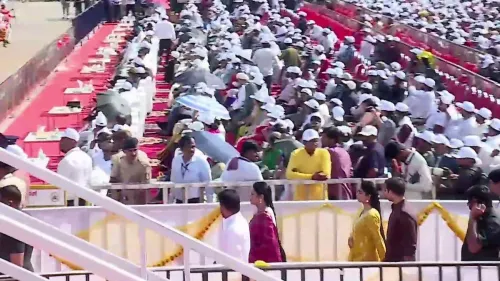
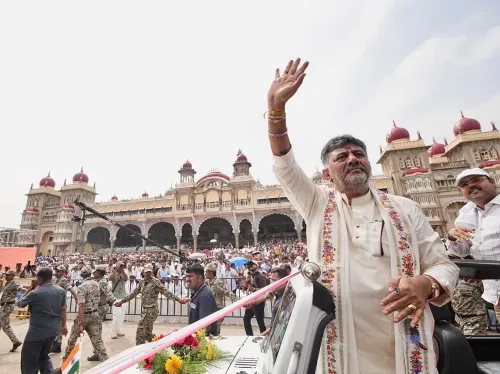
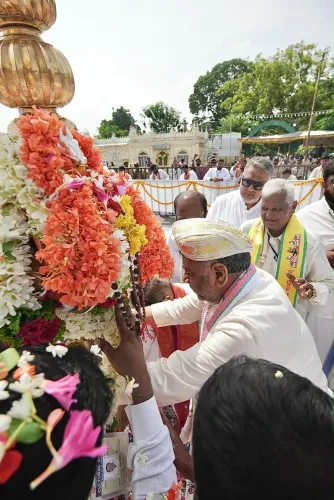
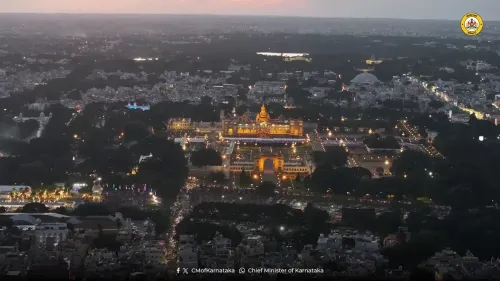
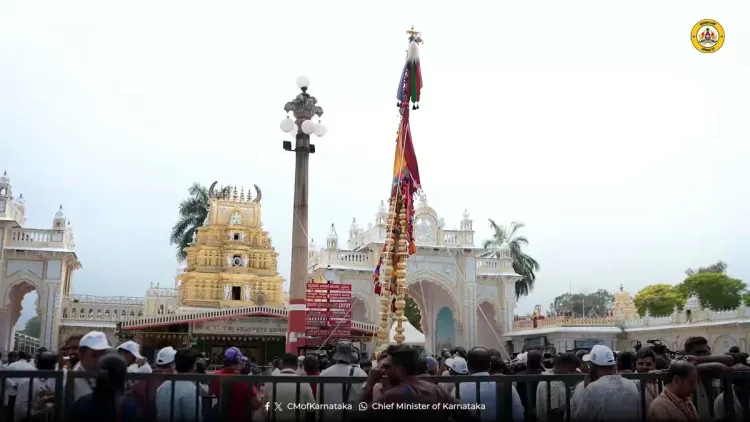
Tens of thousands of devotees lined the streets of Mysore on Thursday, October 22, 2026, as the Chief Minister's Office of Karnataka hailed the grand Jamboo Savari — the iconic elephant procession of Mysore Dasara 2026 — as a feast for the eyes and a flood of devotion for every heart.
The official post, written in Kannada, captured the mood of Vijayadashami in vivid strokes: 'ದುಷ್ಟರ ಶಿಕ್ಷಿಸಿ, ಶಿಷ್ಟರ ರಕ್ಷಿಸುವ ಮಹಾತಾಯಿಯ ಜಂಬೂ ಸವಾರಿ' — 'the grand procession of the Great Mother who punishes the wicked and protects the righteous.' The procession of Goddess Chamundeshwari, carried atop a royal elephant to the recitation of Vedic hymns and the triumphant chants of a sea of devotees, was described as stirring devotion in every soul who witnessed it.
Chamundeshwari's procession and what it carries
At the heart of the Jamboo Savari is the idol of Goddess Chamundeshwari, the presiding deity of Mysore, a form of Goddess Durga whose presence gives the festival its spiritual core. The post noted that artists who travelled from every corner of Karnataka filled the procession route with the rhythm of their footsteps — proclaiming, in the government's words, not merely a festival but the emotions, culture, and heritage of koti koti Kannadigaru ('crores upon crores of Kannadigas') to the world.
Mysore Dasara: a tradition four centuries in the making
Mysore Dasara is a ten-day state festival that culminates each year on Vijayadashami, the day marking the victory of good over evil at the close of Navratri. The tradition was established by the Wodeyar rulers of Mysore in the 17th century and has since been carried forward as a state festival by successive Karnataka governments, making it one of the oldest continuously observed royal-turned-state celebrations in India. The Jamboo Savari procession — its gilded howdah, caparisoned elephants, and disciplined tableaux of folk artists — remains its defining centrepiece.
Karnataka governments across party lines have used Dasara to amplify Kannada identity, support regional artists, and draw cultural tourism. The CMO's post closed with a Vijayadashami blessing: that this auspicious day may tear through the darkness of ignorance everywhere and spread the light of true knowledge.
The message behind the festivity
By invoking the dual mandate of the goddess — to punish the wicked, protect the virtuous — the government's framing does what the best Dasara messaging always does: it roots a spectacular public event in a universal moral idea. The result is a festival that speaks simultaneously to the devout, the culturally curious, and the hundreds of Kannada artists whose performances carry the state's living heritage into the national spotlight. One procession, many meanings. That is the enduring genius of Mysore Dasara.
Point of View
The CMO taps into a symbolism that transcends religion and resonates with voters across demographics. The emphasis on artists 'from every corner' of Karnataka also subtly signals inclusive cultural investment ahead of any upcoming electoral cycle. Dasara thus continues its dual life as both a sacred observance and a soft-power tool of governance.
NationPress
22 Oct 2026
Frequently Asked Questions
What is the Jamboo Savari at Mysore Dasara?
The Jamboo Savari is the grand royal elephant procession held on Vijayadashami as part of Mysore Dasara, in which the idol of Goddess Chamundeshwari is carried atop a decorated elephant through the streets of Mysore to the accompaniment of Vedic chants, folk artists, and large crowds of devotees.
Why is Mysore Dasara celebrated and who started it?
Mysore Dasara marks Vijayadashami, the Hindu festival celebrating the victory of good over evil at the end of Navratri. The tradition of a royal procession in Mysore was established by the Wodeyar rulers in the 17th century and has since been continued as an official state festival by the Karnataka government.
What did the Karnataka CMO say about Mysore Dasara 2026?
The Chief Minister's Office of Karnataka posted on October 22, 2026, describing the Jamboo Savari as a visual feast, saying Goddess Chamundeshwari's procession had stirred devotion in every heart and that the footsteps of artists from across Karnataka had proclaimed the culture and heritage of crores of Kannadigas to the world.
Who is Goddess Chamundeshwari and why is she central to Mysore Dasara?
Chamundeshwari is a form of Goddess Durga and the presiding deity of Mysore, venerated at the famous Chamundeshwari temple on Chamundi Hill. Her idol, placed in a golden howdah atop an elephant, is the spiritual and ceremonial centrepiece of the Jamboo Savari procession every Vijayadashami.
When does Mysore Dasara 2026 end?
Mysore Dasara is a ten-day festival that culminates on Vijayadashami, which in 2026 falls on October 22, the same day the Karnataka CMO's office posted about the Jamboo Savari procession.