CM Karnataka Office Pays Tribute to Former CM N. Dharam Singh
Synopsis
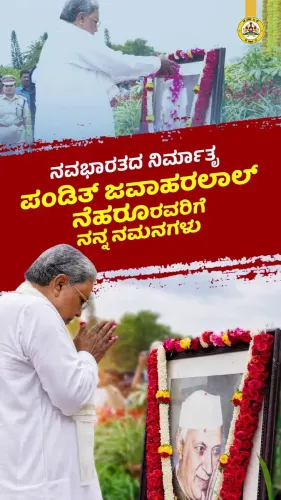
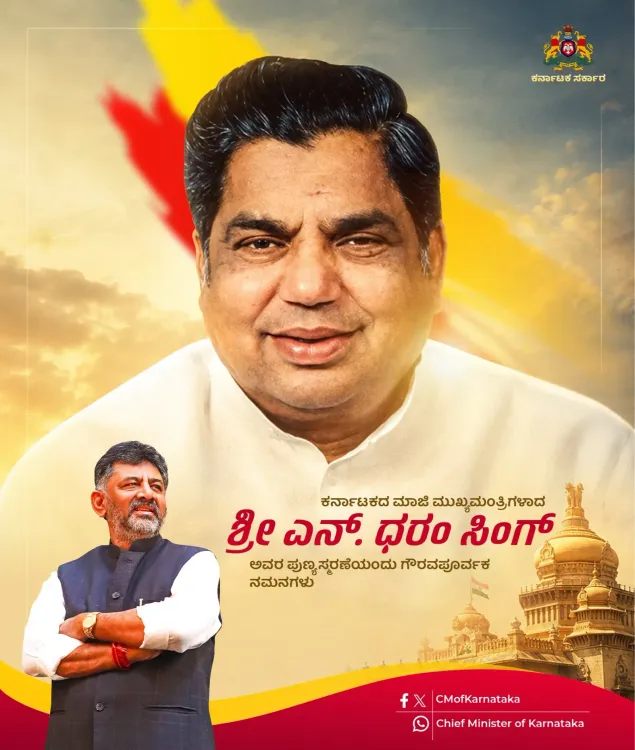
The Chief Minister's Office of Karnataka on 27 July 2026 paid homage to late former CM N. Dharam Singh on his death anniversary, calling him 'Ajatashatru' and 'friend of the poor' and honouring his contributions to backward classes and Karnataka's holistic development.
Key Takeaways
The Chief Minister's Office of Karnataka posted a death-anniversary tribute to former CM N.
Dharam Singh on 27 July 2026 .
Dharam Singh is described as 'Ajatashatru' (one without enemies) and 'Badavara Bandhu' (friend of the poor) in the Kannada-language post.
He served as Chief Minister of Karnataka from 2004 to 2006 , heading a Congress–JD(S) coalition government.
His tenure focused on welfare measures for backward classes, weaker sections, and minorities under the coalition's common minimum programme.
The tribute underscores Karnataka's political tradition of acknowledging past leaders' contributions to inclusive development and regional balance.
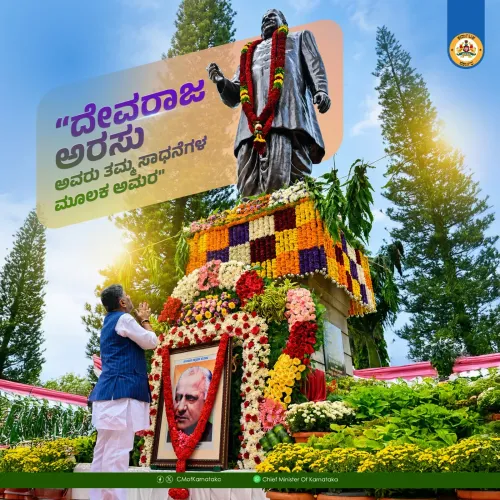
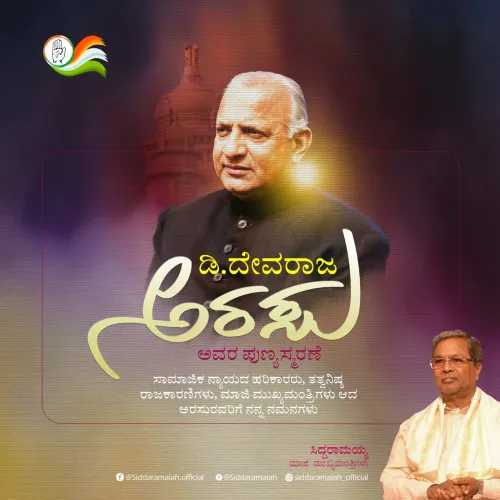
The Chief Minister's Office of Karnataka on Monday, 27 July 2026 paid tribute to late N. Dharam Singh, former Chief Minister of the state, on his death anniversary, honouring his contributions to backward classes, weaker sections, and the overall development of Karnataka.
The post, written in Kannada, described Dharam Singh as 'Ajatashatru' ('one without enemies') and 'Badavara Bandhu' ('friend of the poor') — epithets that reflect the esteem in which he is held in Karnataka's political memory. The office stated that his contributions to the welfare of backward and weaker sections and to the holistic development of the state 'will always be remembered.'
Context
N. Dharam Singh served as Chief Minister of Karnataka from 2004 to 2006, leading a coalition government formed by the Indian National Congress and the Janata Dal (Secular) after the state assembly elections produced a hung house. His tenure was marked by efforts to reach out to socially disadvantaged communities, minorities, and rural populations as part of the coalition's common minimum programme.
Dharam Singh was widely regarded as a consensus builder, a quality captured in the honorific 'Ajatashatru' — a leader who made few political enemies. His identity as a voice for the poor gave him a durable legacy that successive governments across party lines have acknowledged.
Policy Backdrop
The 2004–2006 coalition government under Dharam Singh introduced a range of measures targeting backward classes, weaker sections, and minority communities as commitments under the coalition's shared agenda. These welfare orientations were consistent with Karnataka's broader tradition of balancing developmental priorities between the more prosperous southern districts and the historically underserved northern regions of the state.
Karnataka politics has a recurring pattern of recognising coalition-era Chief Ministers for their inclusive governance, and death-anniversary tributes by the state government are a standard feature of this political culture. Such acknowledgements also serve to keep alive the policy narratives associated with past administrations.
Stakeholders and Impact
The tribute specifically highlights Dharam Singh's work for backward classes and weaker sections — constituencies that remain central to Karnataka's electoral and policy landscape. His legacy is particularly resonant among rural communities and socially marginalised groups across the state.
By invoking Dharam Singh's memory, the Chief Minister's Office signals continuity with a welfare-oriented governance tradition, reinforcing the current administration's positioning on social equity and inclusive development.
What's Next
Observers of Karnataka politics will watch for references to schemes or welfare programmes initiated during the 2004–2006 coalition period in upcoming state budget speeches or party platforms ahead of future assembly elections. Death-anniversary tributes of this nature often serve as a precursor to policy announcements or renewed commitments to the communities a former leader championed.
The broader pattern suggests that Dharam Singh's legacy — particularly his association with backward-class welfare and north Karnataka development — will continue to be invoked as a political and policy touchstone in the state.
Point of View
Constituencies that remain electorally decisive. The epithets 'Ajatashatru' and 'Badavara Bandhu' are carefully chosen, projecting an image of consensus and pro-poor governance that the current administration seeks to associate itself with. In a state where coalition arithmetic and social-equity narratives shape every election cycle, such tributes function as subtle policy signals as much as acts of remembrance. The pattern suggests that the legacy of the 2004–2006 coalition era will be actively mobilised in Karnataka's political discourse in the period ahead.
NationPress
27 Jul 2026
Frequently Asked Questions
Who was N. Dharam Singh?
N. Dharam Singh was a veteran Congress politician who served as Chief Minister of Karnataka from 2004 to 2006, heading a Congress–JD(S) coalition government formed after a hung assembly.
Why is N. Dharam Singh called 'Badavara Bandhu'?
'Badavara Bandhu' means 'friend of the poor' in Kannada, a title given to N. Dharam Singh in recognition of his focus on welfare programmes for backward classes, weaker sections, and rural communities during his tenure as Chief Minister.
What did N. Dharam Singh do for backward classes in Karnataka?
During his 2004–2006 government, N. Dharam Singh introduced measures targeting backward classes, minorities, and weaker sections as part of the Congress–JD(S) coalition's common minimum programme, prioritising inclusive development across the state.
When did the Karnataka CMO pay tribute to N. Dharam Singh in 2026?
The Chief Minister's Office of Karnataka posted its tribute to N. Dharam Singh on Monday, 27 July 2026, marking his death anniversary.
What does 'Ajatashatru' mean and why was it used for N. Dharam Singh?
'Ajatashatru' is a Sanskrit term meaning 'one who has no enemies,' used to describe N. Dharam Singh's reputation as a consensus-building, non-divisive political leader who commanded respect across party lines in Karnataka.