Kejriwal pays tribute to Kalam on death anniversary

Synopsis
AAP convenor Arvind Kejriwal marked Dr. A.P.J. Abdul Kalam's death anniversary on 27 July 2026, honouring the former President's lifelong dedication to science education and reiterating that India can achieve developed-nation status only by following the path Kalam showed.
Key Takeaways
AAP convenor Arvind Kejriwal posted a tribute to Dr.
Abdul Kalam on his death anniversary, 27 July 2026 .
Kejriwal highlighted Kalam's dedication to inspiring students' interest in science and building a brighter future for youth.
He noted that Kalam always wished to be remembered as a teacher , not merely as a president or scientist.
Kejriwal stated that India can become a developed nation only by following Kalam's path of education and science.
Kalam served as India's 11th President (2002-2007) and was a pioneering aerospace scientist behind the country's missile and nuclear programmes.
AAP has consistently linked its Delhi school-reform agenda to Kalam's vision of science-driven national progress.
AAP convenor Arvind Kejriwal on Monday, 27 July 2026 paid tribute to former President Dr. A.P.J. Abdul Kalam on his death anniversary, calling on the nation to follow the path of education and science that Kalam championed to achieve developed-nation status.
Context
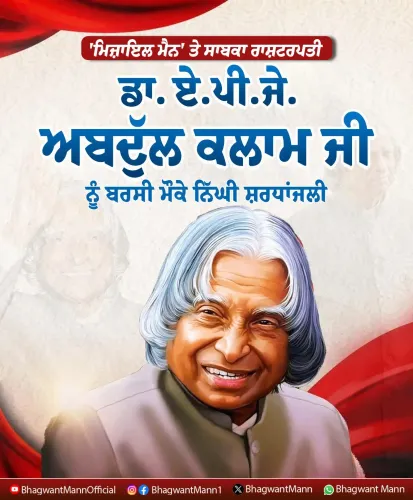
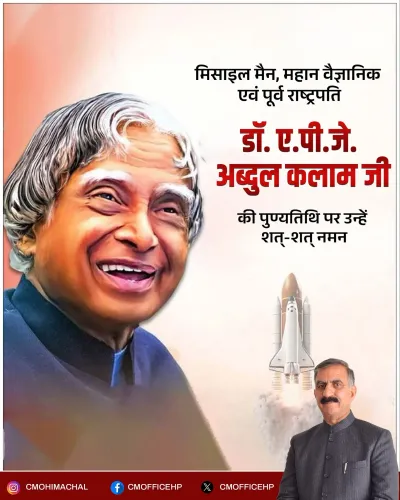
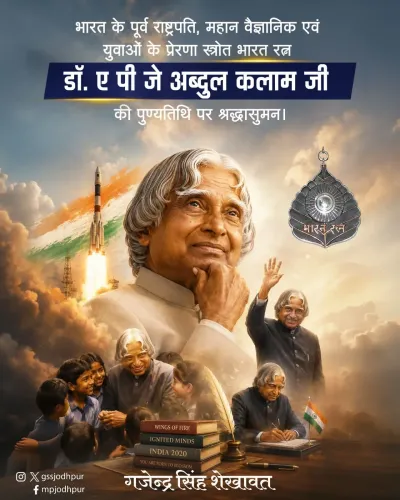
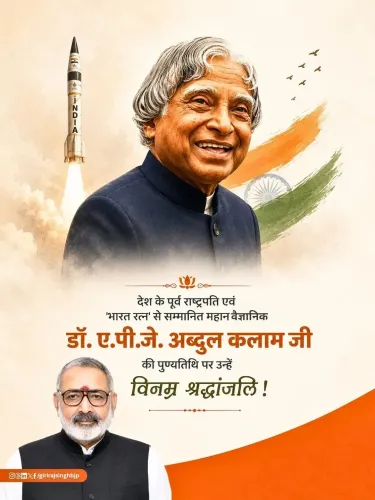
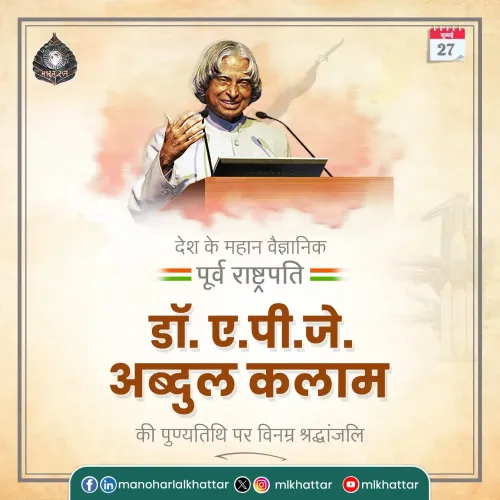
Kejriwal posted his tribute in Hindi on X, writing: 'भारत के पूर्व राष्ट्रपति डॉ. ए.पी.जे. अब्दुल कलाम जी की पुण्यतिथि पर उन्हें विनम्र श्रद्धांजलि' ('Humble tribute to former President of India Dr. A.P.J. Abdul Kalam on his death anniversary'). He recalled that Kalam was always dedicated to awakening a love of science among students and brightening their futures, and that Kalam himself wished to be remembered as a teacher above all else.
Kalam passed away on 27 July 2015 while delivering a lecture at the Indian Institute of Management, Shillong. His death anniversary has since become an occasion for political leaders, educators, and scientists across India to reflect on his legacy of scientific temper and inclusive education.
Policy Backdrop
Dr. Kalam served as India's 11th President from 2002 to 2007, having earlier been a central figure in the country's missile and nuclear programmes as a leading aerospace scientist. During his presidency he repeatedly invoked 'Vision 2020', a framework linking scientific education and economic self-reliance to India's aspiration of becoming a developed nation by that year.
Kejriwal's tribute lands against the backdrop of his party's sustained emphasis on school reform. The Delhi government's education push from 2015 onwards included infrastructure modernisation across hundreds of government schools, free textbooks, and regular teacher-training programmes — initiatives AAP leaders have frequently connected to Kalam's vision of science-driven national progress. Kejriwal concluded his post by saying: 'Only by walking the path of education and science shown by him can our India become a developed nation.'
Stakeholders and Impact
The tribute is directed at students, teachers, and the broader scientific community, groups that Kalam spent decades engaging through lectures, books, and public outreach. His insistence on being remembered as a teacher rather than a president or scientist resonated widely with school and college communities across the country.
Political figures across party lines routinely mark 27 July with statements honouring Kalam, reflecting a rare cross-partisan consensus on his legacy. For AAP, the day also serves as a platform to underline the party's education-reform credentials at a time when the National Education Policy continues to shape debates around gross enrolment ratios and research output in Indian institutions.
What's Next
Attention will turn to whether state governments, including Delhi, announce fresh science-outreach programmes or education-budget allocations around this anniversary. Progress reports on National Education Policy implementation — particularly targets for STEM expansion and teacher capacity — will be a key measure of how far India has moved toward the developed-nation ambition that both Kalam and Kejriwal have invoked.
As India's policymakers debate the pace of educational reform, Kalam's death anniversary is likely to remain a recurring moment for leaders to benchmark national commitments against the scientist-president's enduring call for a knowledge-driven society.
Point of View
The party reinforces its own brand as the custodian of education reform in India's most visible state. The timing — on the death anniversary when cross-party tributes flood public discourse — allows AAP to stand out by tying the homage explicitly to a policy argument about developed-nation ambition. This is part of a consistent pattern in which AAP frames its Delhi school investments not as local governance wins but as national-scale contributions to a Kalam-style vision. Analysts will note that the tribute also implicitly positions education spending as a counter-narrative to critics who question AAP's governance record beyond schooling.
NationPress
25 Oct 2026
Frequently Asked Questions
When did APJ Abdul Kalam pass away?
Dr. A.P.J. Abdul Kalam passed away on 27 July 2015 while delivering a lecture at the Indian Institute of Management in Shillong, Meghalaya.
Why did Arvind Kejriwal pay tribute to Kalam in 2026?
Kejriwal posted the tribute on 27 July 2026 , the 11th death anniversary of Dr. Kalam, as part of the annual national observance honouring the former President's legacy in science and education.
What did Kalam want to be remembered as?
Dr. Kalam consistently expressed the wish to be remembered as a teacher rather than as a president or scientist, a sentiment Kejriwal specifically highlighted in his tribute.
What is APJ Abdul Kalam's connection to India's science programmes?
Dr. Kalam was a leading aerospace scientist who played a central role in India's missile and nuclear programmes before serving as the country's 11th President from 2002 to 2007 .
How does AAP link its education work to Kalam's vision?
AAP leaders frequently connect their Delhi government school reforms — including infrastructure upgrades and teacher training introduced from 2015 — to Kalam's 'Vision 2020' framework that tied scientific education to India's developed-nation aspirations.