CM Pema Khandu Backs HOP's Organic Push in Northeast
Synopsis
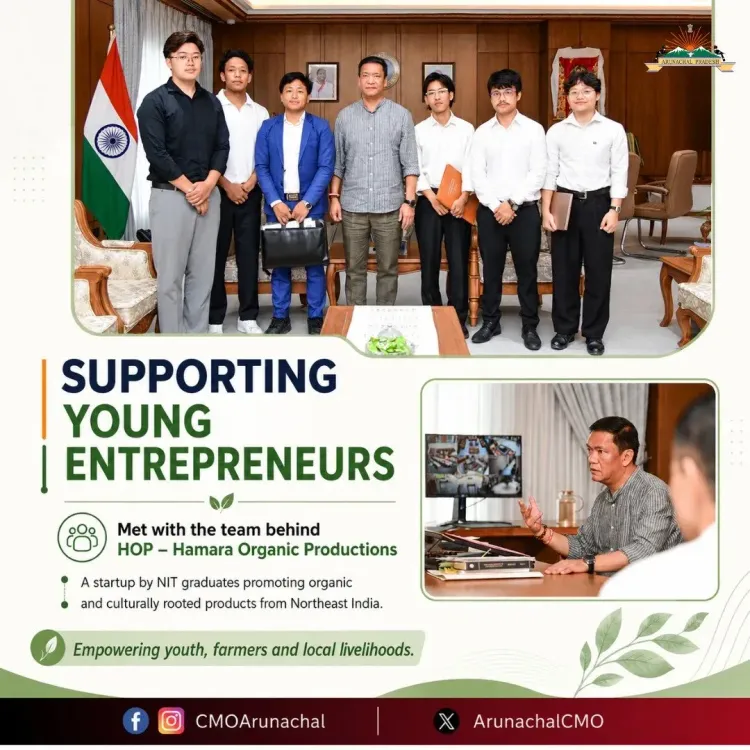
Chief Minister Pema Khandu met the Hamara Organic Productions (HOP) team on 22 May 2026, applauding their role in promoting Northeast India's organic products and encouraging youth-led local value creation in Arunachal Pradesh.
Key Takeaways
CM Pema Khandu met the HOP (Hamara Organic Productions) team on 22 May 2026 in Arunachal Pradesh .
The Chief Minister appreciated HOP's efforts in promoting organic products from Northeast India .
The meeting underscored the state's support for youth-led entrepreneurship and local value creation .
The engagement aligns with the central Mission Organic Value Chain Development for North Eastern Region (MOVCDNER) , launched in 2015-16 .
The initiative connects to the Atmanirbhar Bharat framework promoting self-reliant, locally rooted enterprises.
Arunachal Pradesh's biodiversity positions it as a strong candidate for certified organic product exports.
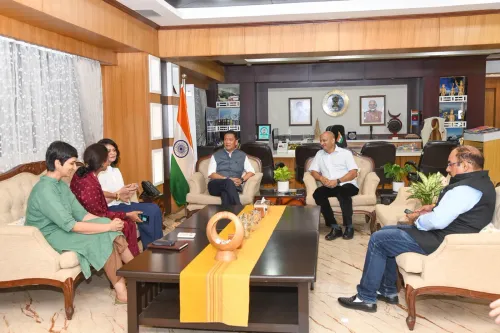
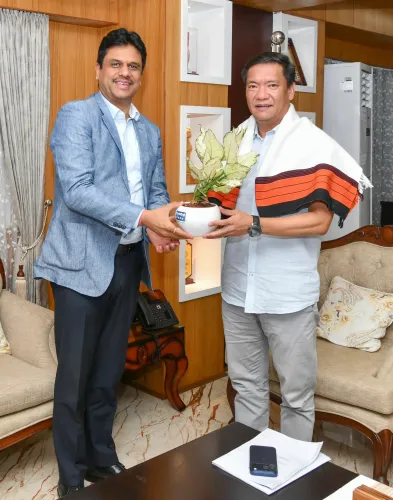
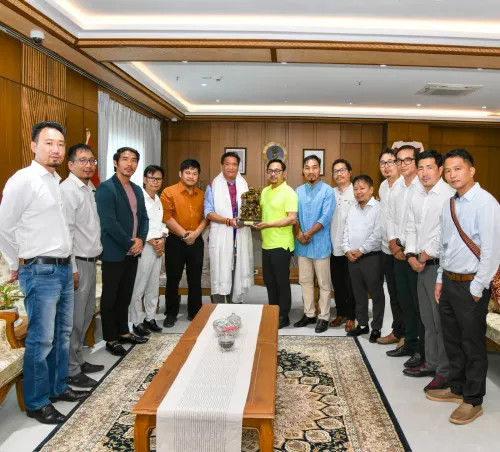
The Chief Minister's Office of Arunachal Pradesh announced on Friday, 22 May 2026, that Chief Minister Pema Khandu met the team of HOP (Hamara Organic Productions) and appreciated their work in promoting organic products from Northeast India, underscoring the state's commitment to youth-led entrepreneurship and local value creation.
Context
The meeting signals a direct engagement by the Arunachal Pradesh government with homegrown organic enterprises seeking to convert the region's biodiversity into marketable, value-added products. CM Khandu's appreciation for HOP's efforts highlights the growing importance the state places on building local brands that can compete in national and international markets. The encounter also reflects the administration's intent to position youth entrepreneurs at the centre of the state's economic transformation.
Policy Backdrop
The engagement fits squarely within the framework of the Mission Organic Value Chain Development for North Eastern Region (MOVCDNER), a central scheme introduced in 2015-16 to develop certified organic clusters, strengthen value-addition infrastructure, and improve marketing linkages across the eight northeastern states. Sikkim's achievement of full organic certification in 2016 set a benchmark that states like Arunachal Pradesh have been working toward, leveraging their largely chemical-free farming traditions. These efforts also align with the broader Atmanirbhar Bharat framework, which encourages self-reliant, locally rooted micro-enterprises.
Stakeholders and Impact
For organic farmers and youth entrepreneurs in Arunachal Pradesh, a chief ministerial endorsement of an enterprise like HOP carries practical significance — it signals potential policy support, easier access to state-backed certification pathways, and stronger market linkages. The Northeast's agricultural sector, characterised by traditional low-chemical-input practices, holds a natural advantage in organic certification, and enterprises that can bridge the gap between farm and consumer stand to benefit most. Local value creation of this kind also reduces the region's dependence on external supply chains, a long-standing economic vulnerability.
What's Next
Observers will watch whether the meeting translates into concrete state-level measures — such as facilitated organic certification, dedicated market access programmes, or export promotion support — for enterprises like HOP and others operating in the organic space. Arunachal Pradesh's rich biodiversity, spanning temperate, subtropical, and alpine zones, offers a wide canvas for certified organic products that could find premium markets both domestically and abroad. If the state follows through with structured support, the HOP model could serve as a replicable template for youth-led agri-enterprises across the Northeast.
Frequently Asked Questions
What is HOP or Hamara Organic Productions?
HOP stands for Hamara Organic Productions, a youth-led enterprise promoting organic products from Northeast India. Chief Minister Pema Khandu met the HOP team on 22 May 2026 and appreciated their work in local value creation.
What is CM Pema Khandu's role in Arunachal Pradesh?
Pema Khandu has served as the Chief Minister of Arunachal Pradesh since 2016 , with a focus on agriculture, infrastructure development, and youth entrepreneurship in the state.
What is MOVCDNER and how does it relate to Arunachal Pradesh?
The Mission Organic Value Chain Development for North Eastern Region (MOVCDNER) is a central government scheme launched in 2015-16 to promote certified organic farming and value addition across the eight northeastern states, including Arunachal Pradesh .
Why is Northeast India important for organic farming?
Northeast India's farming traditions rely on low chemical inputs, giving the region a natural advantage in organic certification. States like Arunachal Pradesh are working to convert this advantage into certified organic value chains that raise rural incomes and create local brands.
What support can organic startups expect from the Arunachal Pradesh government?
Following CM Khandu's meeting with HOP, observers expect potential state-level measures including facilitated organic certification, market linkages, and export promotion support for youth-led agri-enterprises in Arunachal Pradesh .