CM Pema Khandu backs SEE Learning drive across Arunachal
Synopsis
Chief Minister Pema Khandu has backed the DoKAA-led Social, Emotional and Ethical Learning programme after a workshop in Tawang, calling for its rollout across Arunachal Pradesh and emphasising holistic, compassion-centred education.
Key Takeaways
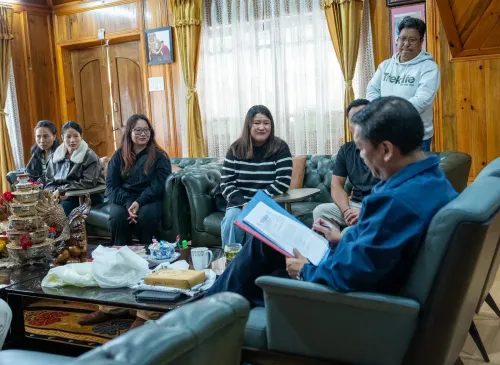
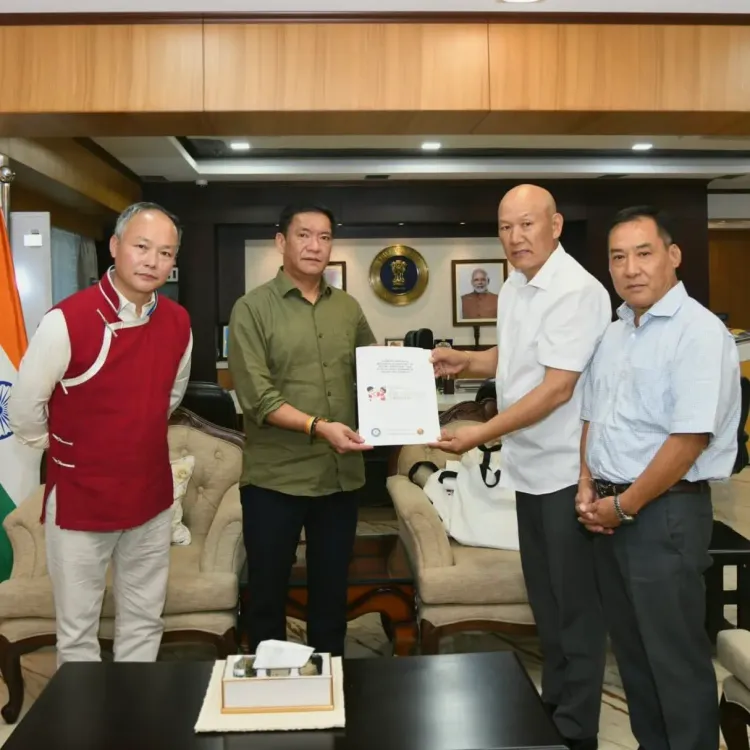
CM Pema Khandu met members of the Department of Karmik and Adhyatmik Affairs (DoKAA) on 25 September 2026 to receive a briefing on SEE Learning.
A Social, Emotional and Ethical (SEE) Learning workshop was recently conducted in Tawang , Arunachal Pradesh.
SEE Learning focuses on compassion, emotional resilience, and ethical reasoning as complements to academic education.
The initiative aligns with the National Education Policy 2020 , which mandates integration of value-based learning in schools.
Khandu called for the programme to be scaled across the state, signalling potential expansion beyond the Tawang pilot.
DoKAA is a unique Arunachal Pradesh government body dedicated to spiritual and ethical affairs.
When Arunachal Pradesh Chief Minister Pema Khandu received members of the Department of Karmik and Adhyatmik Affairs (DoKAA) on Friday, 25 September 2026, the conversation centred on something rarely heard in a chief minister's office: the education of the heart alongside the education of the mind.
The DoKAA team briefed CM Khandu on the Social, Emotional and Ethical (SEE) Learning programme and a recently concluded workshop held in Tawang, the high-altitude district that carries centuries of Buddhist monastic tradition. Khandu congratulated the entire team for the 'successful conduct of the programme' and extended his best wishes for scaling the initiative across the state.
What the SEE Learning framework actually does
SEE Learning is a curriculum framework built around compassion, emotional resilience, and ethical reasoning — qualities that conventional subject-based education rarely measures. The programme is designed to work inside formal schooling, giving teachers structured tools to cultivate self-awareness and empathy in students rather than leaving those capacities to chance.
For a state like Arunachal Pradesh, which is home to diverse indigenous communities and a strong Tibetan-Buddhist cultural heritage, the framework finds particularly fertile ground. Tawang's centuries-old monastic tradition already embeds many of the values SEE Learning formalises, making the district a natural pilot site.
DoKAA's role and the NEP 2020 connection
The Department of Karmik and Adhyatmik Affairs is a distinctive feature of Arunachal Pradesh's administrative architecture — a government body explicitly charged with spiritual, ethical, and karmic affairs initiatives. Its engagement with SEE Learning reflects a broader state strategy of weaving value-based education into institutional frameworks rather than treating ethics as an extracurricular afterthought.
That strategy aligns closely with the National Education Policy 2020, which calls on states to integrate social, emotional, and value-based learning into school education from the ground up. Arunachal Pradesh's push through DoKAA gives NEP 2020's softer mandates a concrete, state-level engine.
The road from Tawang to the rest of Arunachal
With the Tawang workshop behind it, the immediate question is reach. Arunachal Pradesh spans 83,743 square kilometres of difficult terrain, with schools serving students across remote valleys and mountain passes where access is a perennial challenge. Whether SEE Learning workshops move district by district — and whether the programme eventually earns formal inclusion in the state school curriculum — will determine whether this remains a promising pilot or becomes a structural shift in how the state educates its children.
For now, CM Khandu's public endorsement sends a clear signal: holistic education is state policy, not just a departmental experiment.
Point of View
Positioning holistic education as a cultural and ethical project, not merely a curriculum reform. It also gives Arunachal Pradesh a distinct identity within the NEP 2020 implementation race, leveraging the state's Buddhist heritage as a policy asset. The use of DoKAA as the institutional vehicle is notable: it signals that the state views value-based education as inseparable from its broader spiritual governance philosophy. Watch for whether this translates into budget allocations and formal curriculum integration, or remains at the level of workshops.
NationPress
25 Sept 2026
Frequently Asked Questions
What is SEE Learning and which states have adopted it?
SEE Learning stands for Social, Emotional and Ethical Learning — a curriculum framework that builds compassion, emotional resilience, and ethical reasoning in students alongside academic subjects. Arunachal Pradesh, through its Department of Karmik and Adhyatmik Affairs, has piloted the programme with a workshop in Tawang. Several Indian states have adopted social-emotional learning modules, particularly in regions with strong cultural or religious educational traditions.
What is the Department of Karmik and Adhyatmik Affairs (DoKAA) in Arunachal Pradesh?
DoKAA is a government department of Arunachal Pradesh responsible for initiatives related to spiritual, ethical, and karmic affairs. It is a distinctive feature of the state's administration and has been driving the SEE Learning programme as part of its mandate to promote ethical and holistic development.
How does SEE Learning connect to NEP 2020?
The National Education Policy 2020 explicitly calls for the integration of social, emotional, and value-based learning into school education across India. The SEE Learning programme being promoted by Arunachal Pradesh directly aligns with this mandate, giving NEP 2020's holistic education goals a concrete state-level implementation framework.
Why was the SEE Learning workshop held in Tawang?
Tawang is a district in Arunachal Pradesh with a strong Tibetan-Buddhist cultural and monastic heritage, making it a natural fit for a programme centred on compassion and ethical learning. The district's traditional educational values closely mirror the principles of the SEE Learning framework.
Will SEE Learning be rolled out across all of Arunachal Pradesh?
Chief Minister Pema Khandu has publicly endorsed the initiative and expressed his best wishes for it to be taken forward across the state. The next steps to watch are whether workshops expand district by district and whether the programme is formally included in the Arunachal Pradesh school curriculum.