CM Khandu hails APIIP Cohort 5.0 founder bootcamp
Synopsis
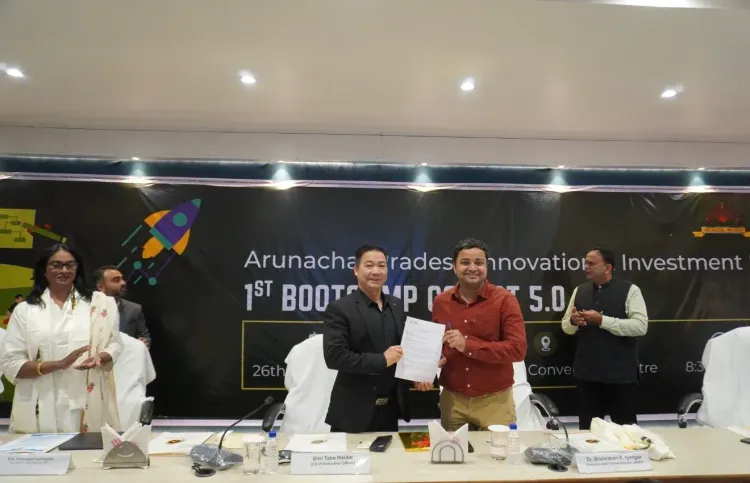
Chief Minister Pema Khandu praised the first APIIP Cohort 5.0 bootcamp after over 90 aspiring entrepreneurs gathered from across Arunachal Pradesh. He thanked mentors and flagged a collaboration with XLRI's XCITE to strengthen rural entrepreneurship, saying youth should become job creators at home.
Key Takeaways
Arunachal Pradesh Chief Minister Pema Khandu on 27 November 2026 hailed the first bootcamp of APIIP Cohort 5.0.
He said over 90 aspiring entrepreneurs from across the state came together for the programme.
Khandu thanked APIIP, resource persons and partner institutions for mentorship and business insights.
He called collaboration with XLRI 's XCITE a welcome step for rural entrepreneurship.
He said Arunachal's vision is for youth to be job creators who build businesses in the state.
The first test of Arunachal's newest founder cohort is already in the room. More than 90 aspiring entrepreneurs from across the state have come together for the opening bootcamp of APIIP Cohort 5.0, and on 27 November 2026 Arunachal Pradesh Chief Minister Pema Khandu called that turnout a sign the hills can grow job creators, not just job seekers.
In a post on X, Khandu said it was 'encouraging to see over 90 aspiring entrepreneurs from across Arunachal Pradesh come together for the first bootcamp under Arunachal Pradesh Innovation and Investment Park APIIP's Cohort 5.0.' He recorded his appreciation to APIIP, distinguished resource persons and partner institutions for mentorship and practical business insights.
APIIP Cohort 5.0 and the XLRI XCITE link
The Chief Minister also called collaboration with XLRI's XCITE a welcome step towards strengthening rural entrepreneurship. XLRI, the Jamshedpur-based management school, has long run entrepreneurship programmes. Pairing it with a state innovation park fits a wider Northeast pattern of grafting national institutions onto local incubation since Startup India launched in 2016.
Khandu's economic line was unambiguous. 'Our vision is to build an economy where our youth are not just job seekers but also job creators,' he wrote. The state, he added, wants to nurture local ideas, support innovative enterprises and create opportunities for young people to build successful businesses 'right here in Arunachal Pradesh.'
Why a hill-state bootcamp matters now
Arunachal has been trying to keep talent from leaving for the metros and to loosen an economy still heavily dependent on government employment. Innovation parks, founder bootcamps and ties with established business schools are the practical tools of that shift. Cohort 5.0's first bootcamp is one more test of whether those tools reach founders beyond a handful of urban networks.
The next scorecard is concrete: how many ventures actually launch from this cohort, and whether follow-on state funding or policy support shows up in the coming budget cycle. For a frontier state, the question is not whether the hall was full. It is whether the jobs stay in the hills.
Point of View
Trying to keep talent from draining to metros. Khandu's Cohort 5.0 message sits squarely in that arc: a state park, an XLRI XCITE rural-enterprise link, and an explicit shift from government jobs to founder jobs. The politics are straightforward. Delivery will be counted in surviving ventures and whether the next budget puts money behind the mentorship.
NationPress
27 Nov 2026
Frequently Asked Questions
What is APIIP in Arunachal Pradesh?
APIIP is the Arunachal Pradesh Innovation and Investment Park, a state initiative to promote innovation, investment and entrepreneurship. Chief Minister Pema Khandu highlighted its Cohort 5.0 bootcamp for aspiring founders.
How many entrepreneurs joined the APIIP Cohort 5.0 bootcamp?
Chief Minister Pema Khandu said over 90 aspiring entrepreneurs from across Arunachal Pradesh came together for the first bootcamp under APIIP Cohort 5.0. Independent details of the cohort timeline were not set out in his post.
What is XLRI XCITE's role in Arunachal?
Khandu described collaboration with XLRI's XCITE as a welcome step towards strengthening rural entrepreneurship in the state. XLRI is a premier management school based in Jamshedpur.
What did Pema Khandu say about jobs in Arunachal Pradesh?
He said the vision is to build an economy where youth are not just job seekers but also job creators. He added that the state wants to nurture local ideas and support innovative enterprises at home.
When did Pema Khandu comment on the APIIP bootcamp?
He posted on 27 November 2026, praising the first Cohort 5.0 bootcamp, mentors, partner institutions and the XLRI XCITE collaboration.