CM Pema Khandu Calls for Greener Future on World Environment Day
Synopsis
Arunachal Pradesh Chief Minister Pema Khandu used World Environment Day on 5 June 2026 to call for renewed commitment to protecting forests, rivers, wildlife, and natural resources, urging collective action for a greener and sustainable future.
Key Takeaways
CM Pema Khandu posted a World Environment Day message on 5 June 2026 calling for protection of forests, rivers, wildlife, and natural resources.
Arunachal Pradesh has over 80 percent forest cover, making it one of India's most ecologically significant states.
The state released its State Action Plan on Climate Change in 2014 , targeting local adaptation and biodiversity protection.
National frameworks including the Green India Mission and CAMPA underpin Arunachal's conservation efforts.
The state faces development pressures from road construction, hydropower projects, and border infrastructure alongside conservation goals.
Budget allocations for afforestation in the 2026-27 fiscal session will be a key indicator of the government's environmental priorities.
Arunachal Pradesh Chief Minister Pema Khandu on Friday, 5 June 2026 marked World Environment Day with a public call to renew collective commitment to protecting forests, rivers, wildlife, and natural resources, urging citizens to work toward a greener and more sustainable world.
Context
World Environment Day, observed every year on 5 June under the United Nations framework, is the principal global platform for raising awareness and driving action on pressing environmental concerns. This year's observance comes as nations worldwide face mounting pressure to balance development with ecological preservation.
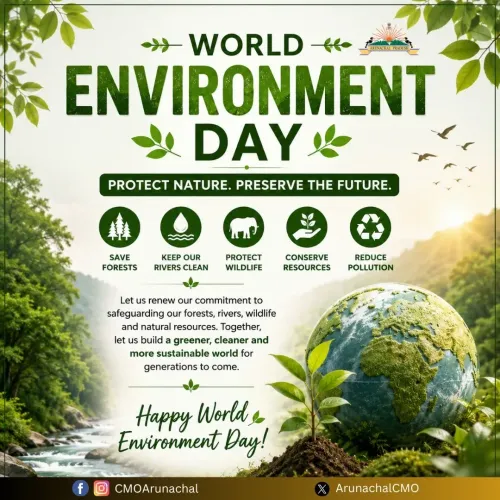
CM Khandu posted on X: 'Let us renew our commitment to protecting our forests, rivers, wildlife, and natural resources. A clean and healthy environment is the foundation of a prosperous future for generations to come.' He added a call to 'work together to preserve nature and build a greener, more sustainable world.'
Policy Backdrop
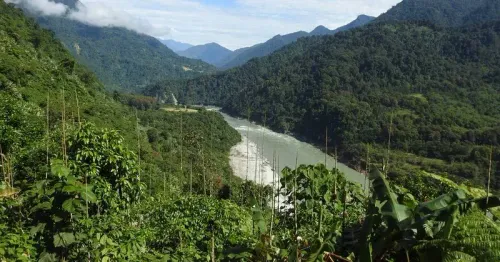
Arunachal Pradesh is among India's most ecologically significant states, with over 80 percent of its land under forest cover and a rich biodiversity corridor spanning the Eastern Himalayas. The state sits at the heart of one of the world's recognised biodiversity hotspots, home to rare flora, fauna, and river systems that sustain millions downstream.
India's National Action Plan on Climate Change (2008) laid the groundwork for the Green India Mission, aimed at expanding and improving forest cover nationally. Arunachal Pradesh followed with its own State Action Plan on Climate Change in 2014, targeting local adaptation measures and biodiversity protection. National schemes such as CAMPA (Compensatory Afforestation Fund Management and Planning Authority) and the Forest Rights Act have since shaped the state's conservation framework.
Stakeholders and Impact
The state's ecological health directly affects indigenous communities and forest-dependent populations who rely on these ecosystems for their livelihoods, food security, and cultural identity. Any shift in forest policy or conservation spending carries immediate consequences for these groups.
At the same time, Arunachal Pradesh faces persistent development pressures — from road construction and border infrastructure to a growing pipeline of hydropower projects on its river systems. Successive state governments, including the current BJP-led administration, have sought to balance conservation commitments with economic growth imperatives under national development mandates.
What's Next
While CM Khandu's post reflects the annual observance rather than a specific new policy announcement, attention now turns to the 2026-27 state budget session, where allocations for afforestation programmes and any updates to Arunachal's State Action Plan on Climate Change are expected to signal the government's concrete environmental priorities.
Advocates for the region's biodiversity will be watching closely to see whether the renewed public commitment translates into measurable budget outlays and on-ground conservation action in the months ahead.
Point of View
But its context carries weight: Arunachal Pradesh is simultaneously one of India's greenest states and one of its most contested development frontiers. The message fits a pattern where state leadership uses high-visibility UN calendar events to reinforce conservation credentials without committing to specific new measures. The real test will come in the 2026-27 budget, where afforestation and climate adaptation spending will reveal how far the rhetoric translates into resource allocation. For a BJP-governed state navigating both ecological mandates and infrastructure-heavy border development, the balance between these two imperatives remains the defining environmental challenge.
NationPress
21 Oct 2026
Frequently Asked Questions
Why did Pema Khandu post about World Environment Day?
Arunachal Pradesh CM Pema Khandu posted on World Environment Day, 5 June 2026, to renew public commitment to protecting forests, rivers, wildlife, and natural resources, and to call for collective action toward a greener and sustainable world.
What is Arunachal Pradesh's forest cover percentage?
Arunachal Pradesh has over 80 percent of its land under forest cover, making it one of the states with the highest forest-cover percentage in India and a key part of the Eastern Himalayan biodiversity corridor.
What is India's Green India Mission?
The Green India Mission is one of eight missions under India's National Action Plan on Climate Change, launched in 2008, aimed at expanding and improving the quality of India's forest cover and enhancing ecosystem services.
What is CAMPA and how does it relate to Arunachal Pradesh?
CAMPA, or the Compensatory Afforestation Fund Management and Planning Authority, channels funds collected when forest land is diverted for development back into afforestation and forest conservation, and is one of the key national schemes shaping Arunachal Pradesh's conservation framework.
What environmental challenges does Arunachal Pradesh face?
Arunachal Pradesh faces development pressures from road construction, hydropower projects, and border infrastructure expansion, which create ongoing tensions with the state's conservation commitments and the livelihoods of indigenous and forest-dependent communities.