Arunachal CMO Marks World Environment Day 2026

Synopsis
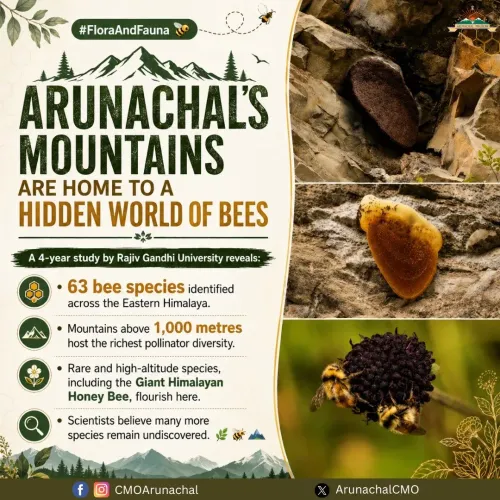
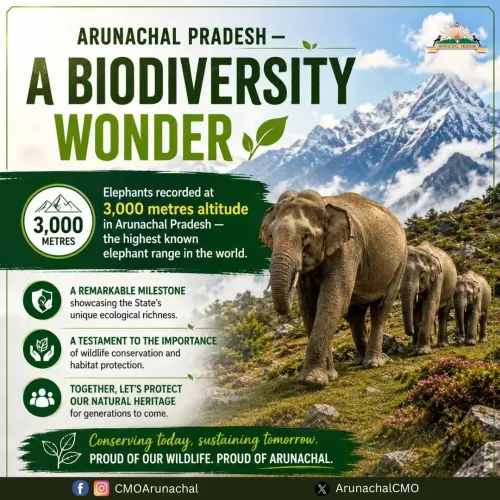
The Chief Minister's Office of Arunachal Pradesh marked World Environment Day on 5 June 2026 with a call to protect nature and conserve biodiversity, underscoring the state's role as a critical ecological buffer in the Eastern Himalayas biodiversity hotspot.
Key Takeaways
The Chief Minister's Office of Arunachal Pradesh posted World Environment Day greetings on 5 June 2026 .
World Environment Day is an annual UN observance established in 1972 by the General Assembly.
Arunachal Pradesh has over 80 percent forest cover and lies within the Eastern Himalayas biodiversity hotspot.
India's National Forest Policy of 1988 set a 33 percent national forest cover target with special emphasis on hill and tribal regions.
The Biological Diversity Act, 2002 mandates state biodiversity boards to protect local ecosystems and traditional knowledge.
Indigenous tribal communities and forest-dependent populations are the primary stakeholders in the state's environmental commitments.
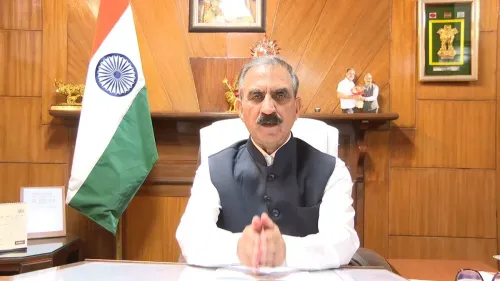
The Chief Minister's Office of Arunachal Pradesh on Friday, 5 June 2026 extended greetings on World Environment Day, calling on citizens to reaffirm their commitment to protecting nature, conserving biodiversity, and building a greener and more sustainable future.
Context
World Environment Day is observed every year on 5 June under the aegis of the United Nations, a tradition established by the UN General Assembly through resolution 2994 in 1972. The day serves as the principal global platform for raising awareness and galvanising political will around pressing environmental challenges. The CMO's post urged collective resolve, stating: 'Let us reaffirm our commitment to protecting nature, conserving biodiversity and building a greener, healthier and more sustainable future for all.'
Policy Backdrop
Arunachal Pradesh sits within the Eastern Himalayas, one of the world's foremost biodiversity hotspots, and retains over 80 percent forest cover — among the highest of any Indian state. This ecological standing gives the state's environmental messaging particular resonance in national and international policy circles. India's National Forest Policy of 1988 set a national target of 33 percent forest cover and placed special emphasis on conservation in hill and tribal regions, a mandate that Arunachal's dense forests substantially advance.
At the legislative level, the Biological Diversity Act, 2002 created state biodiversity boards tasked with documenting and protecting local ecosystems and traditional knowledge. Northeastern states have consistently been framed in policy discourse as critical ecological buffers whose forests deliver carbon sequestration and watershed services to downstream regions across South Asia.
Stakeholders and Impact
The state's indigenous tribal communities and forest-dependent populations are the most immediate stakeholders in any environmental commitment made by the government. Their livelihoods, cultural practices, and food security are directly tied to the health of the forests and rivers that the CMO's message seeks to protect. Broader beneficiaries include downstream populations across the Brahmaputra basin who depend on Arunachal's watersheds for water security.
Indian state governments routinely issue World Environment Day statements that connect local biodiversity assets to obligations under the Convention on Biological Diversity and the UN Sustainable Development Goals. For a frontier state like Arunachal Pradesh, where infrastructure expansion along sensitive border areas has repeatedly prompted debate over compensatory afforestation, such reaffirmations carry added policy weight.
What's Next
Observers will watch for the release of the next State of Environment Report for Arunachal Pradesh and any fresh notifications of biodiversity management committees under the Biological Diversity Act, 2002. As climate pressures on the Eastern Himalayas intensify, the state's ability to translate ceremonial commitments into enforceable conservation policy will be a key measure of its environmental governance in the years ahead.
Point of View
And official reaffirmations of conservation intent feed into India's broader commitments under the Convention on Biological Diversity and the Paris Agreement. At a time when infrastructure expansion in border states is accelerating, the tension between development imperatives and ecological preservation makes such statements worth tracking for follow-through. The real test will be whether ceremonial messaging translates into concrete actions such as new biodiversity management committee notifications or updated state environment reports.
NationPress
21 Oct 2026
Frequently Asked Questions
When is World Environment Day celebrated?
World Environment Day is celebrated every year on 5 June . It was established by the UN General Assembly in 1972 as the principal global platform for environmental awareness and action.
Why is Arunachal Pradesh important for biodiversity in India?
Arunachal Pradesh lies within the Eastern Himalayas , a globally recognised biodiversity hotspot, and has over 80 percent forest cover — making it one of India's most ecologically significant states. Its forests support high levels of plant and animal endemism and provide watershed services to downstream regions.
What is the Biological Diversity Act 2002?
The Biological Diversity Act, 2002 is an Indian law that created state biodiversity boards to document, protect, and sustainably use local biological resources and traditional knowledge. It implements India's obligations under the Convention on Biological Diversity .
What did the Arunachal Pradesh CMO say on World Environment Day 2026?
The Chief Minister's Office of Arunachal Pradesh called on citizens to 'reaffirm our commitment to protecting nature, conserving biodiversity and building a greener, healthier and more sustainable future for all' in a post on 5 June 2026 .
What is India's National Forest Policy target for forest cover?
India's National Forest Policy of 1988 set a target of 33 percent national forest cover and emphasised conservation in hill and tribal regions. States like Arunachal Pradesh significantly exceed this target with their existing forest cover.