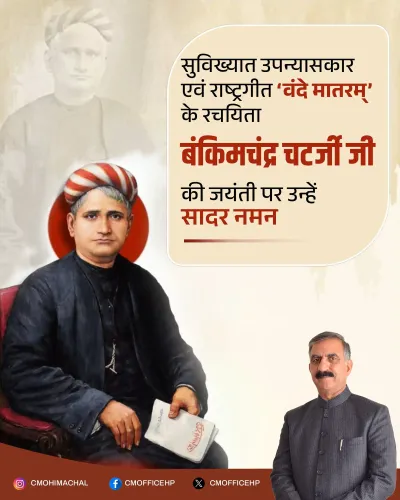
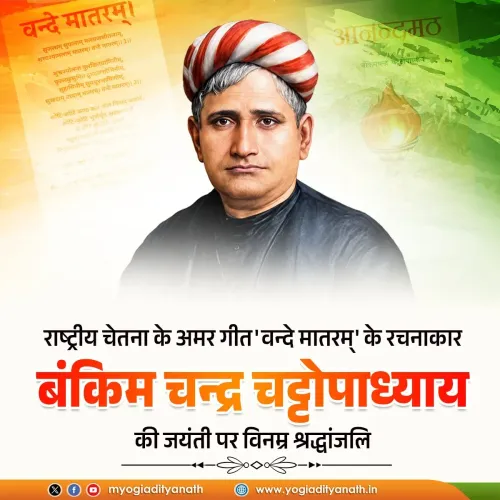
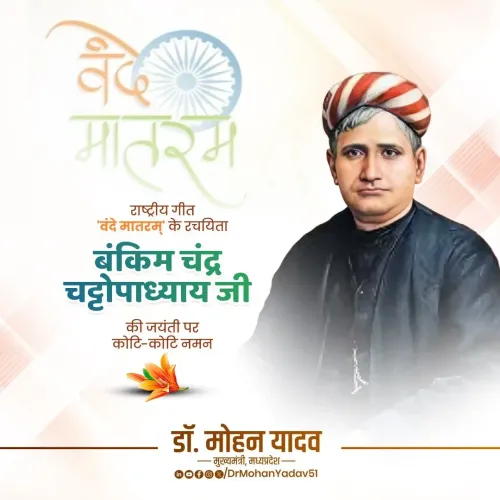
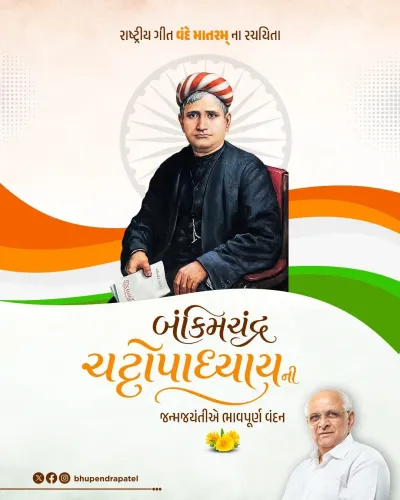
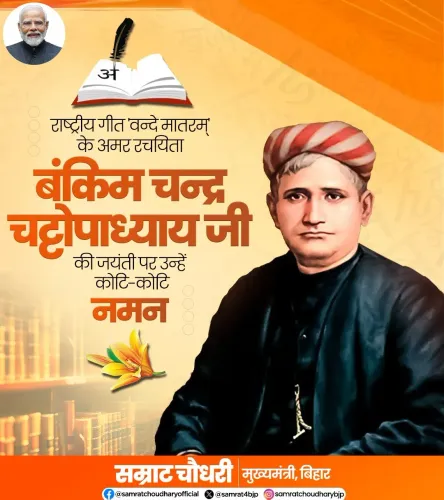
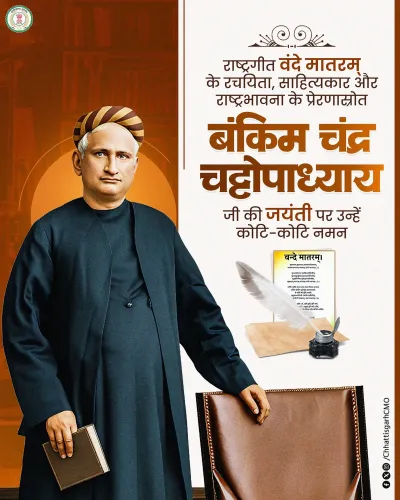
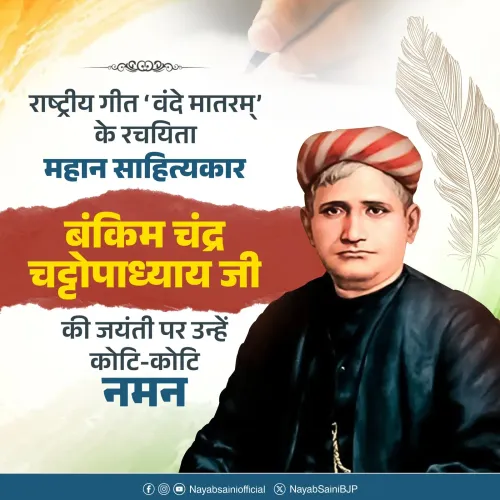
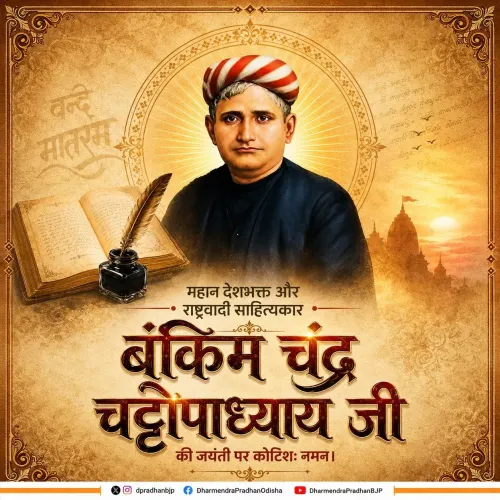
CM Pema Khandu Pays Tribute to Bankim Chandra on Birth Anniversary
Synopsis
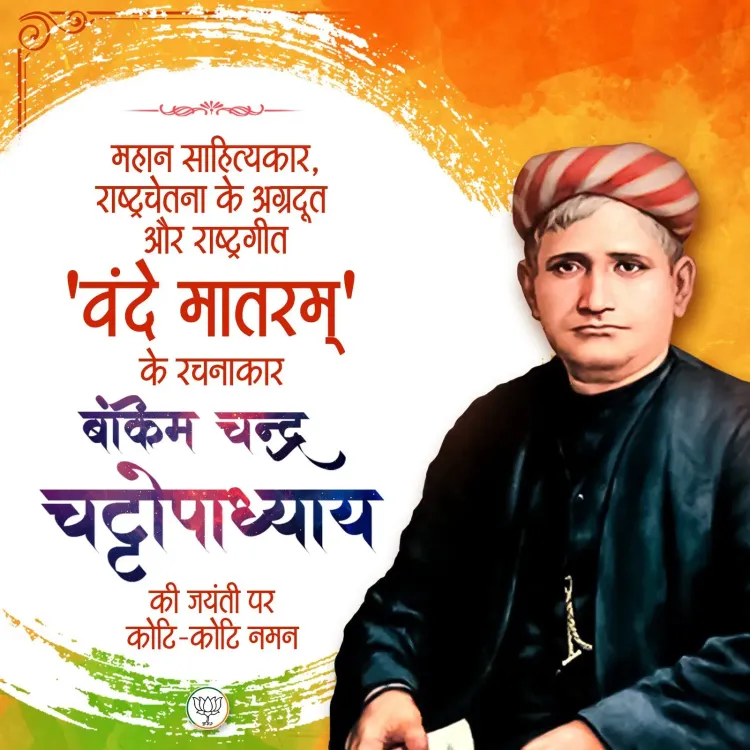
Arunachal Pradesh Chief Minister Pema Khandu paid tribute to Bankim Chandra Chattopadhyay on his birth anniversary, calling the author of Vande Mataram a legendary patriot whose legacy of nationalism and devotion to the motherland continues to inspire generations of Indians.
Key Takeaways
Arunachal Pradesh CM Pema Khandu posted a tribute to Bankim Chandra Chattopadhyay on his birth anniversary on 26 June 2026 .
Bankim Chandra Chattopadhyay ( 1838–1894 ) was a Bengali novelist and poet best known for composing Vande Mataram , which first appeared in his 1882 novel Anandamath .
Vande Mataram was formally recognised as India's national song by the Constituent Assembly on 24 January 1950 .
Khandu described Chattopadhyay as a 'legendary litterateur and patriot' whose composition 'ignited the spirit of nationalism' during the freedom movement.
The tribute is part of a broader BJP pattern of publicly honouring 19th-century cultural and nationalist icons on significant dates.
Arunachal Pradesh Chief Minister Pema Khandu on Friday, 26 June 2026, paid tribute to Bankim Chandra Chattopadhyay on the legendary writer's birth anniversary, honouring him as a patriot whose immortal composition Vande Mataram ignited the spirit of nationalism across India's freedom movement.
Context
Bankim Chandra Chattopadhyay (1838–1894) was a towering Bengali novelist, poet, and journalist whose works shaped the cultural and political consciousness of 19th-century India. His patriotic hymn Vande Mataram first appeared in his 1882 novel Anandamath and quickly became a rallying cry for those seeking independence from British rule.
CM Khandu, in his post on X, described Chattopadhyay as a 'legendary litterateur and patriot' whose legacy 'continues to instill pride, courage, and devotion to our motherland.' The tribute reflects the enduring reverence that political leaders across India hold for 19th-century cultural icons tied to the freedom struggle.
Policy Backdrop
The Constituent Assembly of India formally accorded Vande Mataram the status of the national song on 24 January 1950, placing it alongside the national anthem. The decision recognised the hymn's singular role in mobilising millions during the independence movement, cementing Chattopadhyay's place in the nation's official cultural memory.
BJP leaders have consistently foregrounded indigenous literary and nationalist figures in public discourse, particularly on birth and death anniversaries. These observances form part of a broader pattern of connecting contemporary political identity with the cultural heritage of the freedom struggle era.
Stakeholders and Impact
Tributes of this nature resonate widely among citizens, students, and educational institutions across India, where Vande Mataram is sung at schools, public ceremonies, and national events. For Arunachal Pradesh, a frontier state with a strong tradition of patriotic observance, such statements from the Chief Minister carry symbolic weight in reinforcing national identity.
Cultural organisations and literary bodies in West Bengal — Chattopadhyay's home state — typically mark the anniversary with readings, seminars, and school programmes dedicated to his literary contributions and nationalist legacy.
What's Next
State-level cultural programmes and school observances marking Bankim Chandra Chattopadhyay's birth anniversary are expected to be held across India, with particular focus in West Bengal and other states where his literary influence remains strong. Such commemorations serve as annual touchpoints for reinforcing the connection between India's literary heritage and its national identity.
Point of View
Consistent with the BJP's sustained effort to anchor contemporary political identity in India's 19th-century cultural renaissance. By invoking Vande Mataram — a song with deep emotional resonance for millions of Indians — Khandu reinforces the party's narrative of cultural nationalism. Such observances also serve a pedagogical function, keeping literary figures of the freedom struggle visible in public discourse beyond academic circles. The regularity of these tributes signals that honouring nationalist cultural icons has become a structured part of BJP political communication, not merely a personal gesture.
NationPress
25 Sept 2026
Frequently Asked Questions
Who was Bankim Chandra Chattopadhyay?
Bankim Chandra Chattopadhyay ( 1838–1894 ) was a pioneering Bengali novelist, poet, and journalist, best known for composing Vande Mataram , which appeared in his 1882 novel Anandamath and became a defining anthem of India's independence movement.
What is Vande Mataram and why is it significant?
Vande Mataram is a patriotic hymn composed by Bankim Chandra Chattopadhyay that served as a rallying anthem during India's freedom struggle. The Constituent Assembly of India formally recognised it as the national song on 24 January 1950 .
Why did Pema Khandu pay tribute to Bankim Chandra Chattopadhyay?
Arunachal Pradesh Chief Minister Pema Khandu paid tribute on 26 June 2026 , the birth anniversary of Bankim Chandra Chattopadhyay , honouring him as a 'legendary litterateur and patriot' whose composition Vande Mataram inspired generations in India's freedom movement.
When did Bankim Chandra Chattopadhyay write Vande Mataram?
Vande Mataram was first published in 1882 as part of Bankim Chandra Chattopadhyay's novel Anandamath , before becoming one of the most powerful anthems of the Indian independence movement.
What is Pema Khandu's role in Arunachal Pradesh?
Pema Khandu is the Chief Minister of Arunachal Pradesh and a senior leader of the Bharatiya Janata Party (BJP) .