CM Pema Khandu Pays Tribute to Captain Vikram Batra on Death Anniversary
Synopsis
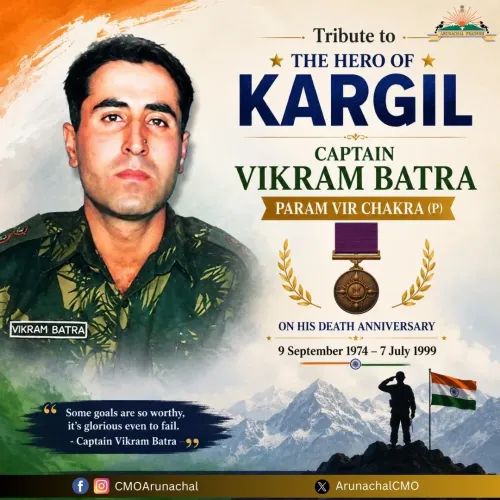
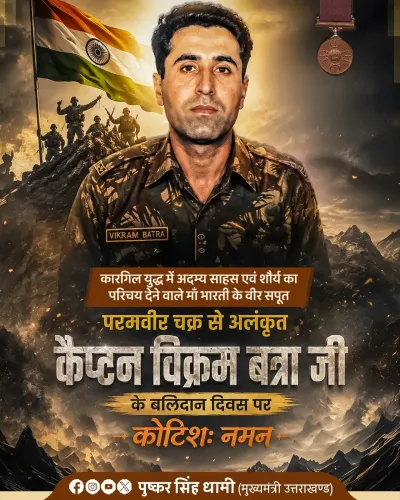
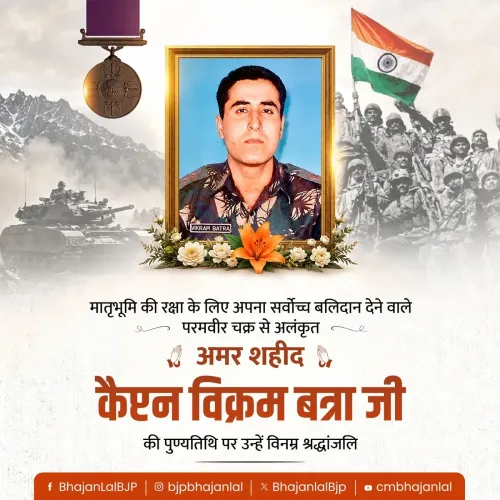
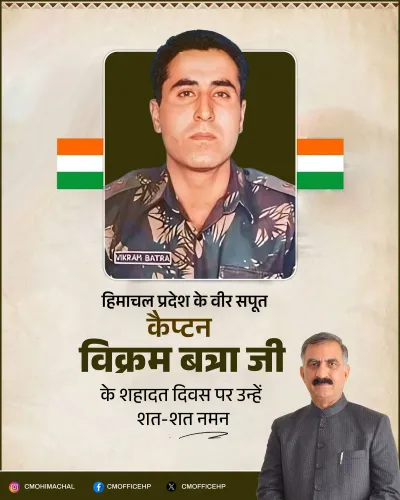
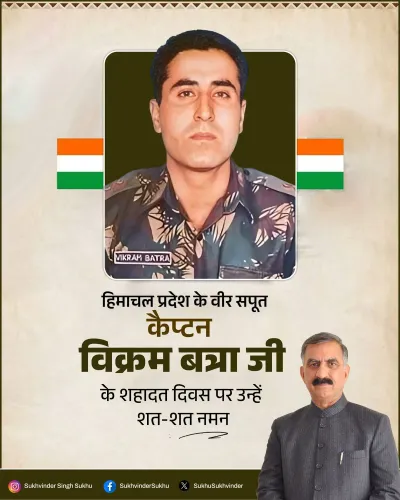
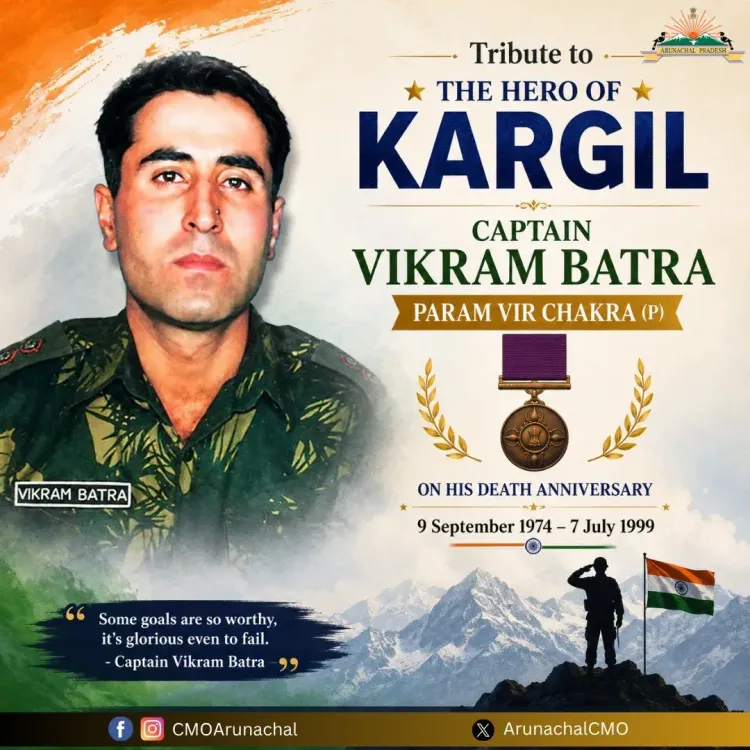
Arunachal Pradesh Chief Minister Pema Khandu paid tribute to Captain Vikram Batra, Param Vir Chakra (Posthumous), on his death anniversary on 7 July 2026, honouring the Kargil War hero's courage, sacrifice, and enduring legacy for the Indian Armed Forces.
Key Takeaways
Chief Minister Pema Khandu posted a tribute to Captain Vikram Batra on his death anniversary, 7 July 2026 .
Captain Batra was killed in action on 7 July 1999 during the Kargil War and was posthumously awarded the Param Vir Chakra , India's highest wartime gallantry honour.
Batra is celebrated for capturing Point 4875 in the Drass sector and for the phrase 'Yeh dil maange more' .
Khandu described Batra's sacrifice as embodying 'the very highest traditions of the Indian Armed Forces.' Annual tributes to Kargil martyrs form part of a broader pattern of political commemoration linking state leaders to national military heritage.
Kargil Vijay Diwas is observed nationally on 26 July each year, with wider commemorations expected in the weeks ahead.
Arunachal Pradesh Chief Minister Pema Khandu on Tuesday, 7 July 2026, paid tribute to Captain Vikram Batra, recipient of the Param Vir Chakra (Posthumous), on his death anniversary, honouring the soldier's supreme sacrifice during the 1999 Kargil War. Khandu described Batra's courage and devotion as embodying the highest traditions of the Indian Armed Forces.
Context
Captain Vikram Batra was killed in action on 7 July 1999 during the Kargil War while recapturing strategic heights in the Drass sector of Jammu and Kashmir. He is remembered for leading the assault on Point 4875 and for his immortal words 'Yeh dil maange more' ('This heart wants more'), which became a rallying cry for a generation of Indians. The Param Vir Chakra, India's highest wartime gallantry award, was conferred on him posthumously.
Chief Minister Khandu wrote: 'His extraordinary courage, indomitable spirit, and supreme sacrifice during the Kargil War embody the very highest traditions of the Indian Armed Forces. He fought with unmatched valor, inspiring generations with his immortal words and unwavering devotion to the nation. India will forever remember its brave son.'
Policy Backdrop
The Kargil War of 1999 was a limited armed conflict in which Indian forces evicted Pakistani intruders from strategic heights in Jammu and Kashmir, concluding operations on 26 July 1999. Since then, Kargil Vijay Diwas has been observed nationally every 26 July to honour fallen soldiers and mark India's military victory. Individual death anniversaries of decorated martyrs such as Captain Batra are observed separately and draw tributes from leaders across the political spectrum.
Annual commemorations of Kargil martyrs have become a consistent feature of political communication for both national and state-level leaders, linking regional governance to pan-India military heritage and national security narratives.
Stakeholders and Impact
The tribute resonates with Indian Armed Forces veterans, serving personnel, and their families, for whom public acknowledgement by elected leaders carries symbolic weight. For the general public, especially younger Indians, Captain Batra's legacy — popularised through books, documentaries, and a major Bollywood film — remains a touchstone of patriotic memory.
As Chief Minister of Arunachal Pradesh, a state that shares a sensitive border with China and has a significant defence presence, Pema Khandu's tributes to military figures carry an added layer of regional significance, reinforcing the state's close ties to India's national security establishment.
What's Next
With Kargil Vijay Diwas falling on 26 July, national and state-level commemorations are expected to intensify over the coming weeks. Arunachal Pradesh may hold its own programmes honouring defence personnel, consistent with the state government's practice of marking military anniversaries. The annual cycle of remembrance serves as a reminder of the human cost of the 1999 conflict and the continuing importance of border security in India's strategic calculus.
Point of View
As head of a border state with a significant strategic profile, such gestures carry additional resonance beyond routine political commemoration. The tribute also arrives ahead of Kargil Vijay Diwas on 26 July, positioning the state government within the broader national narrative of remembrance. Collectively, these annual commemorations sustain public memory of the Kargil conflict as a foundational moment in post-independence Indian military history.
NationPress
6 Oct 2026
Frequently Asked Questions
Who was Captain Vikram Batra?
Captain Vikram Batra was an Indian Army officer who was killed in action on 7 July 1999 during the Kargil War. He was posthumously awarded the Param Vir Chakra, India's highest wartime gallantry decoration, for his role in recapturing strategic heights including Point 4875 in the Drass sector of Jammu and Kashmir.
Why is 7 July significant for Vikram Batra?
7 July marks the death anniversary of Captain Vikram Batra, who was killed in action on this date in 1999 during the Kargil War. Leaders and citizens observe the day with tributes to honour his sacrifice.
What is the Param Vir Chakra?
The Param Vir Chakra is India's highest military decoration, awarded for the most conspicuous acts of bravery or self-sacrifice in the presence of the enemy. Captain Vikram Batra received it posthumously for his actions during the 1999 Kargil War.
What did Pema Khandu say about Vikram Batra?
Arunachal Pradesh Chief Minister Pema Khandu said that Captain Batra's 'extraordinary courage, indomitable spirit, and supreme sacrifice during the Kargil War embody the very highest traditions of the Indian Armed Forces,' and that 'India will forever remember its brave son.'
When is Kargil Vijay Diwas celebrated?
Kargil Vijay Diwas is celebrated on 26 July every year to mark the conclusion of the 1999 Kargil War and to honour Indian soldiers who sacrificed their lives during the conflict.