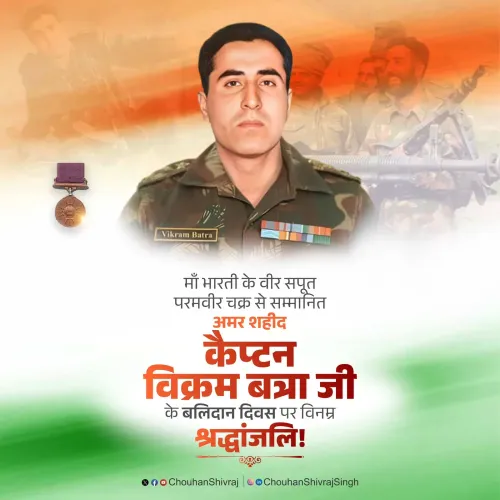
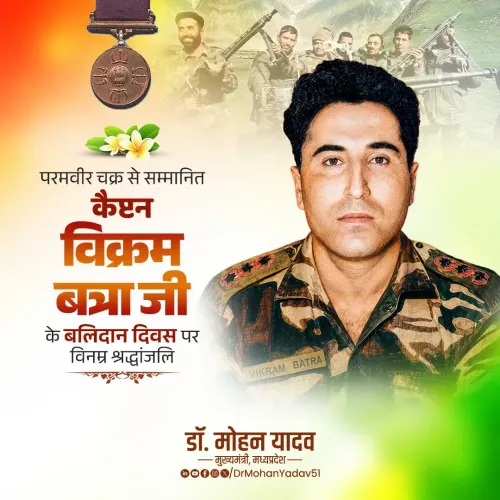
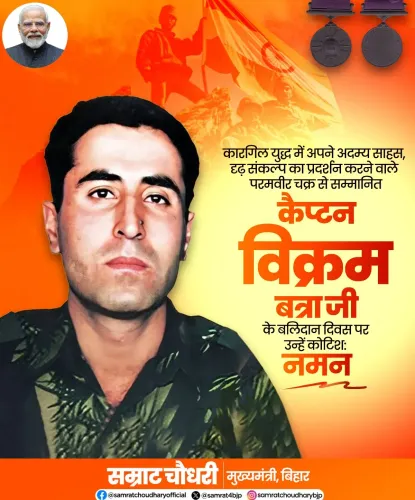
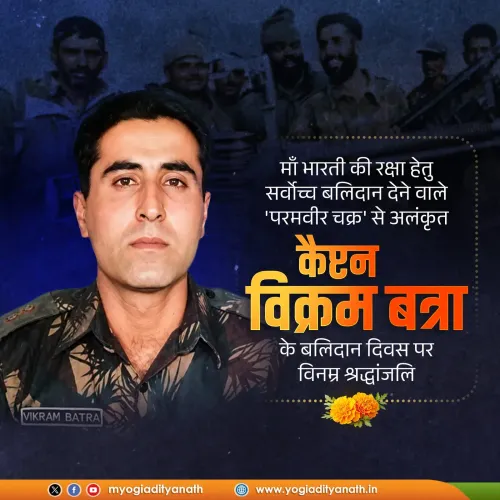
Amit Shah Pays Tribute to Captain Vikram Batra on Martyrdom Day
Synopsis
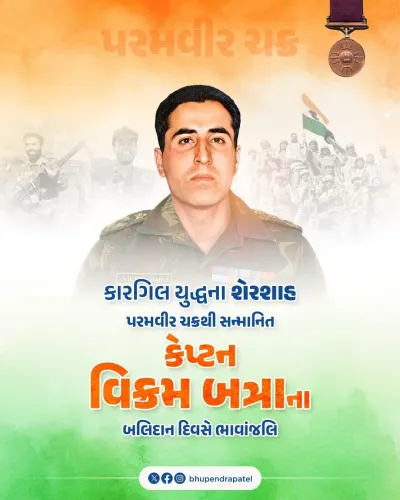
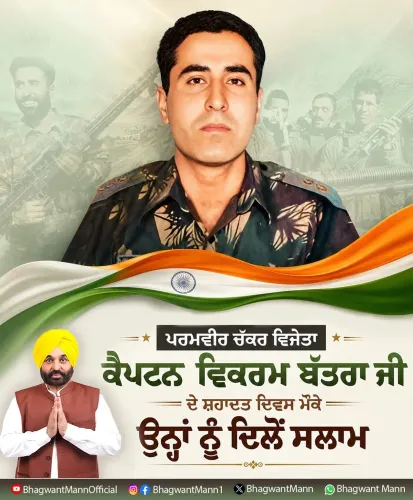
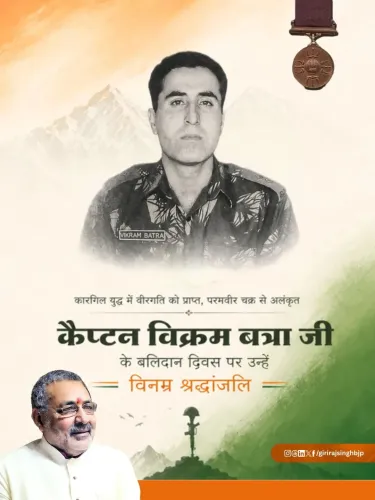
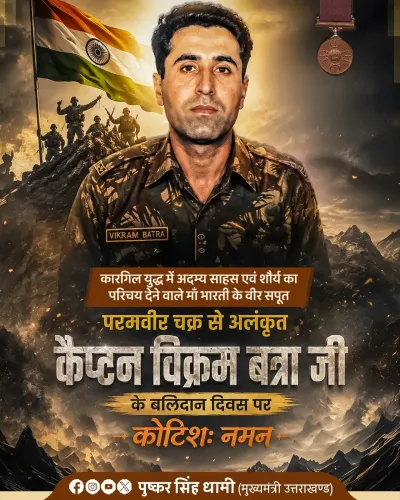
Union Home Minister Amit Shah on 7 July 2026 honoured Param Vir Chakra awardee Captain Vikram Batra on his martyrdom anniversary, saluting the Kargil War hero's capture of Point 4875 and his supreme sacrifice that immortalised him as 'Sher Shah'.
Key Takeaways
Union Home Minister Amit Shah posted a tribute to Captain Vikram Batra on his martyrdom anniversary, 7 July 2026 .
Captain Batra was killed in action on 7 July 1999 during the Kargil War , aged 24 , while capturing a strategically critical peak.
He was posthumously awarded the Param Vir Chakra , India's highest wartime gallantry honour, for his role in capturing Point 4875 .
Batra is widely known by his battlefield nickname 'Sher Shah' (Lion King), used by commanding officers during the conflict.
Shah said Batra's supreme sacrifice would continue to inspire every citizen to place the nation's interest above all else.
The broader Kargil Vijay Diwas commemoration is observed annually on 26 July , marking India's formal declaration of victory in the 1999 war.
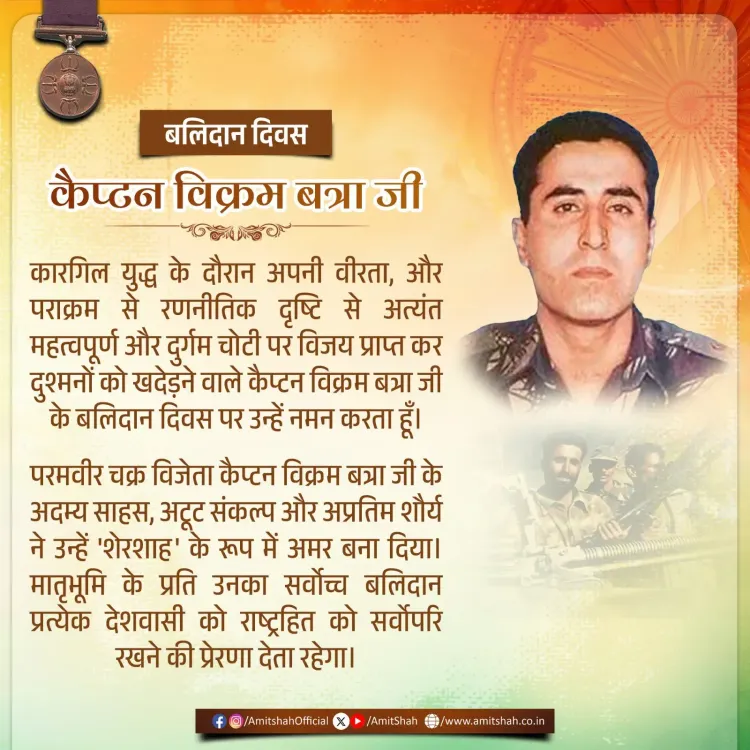
Union Home Minister Amit Shah on Tuesday, 7 July 2026 paid tribute to Param Vir Chakra awardee Captain Vikram Batra on his martyrdom anniversary, honouring the Kargil War hero's supreme sacrifice and extraordinary valour in capturing a strategically vital and near-inaccessible peak.
Posting in Hindi on X, Shah wrote: 'Paramveer Chakra Vijeta Captain Vikram Batra ji ke adamya sahas, atoot sankalp aur apratim shaurya ne unhe 'Sher Shah' ke roop mein amar bana diya' — translating to: 'The indomitable courage, unbreakable resolve and unmatched valour of Param Vir Chakra winner Captain Vikram Batra have immortalised him as 'Sher Shah'.' He added that Batra's supreme sacrifice for the motherland would continue to inspire every citizen to place the nation's interest above all else.
Context
Captain Vikram Batra of the 13 JAK Rifles was killed in action on 7 July 1999 during the Kargil War, a high-altitude conflict fought between May and July 1999 in which Indian forces evicted Pakistani intruders from strategic peaks along the Line of Control in Jammu and Kashmir. He was 24 years old at the time of his death. Batra had earlier in the same campaign led his unit in capturing Point 4875, a peak of exceptional tactical significance, earning him the nickname 'Sher Shah' — Lion King — among fellow soldiers and commanding officers.
He was posthumously awarded the Param Vir Chakra, India's highest wartime gallantry decoration, conferred for the most conspicuous bravery in the presence of the enemy. His story gained renewed national attention after a widely watched Bollywood biographical film portrayed his life and service.
Policy Backdrop
Annual commemorations of the Kargil War have been a fixture of India's official calendar since 2000, with Kargil Vijay Diwas observed every 26 July to mark the formal declaration of victory. Individual martyrdom anniversaries, including that of Captain Batra, are observed separately by political leaders, the armed forces, and civil society. These tributes form part of a consistent, cross-party pattern of honouring the conflict's role in shaping India's security posture along the Line of Control.
The Kargil War also left a lasting imprint on India's defence procurement priorities and border infrastructure planning, with the lessons of high-altitude warfare influencing subsequent policy decisions on mountain warfare capabilities and connectivity in border regions.
Stakeholders and Impact
Tributes of this nature carry institutional weight for the families of Kargil martyrs and the broader defence community, reaffirming that the sacrifices of soldiers remain part of the national conversation. Captain Batra's family, based in Palampur, Himachal Pradesh, has over the years participated in official commemorations and spoken publicly about his legacy. For serving personnel and veterans, such statements from senior constitutional authorities reinforce the state's acknowledgement of military sacrifice.
Public memory of the Kargil War also continues to inform debates around veterans' welfare, war memorials, and the status of next-of-kin benefits — areas where advocacy groups remain active.
What's Next
The larger official commemoration of the Kargil War is expected around Kargil Vijay Diwas on 26 July, when the government, armed forces, and political leadership typically hold ceremonies at Dras in Ladakh — the site of some of the war's fiercest battles — and at war memorials across the country. As the anniversary of the conflict approaches, tributes to individual martyrs such as Captain Batra are likely to intensify, keeping public focus on the human cost and strategic significance of the 1999 campaign.
Point of View
Shah frames the tribute not merely as ceremonial remembrance but as a reaffirmation of military resolve and national security values. Such statements also serve a pedagogical function — linking the sacrifice of individual soldiers to the broader civic duty of placing national interest above self — a message that resonates particularly strongly in the run-up to Kargil Vijay Diwas on 26 July. The consistency of these tributes across political parties since 2000 has effectively institutionalised Kargil commemoration as a non-partisan pillar of India's national security narrative.
NationPress
6 Oct 2026
Frequently Asked Questions
Who was Captain Vikram Batra?
Captain Vikram Batra was an Indian Army officer of the 13 JAK Rifles who became one of the most celebrated heroes of the 1999 Kargil War . He led the capture of Point 4875 and several other strategic peaks before being killed in action on 7 July 1999 at the age of 24 . He was posthumously awarded the Param Vir Chakra , India's highest wartime gallantry honour.
Why is Captain Vikram Batra called Sher Shah?
Captain Vikram Batra earned the nickname 'Sher Shah' — meaning Lion King — from his commanding officers during the Kargil War in recognition of his exceptional battlefield courage, particularly during the assault on Point 4875 .
What is the Param Vir Chakra?
The Param Vir Chakra is India's highest wartime gallantry award, conferred for the most conspicuous bravery or some daring or pre-eminent act of valour or self-sacrifice in the presence of the enemy. Captain Vikram Batra was among its posthumous recipients for his actions in the 1999 Kargil War .
When is Kargil Vijay Diwas observed?
Kargil Vijay Diwas is observed every year on 26 July to mark India's formal declaration of victory in the 1999 Kargil War . Official ceremonies are typically held at Dras in Ladakh and at war memorials across the country.
What did Amit Shah say about Captain Vikram Batra?
Union Home Minister Amit Shah said that Captain Batra's indomitable courage, unbreakable resolve and unmatched valour had immortalised him as 'Sher Shah' , and that his supreme sacrifice for the motherland would continue to inspire every citizen to place the nation's interest above all else.