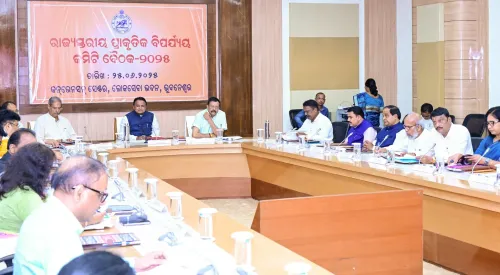
CM Majhi Chairs Odisha Disaster Meet, Orders Monsoon Readiness
Synopsis
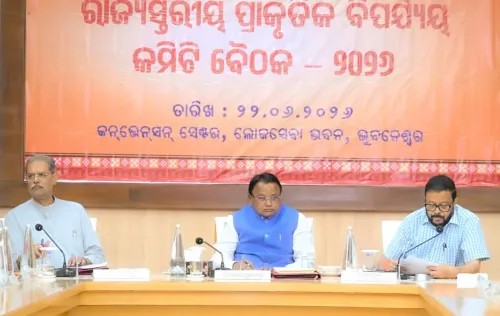
Odisha CM Mohan Charan Majhi chaired the State-Level Natural Disaster Committee Meeting 2026 on 22 June, reviewing monsoon preparedness, reaffirming the zero-casualty policy, ordering panchayat-level vigilance against fertiliser black-marketing, and directing a whole-of-government response for the upcoming season.
Key Takeaways
CM Majhi chaired the State-Level Natural Disaster Committee Meeting 2026 on 22 June 2026 , reviewing monsoon preparedness across all departments.
Odisha's zero-casualty disaster model was cited as a globally recognised benchmark, reportedly praised at the Puri BRICS Summit .
SDRF funds were disbursed on a war-footing basis to victims of past floods, unseasonal rains, and Cyclone Montha .
In view of El Niño risks, District Collectors have been made directly accountable for preventing black-marketing of seeds and fertilisers during the 2026 kharif season .
Panchayat-level vigilance committees and a state-level monitoring mechanism will oversee crop-input supply chains.
Strengthening of ODRAF , fire services, multipurpose shelters, CAP-based SMS alerts , and social-media rumour control are key pillars of the 2026 preparedness plan.
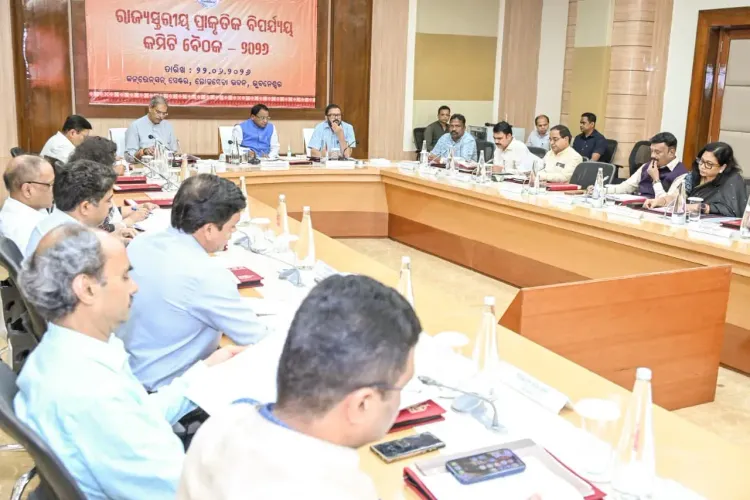
Odisha Chief Minister Mohan Charan Majhi on Monday, 22 June 2026, chaired the 'State-Level Natural Disaster Committee Meeting 2026' in Bhubaneswar, reviewing comprehensive administrative preparedness for the upcoming monsoon season and directing all departments to remain on full alert.
Context
Posting in Odia, CM Majhi stated: 'ଓଡ଼ିଶାବାସୀଙ୍କ ଜୀବନ ଓ ଜୀବିକାର ସୁରକ୍ଷା ଆମ ସରକାରଙ୍କ ସର୍ବୋଚ୍ଚ ପ୍ରାଥମିକତା' ['Protection of the lives and livelihoods of Odisha's people is our government's highest priority']. He underlined that despite the state's geographic vulnerability to multiple hazards, its 'zero-casualty' policy has emerged as a globally recognised model. He noted that this approach was recently appreciated by member nations at the Puri BRICS Summit.
The Chief Minister also cited the government's swift response during past floods, unseasonal rains, and Cyclone Montha, during which affected residents and farmers received war-footing relief from the State Disaster Response Fund (SDRF).
Policy Backdrop
Odisha's disaster management architecture traces its roots to the aftermath of the 1999 Super Cyclone, which killed more than 10,000 people and prompted the creation of the Odisha Disaster Rapid Action Force (ODRAF) in 2001 alongside a network of multipurpose cyclone shelters. The state's evacuation of more than 1.2 million people ahead of Cyclone Fani in 2019 cemented the zero-casualty operational model that successive administrations, including the current BJP government, have maintained.
The Disaster Management Act 2005 provides the statutory backbone for the SDRF and state disaster management authorities. National Disaster Management Authority guidelines since 2016 have encouraged the 'whole-of-government' coordination approach that CM Majhi explicitly invoked at Monday's meeting.
Stakeholders and Impact
With El Niño conditions flagged as a concern for the 2026 kharif season, CM Majhi directed District Collectors to take direct accountability for preventing black-marketing of seeds and fertilisers. A state-level monitoring mechanism will be complemented by panchayat-level vigilance committees to safeguard crop inputs for farmers across the state.
On the infrastructure side, the meeting emphasised maintenance of multipurpose shelters, timely SMS alerts via the Common Alerting Protocol (CAP), and strengthening of ODRAF and fire services. The government also stressed disseminating accurate information through social media to counter rumours during emergencies — a measure aimed at coastal communities most exposed to cyclone risk.
What's Next
The effectiveness of the newly mandated district and panchayat-level committees will be tested during the 2026 southwest monsoon, with any enforcement action against seed and fertiliser black-marketeers serving as an early indicator of ground-level implementation. Budgetary allocations for ODRAF modernisation and shelter upkeep in the upcoming state assembly session will be closely watched. CM Majhi closed with a call for collective resolve: 'ଆସନ୍ତୁ ସମସ୍ତେ ମିଶି ଓଡ଼ିଶାର ସ୍ୱାଭିମାନ ଓ ସଂକଳ୍ପକୁ ଆହୁରି ସୁଦୃଢ଼ କରିବା' ['Let us all come together to further strengthen Odisha's pride and resolve'] and build a safe, prosperous state.
Point of View
The BJP government is framing continuity with the state's post-1999 disaster management legacy as its own achievement. The direct accountability assigned to District Collectors for fertiliser black-marketing is a notable administrative escalation, reflecting awareness that El Niño-linked crop stress could become a political flashpoint. Taken together, the messaging positions disaster preparedness not merely as administration but as a pillar of Odisha's developmental identity.
NationPress
23 Jun 2026
Frequently Asked Questions
What was decided at Odisha's State-Level Natural Disaster Committee Meeting 2026?
CM Majhi reviewed comprehensive monsoon preparedness, directed all departments to remain on full alert, assigned District Collectors direct accountability for preventing seed and fertiliser black-marketing, and called for strengthening ODRAF, cyclone shelters, and early-warning SMS systems.
What is Odisha's zero-casualty policy in disaster management?
Odisha's zero-casualty policy aims to prevent deaths during natural disasters through advance evacuations, early warnings, and rapid response. It gained global attention after more than 1.2 million people were evacuated ahead of Cyclone Fani in 2019 with minimal loss of life.
What is ODRAF and what role does it play?
ODRAF, the Odisha Disaster Rapid Action Force, is a specialised state response unit created after the 1999 Super Cyclone to enable rapid deployment during cyclones, floods, and other emergencies. CM Majhi directed its further strengthening as part of 2026 monsoon preparations.
How does El Niño affect Odisha's 2026 kharif season?
El Niño can weaken the Indian monsoon and cause erratic or deficient rainfall, threatening kharif crops. The Odisha government has set up a state-level monitoring mechanism and panchayat-level vigilance committees to protect crop-input supply chains against this risk.
What is the SDRF and how has Odisha used it?
The State Disaster Response Fund is a statutory mechanism under the Disaster Management Act 2005 that provides states with dedicated resources for immediate relief. Odisha used SDRF funds on a war-footing basis to assist farmers and residents affected by past floods, unseasonal rains, and Cyclone Montha.