CM Majhi Celebrates Odisha's Cultural Heritage and Traditions
Synopsis
Odisha Chief Minister Mohan Charan Majhi has celebrated the state's cultural wealth — from Jagannath devotion and Odissi dance to tribal art and handicrafts — calling on citizens to honour and advance Odisha's heritage. The statement underscores the BJP government's focus on cultural identity as a pillar of state pride.
Key Takeaways
Odisha CM Mohan Charan Majhi posted on 30 May 2026 celebrating the state's culture, tradition, and art.
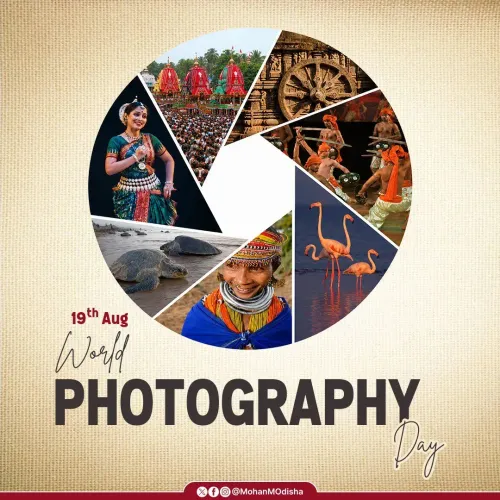
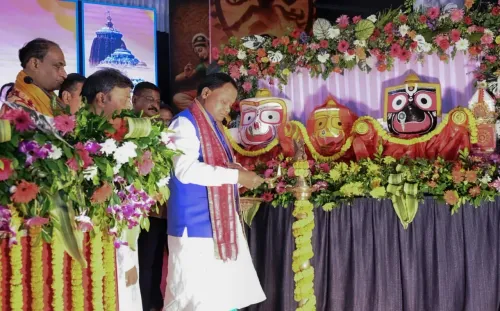
The post highlighted Mahaprabhu Shri Jagannath 's spirituality, Odissi dance , tribal arts, handicrafts, and Odisha's natural beauty.
Majhi called on citizens to honour Odisha's heritage and carry its glory forward.
Odisha's cultural assets — including the Puri Rath Yatra and Odissi — have received state support since the 1950s .
The statement is relevant to stakeholders including classical dancers , tribal artisans , weavers , and the tourism industry .
Policy watchers will track whether the message is followed by budget allocations for cultural infrastructure or artist welfare.
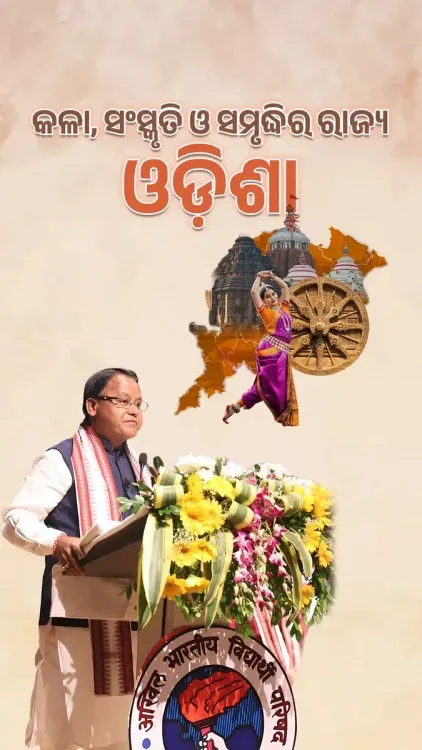
Odisha Chief Minister Mohan Charan Majhi on Saturday, 30 May 2026, took to X to celebrate the state's rich cultural identity, highlighting its spiritual traditions, classical arts, tribal heritage, and natural beauty as pillars of Odisha's pride and national cultural significance.
In his post, written in Odia, the Chief Minister declared: 'ସଂସ୍କୃତି, ପରମ୍ପରା ଓ କଳାରେ ସମୃଦ୍ଧ ଆମ ଓଡ଼ିଶା' — 'Our Odisha is rich in culture, tradition and art.' He invoked the spirituality of the state's temples, devotion to Mahaprabhu Shri Jagannath, classical Odissi dance, and tribal art forms as elements that 'illuminate our glory further.' The message concluded with a call to action: 'Let us honour our heritage and traditions, and carry Odisha's glory further forward.'
Context
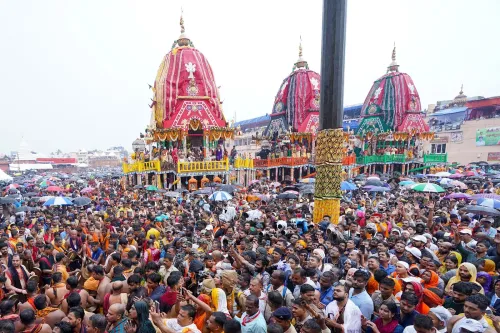
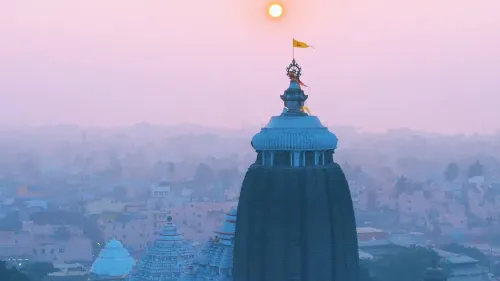
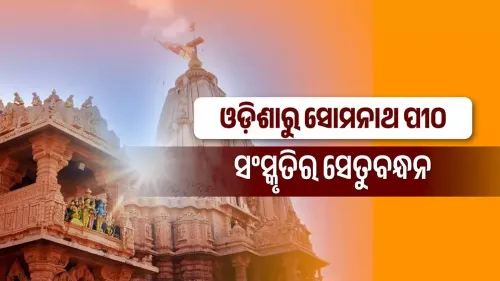
Odisha holds a distinctive position in India's cultural landscape, anchored by the Jagannath Temple in Puri — one of the four sacred dhams — and the annual Rath Yatra, which draws millions of pilgrims and tourists each year. The state is also the birthplace of Odissi, one of India's eight classical dance forms, formally recognised by the Sangeet Natak Akademi. Tribal communities across the state have sustained distinct art traditions in pottery, weaving, and visual art for centuries.
Mohan Charan Majhi became Chief Minister in June 2024 after the BJP won the Odisha assembly elections, ending 24 years of Biju Janata Dal rule. Cultural and heritage promotion has been a visible thread in his administration's public communication since taking office.
Policy Backdrop
State support for Odisha's cultural institutions has a long lineage. Government funding for Odissi academies and state-level festivals dates to the reorganisation of classical arts in the 1950s. The Rath Yatra at Puri has been a state-supported event for decades, with successive governments allocating funds for infrastructure, security, and promotion.
After 2014, central government schemes for intangible heritage, domestic tourism circuits, and artisan welfare — including the Ek Bharat Shreshtha Bharat framework — have intersected with state-level cultural drives. Odisha's handicrafts sector, covering Pattachitra paintings, Dhokra metalwork, and Sambalpuri textiles, has benefited from both state and central promotion schemes targeting artisan livelihoods and export potential.
Stakeholders and Impact
The Chief Minister's statement speaks directly to a broad constituency: classical dancers, tribal artisans, temple priests, handicraft weavers, and the tourism industry that depends on Odisha's cultural assets. Puri, Bhubaneswar, and Konark together form a tourism triangle that generates significant revenue for the state economy.
Tribal communities in districts such as Mayurbhanj, Koraput, and Kandhamal are custodians of art and music traditions that CM Majhi's message explicitly acknowledges. Recognition at the highest political level can translate into greater budget visibility for artisan welfare and cultural infrastructure in these regions.
What's Next
Attention will now turn to whether the statement is followed by concrete policy measures — including state budget provisions for cultural infrastructure, artist welfare schemes, or expanded promotion of the Puri Rath Yatra ahead of its next edition. The BJP government's approach to integrating Odisha's cultural identity with tourism and heritage policy will be closely watched as the administration approaches its second year in office.
Point of View
Such messaging reinforces a core ideological commitment. The explicit inclusion of tribal arts alongside temple traditions is notable, signalling an attempt to build a unified Odia cultural identity across demographic lines. Whether this translates into measurable policy — artisan stipends, festival funding, heritage infrastructure — will determine its lasting impact beyond political signalling.
NationPress
15 Sept 2026
Frequently Asked Questions
What did Odisha CM Mohan Majhi say about Odisha's culture?
CM Mohan Charan Majhi posted on X on 30 May 2026 celebrating Odisha's richness in culture, tradition, and art, specifically highlighting Jagannath devotion, Odissi dance, tribal arts, handicrafts, and the state's natural beauty, and called on people to honour and advance Odisha's heritage.
Why is Jagannath Temple important to Odisha's cultural identity?
The Jagannath Temple in Puri is one of India's four sacred dhams and the centre of the annual Rath Yatra, which draws millions of pilgrims. It is the spiritual anchor of Odia culture and has been a state-supported heritage site for decades.
What is Odissi dance and why is it significant?
Odissi is one of India's eight classical dance forms, originating in Odisha's temple rituals and formally recognised by the Sangeet Natak Akademi. It is considered a defining cultural export of the state and has received government funding since the 1950s.
When did Mohan Charan Majhi become Chief Minister of Odisha?
Mohan Charan Majhi became Chief Minister of Odisha in June 2024 after the BJP won the state assembly elections, ending 24 years of Biju Janata Dal rule.
What tribal arts is Odisha known for?
Odisha's tribal communities, particularly in districts like Mayurbhanj, Koraput, and Kandhamal, are known for distinct traditions in pottery, weaving, music, and visual art. Alongside Pattachitra paintings, Dhokra metalwork, and Sambalpuri textiles, these form a significant part of the state's intangible heritage.