CM Majhi Conducts Aerial Survey of Flood-Hit Ganjam, Gajapati
Synopsis
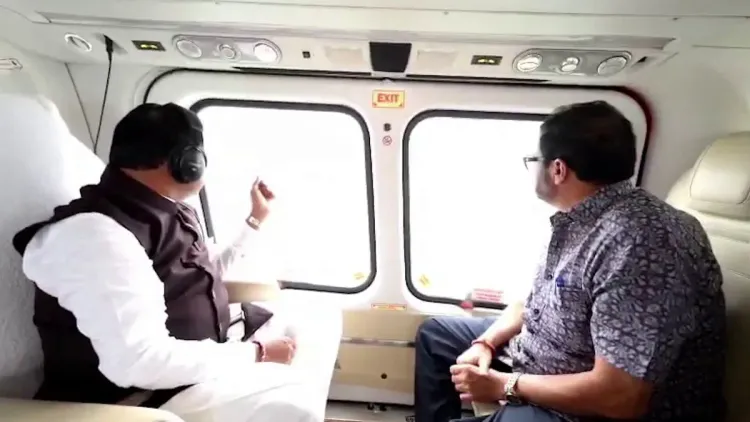
Odisha Chief Minister Mohan Charan Majhi conducted an aerial survey of flood-hit Ganjam and Gajapati districts with Revenue Minister Suresh Pujari on 30 October 2026, directing round-the-clock relief, road restoration, power recovery, and post-flood health surveillance.
Key Takeaways
CM Mohan Charan Majhi and Revenue Minister Suresh Pujari conducted an aerial survey of flood-affected areas in Ganjam and Gajapati districts on 30 October 2026 .
The Chief Minister has ordered accelerated relief and rescue operations, with food, drinking water, and emergency healthcare to be delivered without interruption.
District administrations have been directed to restore damaged roads, normalise power supply, and monitor post-flood health risks.
Ganjam and Gajapati are among Odisha's most flood-vulnerable southern districts due to their coastal and hilly geography.
Odisha's disaster-response framework is anchored by the Odisha State Disaster Management Authority (OSDMA) , established after the 1999 super cyclone .
Majhi appealed directly to residents to stay safe, follow rescue-team guidance, and support one another through the crisis.
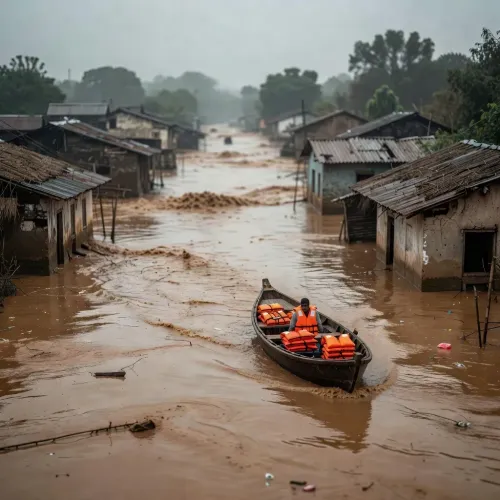
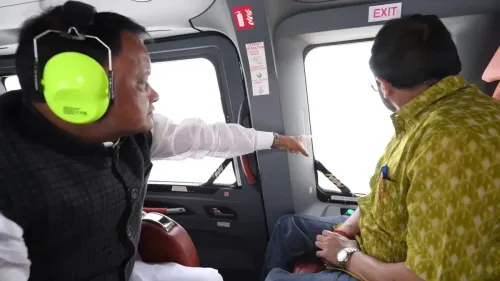
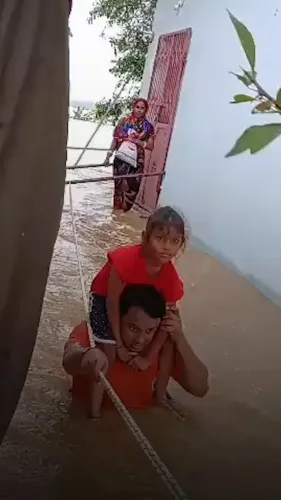
Aerial survey at the controls, orders on the ground — Odisha Chief Minister Mohan Charan Majhi on Friday, 30 October 2026, flew over flood-affected areas of Ganjam and Gajapati districts to personally assess the scale of devastation, and declared that protecting lives and property in times of disaster is his government's highest priority.
The Chief Minister conducted the aerial survey alongside Revenue and Disaster Management Minister Suresh Pujari, gaining a bird's-eye view of the stricken zones before issuing a fresh round of directives to accelerate relief and rescue operations. Writing in Odia to his constituents, Majhi stated: 'ବିପତ୍ତି ସମୟରେ ରାଜ୍ୟବାସୀଙ୍କ ଜୀବନ ଓ ସମ୍ପତ୍ତିର ସୁରକ୍ଷା ମୋର ସର୍ବୋଚ୍ଚ ପ୍ରାଥମିକତା' — 'The protection of the lives and property of the people of the state during a crisis is my topmost priority.'
Food, Water, and Medical Care: The Three-Line Guarantee
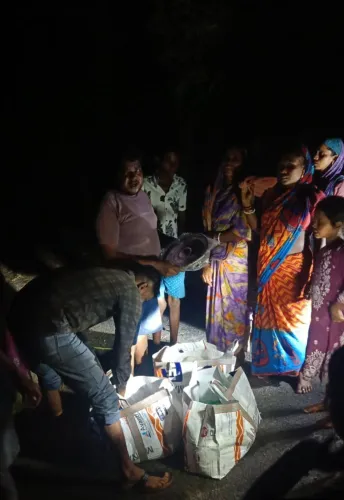
Majhi confirmed that the entire administration is working round the clock to ensure the uninterrupted delivery of food, drinking water, and emergency healthcare to those affected. The explicit three-point guarantee — essentials, potable water, medical care — signals the state's intent to prevent a secondary humanitarian crisis in the aftermath of flooding.
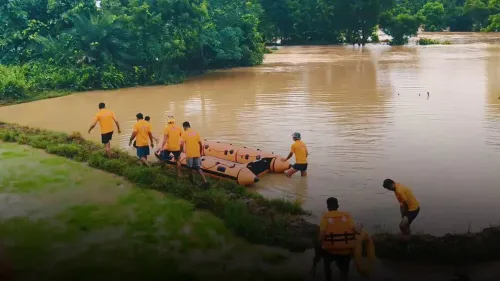
He has ordered a further acceleration of relief and rescue operations. The mandate goes beyond immediate survival: district administrations have been directed to stay fully alert to restoring damaged roads, normalising power supply, and controlling post-flood health risks — the slower-burning dangers that can linger long after floodwaters recede.
Why Ganjam and Gajapati Are Always First on the List
Ganjam, on Odisha's southern coast, sits directly in the path of Bay of Bengal weather systems and has a long history of cyclone and flood damage. Gajapati, inland and bordering Andhra Pradesh, funnels heavy rainfall off the Eastern Ghats into low-lying settlements. Together, these two districts represent the most persistently vulnerable corridor in the state's southern flank.
Odisha's disaster-response architecture traces back to the catastrophic 1999 super cyclone, which prompted the creation of the Odisha State Disaster Management Authority (OSDMA) — one of the first such bodies in India. That institutional memory has made the state a benchmark for disaster preparedness nationally. The BJP government under Majhi, which assumed office in June 2024, has continued the operational framework built over two decades.
A Direct Word to Residents: Stay Safe, Stay Together
The Chief Minister closed his message with a direct appeal to affected citizens — keep courage, stay in safe locations, follow instructions from local administration and rescue teams, and extend a hand of cooperation to one another. 'In this crisis, we will all come out of it together very soon,' he assured.
The watch now shifts to how quickly roads are reopened and power lines restored — the metrics that will determine whether the government's round-the-clock promise translates from directive to delivery.
Point of View
Being seen over the crisis zone matters as much as the relief orders that follow. For a BJP government that unseated the long-ruling BJD in 2024 partly on governance credibility, every disaster response is also an implicit referendum on whether the new administration can match Odisha's internationally cited preparedness record. The focus on post-flood health surveillance and infrastructure restoration — not just immediate relief — signals a more systemic framing, which aligns with the state's OSDMA-driven institutional legacy. Whether central resources are sought, and how quickly roads and power are restored, will be the cleaner test of intent.
NationPress
30 Oct 2026
Frequently Asked Questions
Why did Odisha CM Majhi conduct an aerial survey of Ganjam and Gajapati?
CM Mohan Charan Majhi conducted the aerial survey to personally assess the extent of flood damage in the two southern districts and to direct relief and rescue operations on the ground more effectively.
Who accompanied CM Majhi on the aerial survey of flood-affected areas?
Revenue and Disaster Management Minister Suresh Pujari accompanied CM Majhi during the aerial inspection of flood-hit areas in Ganjam and Gajapati districts.
Which districts in Odisha are most affected by the current flooding?
Ganjam and Gajapati in southern Odisha are the districts under focus, both of which are historically vulnerable to monsoon flooding due to coastal exposure and proximity to the Eastern Ghats.
What relief measures has the Odisha government announced for flood victims?
The Odisha government has directed round-the-clock delivery of food, drinking water, and emergency healthcare, along with accelerated rescue operations, road restoration, power supply normalisation, and post-flood health surveillance.
What is the OSDMA and how does it help in Odisha flood relief?
The Odisha State Disaster Management Authority (OSDMA) was created in 1999 after the super cyclone to coordinate disaster preparedness and response across the state, and it continues to underpin relief logistics in events like the current flooding.