CM Majhi Deploys IAS Officers as Floods Hit Odisha

Synopsis
Odisha Chief Minister Mohan Charan Majhi activated a full flood-response framework on 29 July 2026, deploying three senior IAS officers to Balasore, Bhadrak and Jajpur, ordering 24x7 emergency control rooms, and directing swift compensation for flood-hit homes and farmland across the state's northern river belt.
Key Takeaways
Three senior IAS officers assigned special charge in Balasore, Bhadrak, and Jajpur districts to personally supervise flood management and relief.
SRC office and State Emergency Control Room ordered to operate 24x7 for continuous water-level monitoring.
NDRF, ODRAF, fire services, and police fully deployed for evacuation of low-lying areas.
Relief shelters stocked with food, clean water, healthcare, anti-snake-venom medicines , and cattle fodder.
Night police patrolling intensified around evacuated homes to prevent theft.
Officials directed to begin swift compensation for flood-damaged homes and agricultural land.
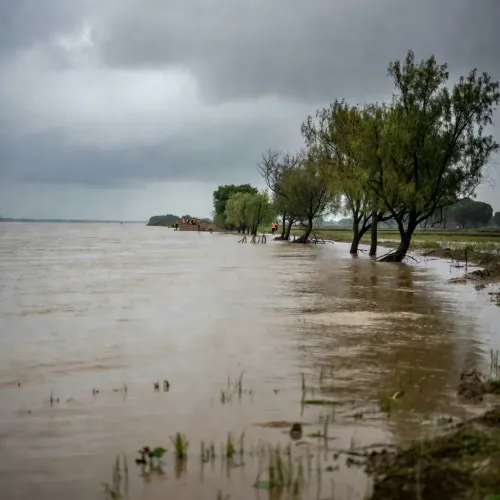
With rivers breaching banks across northern Odisha and relentless monsoon rain showing no sign of easing, Odisha Chief Minister Mohan Charan Majhi announced a full-scale state response on Wednesday, 29 July 2026 — deploying senior IAS officers to the worst-hit districts and placing the entire administration on flood alert.
Posting in Odia, the Chief Minister said: 'Rajyara pratyek nagarianka jibana o suraksha amara pain sabutharu gurutwapurna' — 'The life and safety of every citizen of the state is most important to us.' He added that he and his government were monitoring the flood situation 'directly, at every moment.'
Three IAS Officers Rushed to Balasore, Bhadrak and Jajpur
The sharpest administrative move: three senior IAS officers have been given special charge to personally oversee flood management, evacuation, and relief operations in Balasore, Bhadrak, and Jajpur districts — a northern coastal belt that bears the brunt of monsoon flooding almost every year. Majhi confirmed he had already held discussions with the Chief Secretary and the Special Relief Commissioner (SRC) on the ground situation and the state's counter-measures.
The SRC office and the State Emergency Control Room have been ordered to remain operational 24x7, with round-the-clock monitoring of water levels and field conditions — a standard but critical command-and-control measure that Odisha has refined over decades of disaster response.
NDRF, ODRAF and Police on Full Deployment
On the ground, NDRF (National Disaster Response Force), ODRAF (Odisha Disaster Rapid Action Force), fire services, and police units are fully mobilised to evacuate residents from low-lying areas to safer ground. Odisha's ODRAF — a state-created rapid-response unit born from the hard lessons of the 1999 super cyclone — has become one of the country's most battle-tested disaster forces, and its activation signals the administration is treating this as a serious event.
All relief shelters have been stocked with clean drinking water, cooked food, emergency healthcare, anti-snake-venom medicines, and cattle fodder — the last item a telling detail about the agrarian communities most exposed to flood damage. Police night patrolling has been intensified around evacuated homes to prevent theft and protect property left behind.
Compensation Orders Already Issued
Majhi also directed officials to begin swift compensation for flood-damaged homes and agricultural land — a move aimed at reassuring farmers in the affected districts that relief will not be delayed until after the waters recede. Odisha's established practice of rapid damage assessment and ex-gratia payouts, institutionalised after the 1999 cyclone, gives the state a procedural head-start that few others can match.
The Chief Minister's public message to citizens was direct: 'Do not be disturbed or afraid. We are with you at every step. Follow administration instructions and stay safe.'
The next test is whether the pace of actual compensation release and the adequacy of shelter capacity match the urgency of the announcements — because in flood-prone Odisha, the gap between order and delivery is where lives are won or lost.
Point of View
Rapid deployment of ODRAF, and pre-stocked shelters. The decision to embed senior IAS officers directly in the three worst-hit districts, rather than managing remotely from Bhubaneswar, signals a political calculation as much as an administrative one: visible, accountable governance in disaster zones has become an electoral expectation in Odisha. The early compensation directive is notable — it compresses the usual post-flood assessment timeline and may pre-empt opposition criticism. Whether the state will subsequently seek central NDRF funds will be the clearest indicator of how severe the damage actually is.
NationPress
29 Jul 2026
Frequently Asked Questions
Which districts in Odisha are worst affected by the 2026 floods?
Balasore, Bhadrak, and Jajpur districts in northern Odisha are the worst-affected areas, according to CM Mohan Charan Majhi's announcement on 29 July 2026 . Three senior IAS officers have been deployed to these districts specifically.
What is ODRAF and how is it helping in the Odisha floods?
ODRAF stands for Odisha Disaster Rapid Action Force , a state-created specialised unit established after the 1999 super cyclone to respond quickly to natural disasters within Odisha. It is currently deployed alongside NDRF, fire services, and police for evacuation of low-lying areas.
What relief is being provided at Odisha flood shelters?
Flood shelters in Odisha are being stocked with clean drinking water, cooked food, emergency healthcare, anti-snake-venom medicines, and cattle fodder for evacuated residents and their livestock, as directed by CM Majhi.
Will flood-affected farmers in Odisha get compensation?
Yes. CM Mohan Charan Majhi has directed officials to provide swift compensation for flood-damaged homes and agricultural land. Odisha has an established mechanism for rapid damage assessment and ex-gratia payments developed after the 1999 cyclone.
Is the Odisha Emergency Control Room active during the floods?
Yes. The SRC (Special Relief Commissioner) office and the State Emergency Control Room have been ordered to remain operational 24 hours a day, 7 days a week for continuous monitoring of water levels and the flood situation.