CM Majhi Reaffirms Odisha's Forest Cover Push
Synopsis
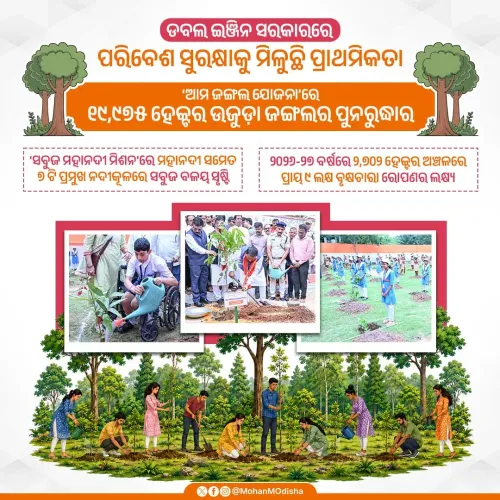
Odisha Chief Minister Mohan Charan Majhi on 7 July 2026 declared the state's forests the foundation of future generations' security, pledging to deepen community-led forest protection and broad-based afforestation. He said lakhs of families are already benefiting and that Odisha is taking a leading role in expanding forest cover.
Key Takeaways
Odisha CM Mohan Charan Majhi posted on 7 July 2026 reaffirming the state government's commitment to forest protection and afforestation.
He described forests as the foundation of future generations' security and prosperity, not merely a natural resource.
The government is strengthening forest protection by making active local participation the cornerstone of its management strategy.
Lakhs of families in Odisha are stated to be benefiting from the ongoing campaign, which Majhi called 'epoch-making.' The approach aligns with India's National Forest Policy of 1988 and Joint Forest Management guidelines of 1990 , which institutionalised community co-management of forests.
The next India State of Forest Report will be a key metric for independently assessing Odisha's forest cover claims.
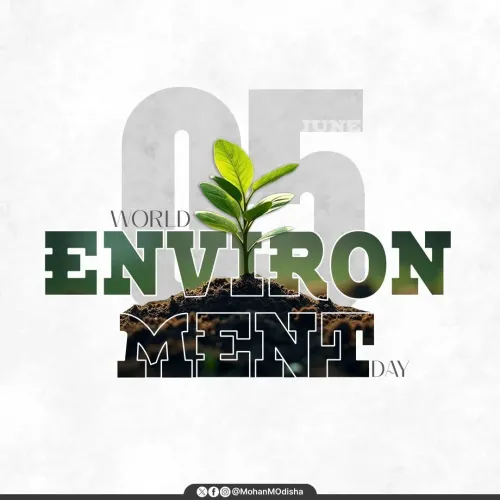
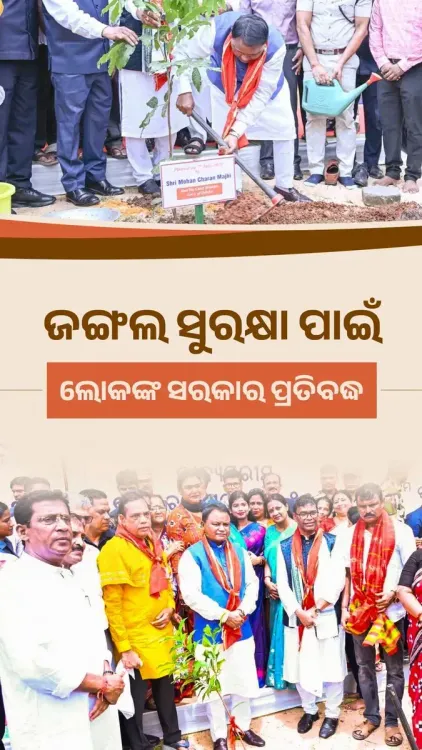
Odisha Chief Minister Mohan Charan Majhi on Tuesday, 7 July 2026, reaffirmed his government's commitment to forest protection and afforestation, stating that the state's forests are not merely a natural resource but the foundation of future generations' security and prosperity. Writing in Odia, the Chief Minister highlighted community participation as the central pillar of the state's forest governance strategy.
In his post, Majhi wrote: 'ଓଡ଼ିଶାର ଜଙ୍ଗଲ କେବଳ ଆମର ପ୍ରାକୃତିକ ସମ୍ପଦ ନୁହେଁ' — 'Odisha's forests are not merely our natural resource' — framing forest conservation as a civilisational and intergenerational obligation. He added that through active local participation, the state government is further strengthening forest protection and management systems, and that lakhs of families across the state are benefiting from what he called a 'epoch-making campaign' (ଯୁଗାନ୍ତକାରୀ ଅଭିଯାନ).
Context
Odisha is one of India's more forested states, with a significant share of its population — particularly Scheduled Tribe communities — directly dependent on forest land and produce for their livelihoods. The state has a long history of community-based forest protection, with village-level forest protection committees operating informally in many districts for decades before formal policy frameworks caught up.
Chief Minister Majhi, who assumed office in 2024 as Odisha's first BJP Chief Minister, has positioned environmental stewardship alongside economic development as a governance priority. His post on 7 July 2026 signals continued political messaging around the state's green credentials.
Policy Backdrop
India's National Forest Policy of 1988 was a landmark shift that placed people's participation at the centre of forest regeneration and protection. The Central government's Joint Forest Management (JFM) guidelines of 1990 institutionalised this approach, enabling state governments to form joint committees of forest departments and local communities to co-manage forest areas.
Odisha adopted JFM frameworks and has over the years expanded the network of village-level forest protection committees. These structures give local communities a formal stake in forest health, including a share of non-timber forest produce and, in some cases, timber revenue — making conservation economically rational for forest-fringe households.
Majhi's statement about 'broad-based afforestation programmes' (ବ୍ୟାପକ ବନୀକରଣ କାର୍ଯ୍ୟକ୍ରମ) aligns with India's commitments under international climate agreements to increase forest and tree cover, a target tracked through the biennial India State of Forest Report published by the Forest Survey of India.
Stakeholders and Impact
Forest-dependent families — many of them from Scheduled Tribe and Other Traditional Forest Dweller communities — stand as the primary beneficiaries of participatory forest management programmes in Odisha. Access to forest produce, wage employment in afforestation drives, and protection of common land resources directly affect household incomes in forested districts such as Koraput, Mayurbhanj, Sundargarh, and Kandhamal.
State forest departments, gram panchayats, and civil society organisations working on tribal rights and ecological conservation are all stakeholders in how these programmes are designed and monitored. The Chief Minister's emphasis on 'active participation of local people' (ସ୍ଥାନୀୟ ଲୋକଙ୍କ ସକ୍ରିୟ ସହଭାଗିତା) suggests the government is seeking to deepen, rather than centralise, the governance of forest resources.
What's Next
The next India State of Forest Report by the Forest Survey of India will be a key data point for assessing whether Odisha's forest cover has expanded under the current administration. State budget allocations for afforestation and community forest management in the coming fiscal cycle will indicate the financial weight the government places behind this political commitment.
If the state follows through on scaling participatory forest management, Odisha could strengthen its position as a model for community-led conservation in eastern India — with implications for how Centre-state forest governance debates unfold in the run-up to national climate target reviews.
Point of View
Which carries electoral resonance in heavily forested and tribal-majority constituencies. By invoking community participation so explicitly, the government is also pre-empting criticism from tribal rights groups who have historically questioned whether forest departments genuinely devolve power to local committees. The messaging dovetails with India's international climate commitments, giving the state government a platform that plays well both domestically and in national policy conversations. Whether the rhetoric translates into measurable forest cover gains will ultimately be judged by independent survey data, making the next Forest Survey of India report a political as much as an ecological document for the Majhi administration.
NationPress
6 Oct 2026
Frequently Asked Questions
What did Odisha CM Mohan Charan Majhi say about forests?
On 7 July 2026, CM Majhi stated that Odisha's forests are the foundation of future generations' security and prosperity, and pledged to strengthen forest protection through active community participation and broad-based afforestation programmes.
How does Odisha involve local communities in forest management?
Odisha uses the Joint Forest Management framework, introduced under Central government guidelines in 1990, which enables village-level committees to co-manage forest areas alongside the state forest department, giving communities a stake in conservation outcomes.
What is Joint Forest Management in India?
Joint Forest Management (JFM) is a Central government policy framework from 1990 that allows state governments to form joint committees of forest departments and local communities to protect and manage forest areas, sharing benefits such as non-timber forest produce with participating households.
Which districts in Odisha have the most forest cover?
Odisha's most forested districts include Mayurbhanj, Koraput, Sundargarh, and Kandhamal, where a significant share of the population — particularly Scheduled Tribe communities — depends on forests for livelihoods.
How is Odisha's forest cover measured?
Forest cover in Indian states is measured biennially by the Forest Survey of India, which publishes the India State of Forest Report. This report is the primary independent benchmark for assessing whether a state's afforestation and conservation efforts are translating into actual cover gains.