CM Majhi Hails India's First Hydrogen Train Launch
Synopsis
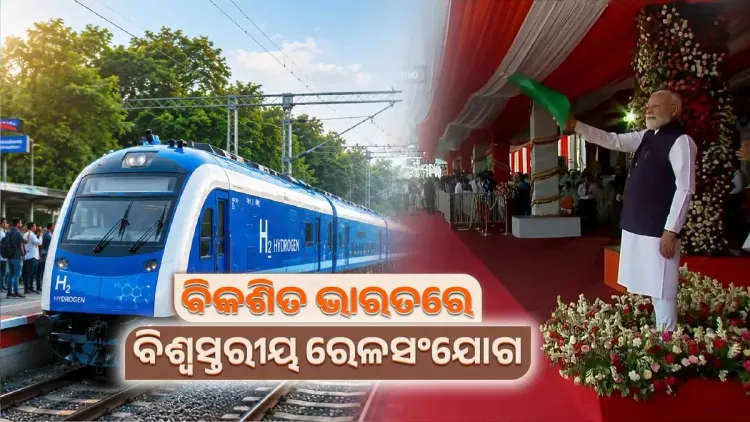
Odisha Chief Minister Mohan Charan Majhi has hailed the launch of India's first hydrogen train as a historic milestone, calling it a symbol of innovation, green development and Atmanirbhar Bharat, and crediting PM Modi's leadership for advancing world-class, environment-friendly rail technology.
Key Takeaways
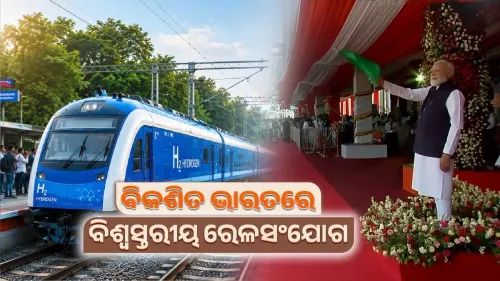
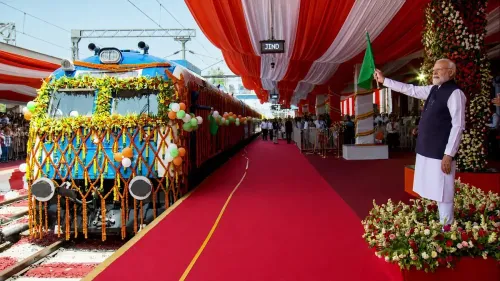
India's first hydrogen train was launched, marking a historic step in Indian Railways modernisation.
CM Mohan Charan Majhi described the train as a symbol of innovation, green development and Atmanirbhar Bharat .
The initiative aligns with the National Green Hydrogen Mission (launched 2021 ) and Indian Railways' net-zero by 2030 target.
Hydrogen trains emit only water vapour, directly reducing carbon emissions and improving air quality for passengers.
The launch supports India's long-term climate commitment of reaching net-zero emissions by 2070 .
Further rollout of hydrogen trains and green hydrogen fuelling infrastructure is expected in upcoming Railway Budget cycles.
Odisha Chief Minister Mohan Charan Majhi on Sunday, 19 July 2026, welcomed the launch of India's first hydrogen train, calling it a historic milestone in the modernisation of Indian Railways and a powerful symbol of the country's green development ambitions.
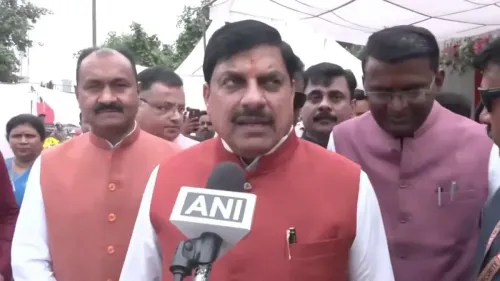
Posting in Odia on X, CM Majhi wrote: 'ହାଇଡ୍ରୋଜେନ୍ ଟ୍ରେନ୍ କେବଳ ଏକ ନୂତନ ପ୍ରଯୁକ୍ତି ନୁହେଁ' ['The hydrogen train is not merely a new technology'], describing the train as 'a strong symbol of innovation, green development and Atmanirbhar Bharat.' He credited Prime Minister Narendra Modi's 'visionary leadership' for integrating cutting-edge technology into Indian Railways, making rail services 'more efficient, environment-friendly and world-class.'
Context
Indian Railways, the world's fourth-largest railway network, has been pursuing an aggressive modernisation and decarbonisation agenda. The introduction of a hydrogen fuel-cell train marks a significant departure from diesel traction and represents one of the most visible steps in the network's push toward cleaner propulsion systems. CM Majhi framed the launch as a step that strengthens the resolve to build a 'Viksit Bharat' — a developed India by 2047.
Policy Backdrop
The hydrogen train initiative sits at the intersection of two major national programmes. The National Green Hydrogen Mission, launched in 2021, aims to scale production and adoption of green hydrogen across sectors including transport. Separately, Indian Railways announced plans in 2023 to introduce hydrogen fuel-cell trains as part of a commitment to achieve net-zero emissions by 2030.
These efforts are also aligned with India's broader climate pledge of reaching net-zero carbon emissions by 2070. Railway modernisation — spanning electrification, high-speed corridors, and alternative fuels — has been a core pillar of infrastructure policy since 2014, with hydrogen traction now added as the latest frontier. The Atmanirbhar Bharat campaign, launched in 2020, further anchors the push for indigenous technology development in this space.
Stakeholders and Impact
Railway passengers stand to benefit from quieter, cleaner journeys as hydrogen trains emit only water vapour rather than greenhouse gases or particulate matter. The renewable energy sector, particularly green hydrogen producers, is poised for expanded demand as the railway network scales up its hydrogen fleet beyond the inaugural service.
For Odisha, a state with significant industrial and coastal geography, the emphasis on energy security and clean transport carries particular resonance. CM Majhi's endorsement signals state-level political support for the Centre's green mobility agenda, reinforcing a coordinated federal push on decarbonisation.
What's Next
Attention will now turn to the rollout of additional hydrogen trains on heritage and regional routes across the country. Subsequent Railway Budget allocations for green hydrogen infrastructure — including fuelling stations and maintenance facilities — will be closely watched as indicators of how rapidly the programme can scale. The success of the first hydrogen train could also accelerate private sector investment in domestic hydrogen fuel-cell manufacturing, a key goal of the National Green Hydrogen Mission.
Point of View
A rhetorical pattern that has become standard for BJP-governed states reinforcing federal policy. The shout-out to PM Modi's 'visionary leadership' also underscores the coordinated messaging discipline within the party on infrastructure wins. More substantively, the hydrogen train launch, if it scales, could position India as a rare emerging-market leader in rail decarbonisation — a geopolitically useful credential in climate diplomacy.
NationPress
19 Jul 2026
Frequently Asked Questions
What is India's first hydrogen train?
India's first hydrogen train is a fuel-cell-powered passenger train that runs on hydrogen, emitting only water vapour instead of greenhouse gases. It represents a major step in Indian Railways' plan to achieve net-zero emissions by 2030 .
What did Odisha CM Mohan Majhi say about the hydrogen train?
CM Mohan Charan Majhi called the launch a 'historic milestone' in railway modernisation, describing the train as a symbol of innovation, green development and Atmanirbhar Bharat , and crediting PM Narendra Modi's visionary leadership.
What is the National Green Hydrogen Mission?
The National Green Hydrogen Mission was launched in 2021 to scale up the production and use of green hydrogen across sectors including transport, supporting India's broader climate and energy-security goals.
How does a hydrogen train help the environment?
Hydrogen fuel-cell trains emit only water vapour, producing zero direct carbon emissions or particulate matter. This makes them significantly cleaner than diesel trains and supports India's commitment to reaching net-zero emissions by 2070 .
What is Viksit Bharat and how does the hydrogen train relate to it?
Viksit Bharat is the government's vision for a fully developed India by 2047 . The hydrogen train is cited as evidence of progress toward this goal, combining sustainable infrastructure, indigenous technology and world-class public services.