Swamy hosts media ethics talk with Madhu Kishwar
Synopsis
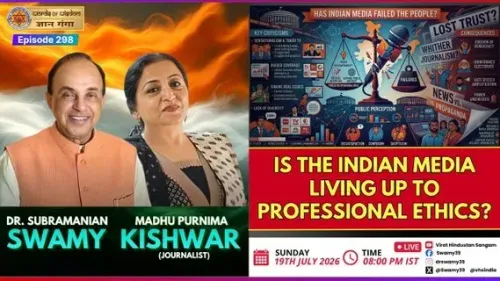
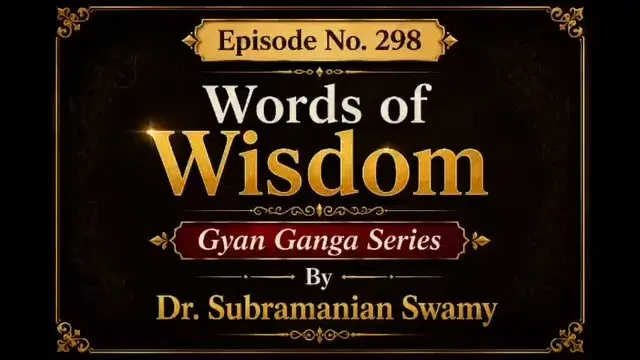
Dr. Subramanian Swamy on 19 July 2026 shared a 'Words of Wisdom / Gyan Ganga' discussion with Madhu Purnima Kishwar questioning whether Indian media upholds professional ethics — reigniting a long-running debate over press accountability and the limits of existing regulatory frameworks like the Press Council of India.
Key Takeaways
Subramanian Swamy posted the session on 19 July 2026 under his recurring 'Words of Wisdom / Gyan Ganga' series on X.
The discussion features Madhu Purnima Kishwar , founder-editor of Manushi and a prominent critic of mainstream media narratives.
The central question posed is whether Indian media is living up to its professional and ethical obligations.
The Press Council of India , set up under the Press Council Act, 1965 , remains the primary but limited statutory body for print media conduct.
Broadcast and digital media in India operate under separate, contested regulatory regimes, leaving a gap in unified ethics enforcement.
The conversation feeds into wider public debate over declining trust in Indian media institutions and possible reforms to accountability mechanisms.
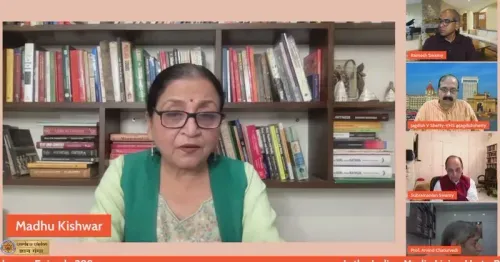
Veteran politician Dr. Subramanian Swamy on Sunday, 19 July 2026, shared a 'Words of Wisdom / Gyan Ganga' session on his official X account featuring a discussion titled 'Is the Indian Media Living Up to Professional Ethics?' with academic and rights activist Madhu Purnima Kishwar.
Context
The session, posted in the evening, centres on a pointed question that has long animated public discourse in India: whether the country's media ecosystem adheres to the professional and ethical standards it is expected to uphold. Dr. Swamy, a former Union Minister and Rajya Sabha MP, has consistently used his public platforms to scrutinise mainstream media coverage of political and economic affairs.
Madhu Purnima Kishwar, the founder-editor of the long-running journal Manushi, brings an academic and activist perspective to the conversation. She has been a vocal critic of what she describes as selective framing and ideological bias in Indian media narratives.
Policy Backdrop
India's primary institutional mechanism for media accountability is the Press Council of India (PCI), established under the Press Council Act, 1965 and reconstituted in 1979. The PCI is mandated to prescribe standards of journalistic conduct and adjudicate public complaints against print publications.
Critics across the political spectrum have argued for decades that the PCI's powers are limited — it can censure but cannot penalise — leaving a structural gap in enforcing professional ethics. Broadcast and digital media operate under separate, often disputed, regulatory frameworks, intensifying the debate over a unified accountability standard.
Stakeholders and Impact
The discussion touches directly on working journalists, editors, and media proprietors, whose professional reputations and commercial interests are bound up in how 'ethics' is defined and enforced. Civil society organisations and media-freedom advocates are equally invested, since stronger regulation can cut both ways — curbing malpractice or enabling state overreach.
For ordinary news consumers, the conversation feeds into a broader crisis of trust: surveys conducted in recent years have consistently shown declining public confidence in Indian media institutions. Swamy's platform amplifies this concern to a politically engaged audience that follows his commentary closely.
What's Next
The session adds momentum to calls for a re-examination of the Press Council Act and whether its scope should be extended to cover digital and broadcast outlets. Any follow-up parliamentary discussion or regulatory proposal on unified media ethics norms will be watched closely by industry bodies and civil liberties groups alike.
Whether this conversation translates into concrete legislative or regulatory action remains to be seen, but it underscores a growing consensus — cutting across political lines — that the question of media accountability in India is overdue for a serious, structured answer.
Point of View
Institutional level. Pairing with Madhu Purnima Kishwar, who carries academic credibility independent of any party, lends the critique a cross-ideological weight that purely partisan commentary would lack. The exchange slots into a broader arc in which questions about press accountability are migrating from op-ed pages into the political mainstream, creating pressure on regulators and legislators alike. If the conversation gains traction, it could accelerate demands for a reformed or expanded Press Council mandate covering digital and broadcast media.
NationPress
18 Oct 2026
Frequently Asked Questions
What did Subramanian Swamy post about Indian media on 19 July 2026?
Dr. Subramanian Swamy shared a video discussion titled 'Is the Indian Media Living Up to Professional Ethics?' featuring Madhu Purnima Kishwar as part of his 'Words of Wisdom / Gyan Ganga' series on X.
Who is Madhu Purnima Kishwar?
Madhu Purnima Kishwar is an academic, rights activist, and the founder-editor of Manushi , a journal known for its commentary on social and political issues. She is a frequent critic of what she sees as bias and selective framing in Indian media.
What is the Press Council of India and what does it do?
The Press Council of India is a statutory body established under the Press Council Act, 1965 (reconstituted 1979) to maintain and improve standards of journalistic conduct. It can censure publications but does not have the power to impose financial penalties.
Why is Indian media ethics a debated topic?
Indian media ethics is debated because the existing regulatory framework — centred on the Press Council — covers only print media and lacks punitive powers, while broadcast and digital outlets fall under separate, often disputed, rules, leaving gaps in unified accountability.
What reforms to Indian media regulation are being discussed?
Calls have grown for extending or replacing the Press Council Act to cover digital and broadcast media under a single, stronger accountability framework, though no specific legislation has been tabled as of mid-2026.