Swamy to Discuss Social Media's Impact on Public Perception
Synopsis
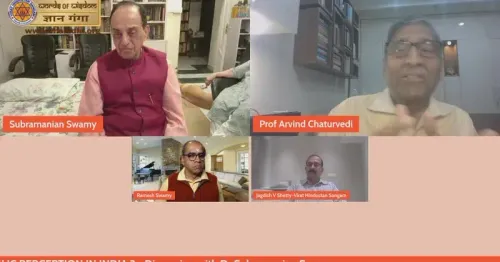
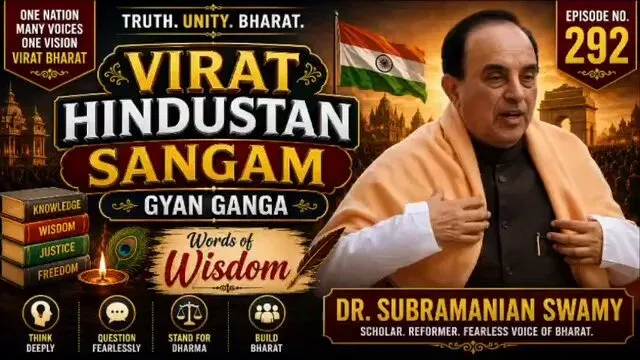
Former Union Minister Dr. Subramanian Swamy joined a YouTube live discussion on 24 May 2026 to examine whether social media is reshaping public perception in India — a question at the centre of ongoing debates over platform regulation, electoral influence, and digital rights.
Key Takeaways
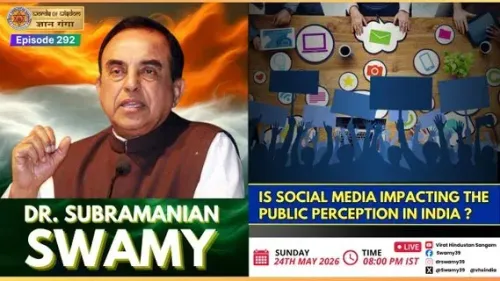
Subramanian Swamy announced a live YouTube discussion on 24 May 2026 at 8 pm on social media's influence on Indian public perception.
The debate sits against the backdrop of the IT (Intermediary Guidelines and Digital Media Ethics Code) Rules, 2021 , which imposed content-moderation duties on large platforms.
Social media's role in shaping political narratives in India has been a central concern since the 2014 general election .
Key stakeholders include the Indian electorate , digital-rights groups, platform companies, and the Ministry of Electronics and Information Technology .
The discussion comes as India faces recurring cycles of viral misinformation ahead of state assembly elections .
Calls for greater algorithmic transparency and local-language content moderation are growing louder across India's digital landscape.
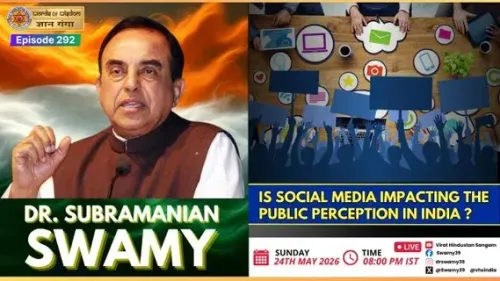
Veteran politician Dr. Subramanian Swamy, former Union Minister and Rajya Sabha MP, announced on Sunday, 24 May 2026, that he would participate in a live discussion at 8 pm on the topic 'Is Social Media Impacting the Public Perception in India?'
Context
Dr. Swamy shared the announcement on X, inviting followers to join a YouTube live session exploring the growing influence of social media on how Indians form political and social opinions. The session is positioned as an open public conversation rather than a formal policy address.
The question at the heart of the discussion — whether social media is reshaping public perception — has become one of the most contested debates in Indian civic life, drawing in politicians, academics, and regulators alike.
Policy Backdrop
India's regulatory engagement with social media accelerated with the Information Technology (Intermediary Guidelines and Digital Media Ethics Code) Rules, 2021, which placed new obligations on large platforms around content moderation, grievance redressal, and transparency reporting.
Critics of the rules argued they gave the government excessive leverage over platform content decisions, while proponents maintained they were necessary to curb misinformation and protect users. The tension between free expression and platform accountability has not been resolved, and the debate remains live in parliamentary and civil-society circles.
Social media's role in Indian electoral politics dates back to the 2014 general election, widely regarded as the first in which digital campaigning played a decisive role in narrative-building. Since then, every major electoral cycle has intensified scrutiny of how platforms amplify or distort political messaging.
Stakeholders and Impact
The discussion touches interests that span the Indian electorate broadly — from first-time voters who receive much of their political information via short-video and messaging platforms, to established parties that have built sophisticated digital outreach machinery.
Civil-society organisations focused on digital rights, platform companies operating under Indian jurisdiction, and regulators at the Ministry of Electronics and Information Technology all have a stake in how the public perception question is answered. Misinformation researchers have documented repeated cycles of viral content shaping ground-level opinion ahead of state assembly elections.
For ordinary users, the stakes are concrete: the credibility of health information, the framing of communal or economic anxieties, and the visibility of policy critiques are all mediated by algorithmic choices made by a small number of global platforms.
What's Next
Dr. Swamy's live session adds a prominent political voice to a conversation that is likely to grow louder as state assembly elections approach and as Parliament revisits digital media guidelines. Whether such public discussions translate into legislative pressure for stricter platform transparency requirements or fresh amendments to the IT Rules remains to be seen.
Regulators and platform companies will be watching the tenor of public discourse closely, particularly as demands for algorithmic accountability and local-language content moderation intensify across India's diverse media landscape.
Point of View
Bypassing traditional broadcast formats. The choice of topic is telling: questions about platform influence on public opinion have moved from academic seminars to mainstream political discourse, particularly as India's regulatory framework for digital intermediaries remains contested. By entering this conversation, Swamy adds legislative credibility to demands for greater scrutiny of how algorithms shape the information environment. The session is unlikely to produce policy outcomes on its own, but it signals that pressure on platforms from across the political spectrum is building ahead of the next electoral cycle.
NationPress
9 Oct 2026
Frequently Asked Questions
What is Dr. Subramanian Swamy discussing in his YouTube live session?
Dr. Swamy is hosting a live discussion on the topic 'Is Social Media Impacting the Public Perception in India?', examining how platforms shape political and social opinion among Indian users.
When and where can I watch Dr. Swamy's YouTube live discussion?
The session was scheduled for 8 pm on Sunday, 24 May 2026 , streamed live on YouTube via the link Dr. Swamy shared on his X account (@Swamy39).
What are India's current rules governing social media platforms?
The Information Technology (Intermediary Guidelines and Digital Media Ethics Code) Rules, 2021 require large social media platforms to appoint grievance officers, comply with takedown orders within set timelines, and publish transparency reports.
How has social media influenced Indian elections?
Since the 2014 general election , social media has been central to political campaigning and narrative-building in India, with parties investing heavily in digital outreach and researchers documenting the viral spread of misinformation during electoral cycles.
Why is the debate over social media and public perception important in India?
India has one of the world's largest social media user bases, and platforms mediate access to political information, health guidance, and economic news for hundreds of millions of people, making questions of algorithmic accountability and content moderation consequential for democracy.