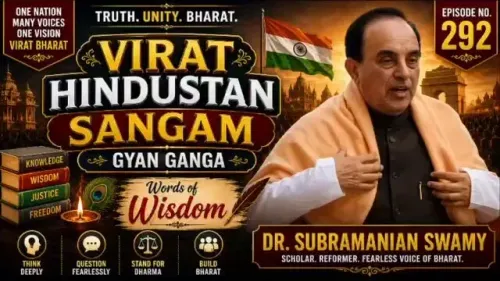
Swamy Speaks on Social Media and Public Perception in India
Synopsis
Veteran politician Dr. Subramanian Swamy took to a live broadcast on X on 25 May 2026 to address whether social media is shaping public perception in India — a question at the heart of ongoing debates over platform regulation, misinformation, and democratic discourse in one of the world's largest digital markets.
Key Takeaways
Subramanian Swamy conducted a live broadcast on X on 25 May 2026 on the topic of social media's impact on public perception in India.
The broadcast format itself exemplified the trend of senior politicians using social media to directly shape public narratives.
India's regulatory framework for social media is anchored in the IT Act, 2000 and the IT (Intermediary Guidelines and Digital Media Ethics Code) Rules, 2021 .
Key stakeholders include hundreds of millions of Indian social media users, all major political parties, and digital regulators under the Ministry of Electronics and Information Technology .
Potential next steps include further amendments to IT Rules and parliamentary committee reviews of digital media ethics and electoral conduct.
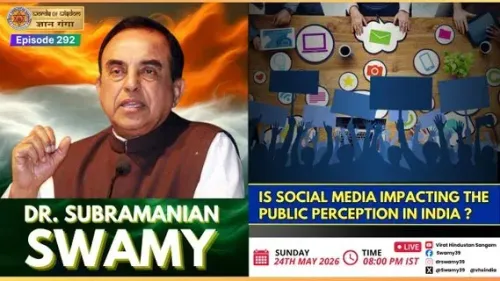
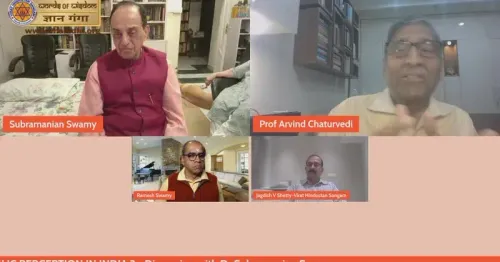
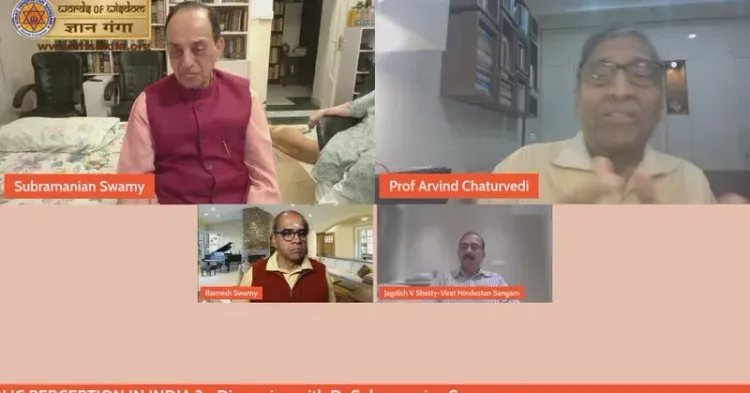
Veteran politician Dr. Subramanian Swamy, former Union Minister and Rajya Sabha MP, addressed the question 'Is Social Media Impacting the Public Perception in India?' in a live broadcast on X (formerly Twitter) on Sunday, 25 May 2026.
Context
Dr. Swamy, a long-standing commentator on governance and economic policy, chose a live audio broadcast on X to engage directly with audiences on a question that sits at the intersection of technology, politics, and public discourse. The format itself underscored the very theme under discussion: a senior politician using a global social media platform to shape opinion about social media's influence on opinion.
The broadcast comes at a moment when India's digital public sphere is under heightened scrutiny, with debates around misinformation, platform accountability, and electoral conduct intensifying ahead of and after successive election cycles.
Policy Backdrop
India's regulatory approach to social media has evolved steadily over more than two decades. The Information Technology Act, 2000 laid the foundational framework for governing online intermediaries, while the Information Technology (Intermediary Guidelines and Digital Media Ethics Code) Rules, 2021 introduced more specific obligations — including grievance redressal mechanisms and content-moderation norms — on large social media platforms.
These rules have been contested and revised in subsequent years, reflecting the difficulty of balancing free expression with accountability in a country that is home to one of the world's largest internet user bases. The question of how platforms shape public perception has been central to these regulatory debates, particularly around election periods when the spread of unverified content can influence voter behaviour.
Stakeholders and Impact
The stakeholders in this debate are broad: social media users — numbering in the hundreds of millions across India — political parties of every stripe, digital regulators including the Ministry of Electronics and Information Technology, and civil society organisations focused on digital rights and media literacy.
Indian politicians across the spectrum have increasingly relied on platforms like X, WhatsApp, Instagram, and YouTube to communicate directly with voters, bypassing traditional editorial gatekeepers. This shift has amplified individual voices but has also raised concerns about echo chambers, coordinated inauthentic behaviour, and the speed at which narratives — accurate or otherwise — can travel.
Dr. Swamy himself has been among the more prolific political voices on X, regularly using the platform to comment on judicial matters, economic policy, and national security, making his engagement with this topic particularly pointed.
What's Next
The broader conversation Dr. Swamy has entered is unlikely to remain at the level of public commentary alone. Parliamentary committee discussions on digital media ethics, potential further amendments to the IT Rules, and ongoing judicial scrutiny of platform liability are all live processes that could give legislative or regulatory shape to the questions he raised.
As India's internet penetration continues to deepen and the next major electoral cycle approaches, the debate over whether social media distorts or democratises public perception will only grow louder — and more consequential for how politics, policy, and public trust are managed in the country.
Point of View
The fluency with which he deploys these platforms signals how thoroughly digital communication has displaced older modes of political engagement. The broader arc here is regulatory: India has been incrementally tightening its grip on social media intermediaries since 2021, and high-profile political commentary on platform influence adds pressure on lawmakers to act more decisively. The question is whether that action will prioritise accountability and transparency, or tip toward control.
NationPress
20 Sept 2026
Frequently Asked Questions
What did Subramanian Swamy say about social media in India?
Dr. Subramanian Swamy addressed the question of whether social media is impacting public perception in India during a live broadcast on X on 25 May 2026. The specific content of his remarks was delivered in the broadcast linked in his post.
How is social media regulated in India?
Social media in India is primarily regulated under the Information Technology Act, 2000 and the IT (Intermediary Guidelines and Digital Media Ethics Code) Rules, 2021, which impose accountability and grievance redressal obligations on large platforms.
Does social media influence elections in India?
Debates over social media's influence on Indian elections have grown alongside rising internet penetration, with concerns centred on misinformation, coordinated inauthentic behaviour, and the speed at which narratives spread across platforms like X, WhatsApp, and YouTube.
Who is Dr. Subramanian Swamy?
Dr. Subramanian Swamy is a veteran Indian politician, economist, former Union Minister, and long-serving Rajya Sabha MP known for outspoken commentary on economic policy, governance, and national security matters.
What are the IT Intermediary Guidelines 2021?
The IT (Intermediary Guidelines and Digital Media Ethics Code) Rules, 2021 are regulations that require large social media platforms operating in India to appoint local grievance officers, comply with content-takedown orders, and follow a code of ethics for digital media publishers.