Swamy Raises Question on Social Media's Impact on Indian Public Perception
Synopsis
Veteran politician Dr. Subramanian Swamy pinned a broadcast on X on 24 May 2026 posing the question of whether social media is reshaping public perception in India — a debate that intersects with digital regulation, electoral integrity, and the future of Indian democracy.
Key Takeaways
Subramanian Swamy pinned a broadcast on X on 24 May 2026 raising the question of social media's impact on public perception in India .
India's social media user base has grown rapidly since the early 2010s, making it one of the world's largest markets for digital platforms.
The Information Technology Act, 2000 and subsequent intermediary guidelines form the current regulatory backbone for online content in India.
Political parties across the spectrum have invested heavily in social media strategy, shaping how voters receive and process political information.
Parliamentary discussions on amendments to IT rules and platform accountability during elections remain active policy fronts.
The broadcast signals Dr.
Swamy's intent to drive structured public debate on digital governance at a time of heightened regulatory scrutiny.
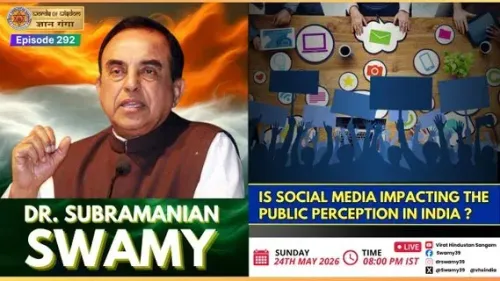
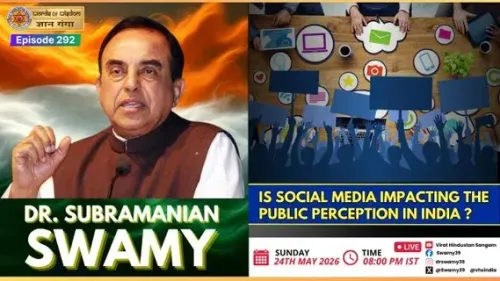
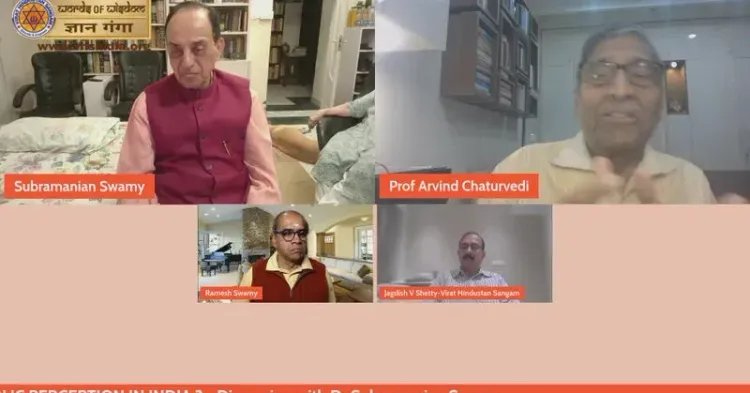
Veteran politician Dr. Subramanian Swamy, former Union Minister and Rajya Sabha MP, pinned a broadcast on Sunday, 24 May 2026, posing the question: 'Is social media impacting the public perception in India?' — signalling his intent to engage audiences in a structured discussion on the growing influence of digital platforms on Indian political and social discourse.
Context
Dr. Swamy is a long-time political commentator known for raising policy-level questions on platforms such as X (formerly Twitter), where he commands a large and politically engaged following. By pinning the broadcast, he has elevated the question to the top of his public profile, inviting sustained attention. The move reflects a wider trend of senior politicians using live-audio and broadcast features to extend their reach beyond traditional media.
Social media usage in India has grown exponentially since the early 2010s, with platforms becoming central arenas for political mobilisation, opinion formation, and information — and misinformation — spread. The question Dr. Swamy raises is not rhetorical; it sits at the heart of ongoing regulatory and democratic debates across the country.
Policy Backdrop
India's digital governance framework traces its roots to the Information Technology Act, 2000, which established the foundational legal structure for online content and intermediary liability. Subsequent amendments and the introduction of intermediary guidelines have attempted to balance free expression with accountability, particularly as platforms scaled rapidly during national and state election cycles.
Governments across the political spectrum have grappled with regulating content moderation, curbing misinformation, and defining the responsibilities of large social media intermediaries. Parliamentary discussions on proposed amendments to IT rules remain active, with digital platforms' role during elections drawing particular scrutiny from lawmakers and civil society alike.
Stakeholders and Impact
The question touches directly on political parties, who have invested heavily in social media strategy, and on ordinary Indian voters, whose news consumption and political opinions are increasingly shaped by algorithmic feeds rather than traditional editorial gatekeepers. Researchers and civil society groups have documented both the democratising potential of these platforms and their capacity to amplify polarisation.
Platform companies operating in India — one of the world's largest and fastest-growing user bases — face mounting pressure from regulators, legislators, and the public to demonstrate responsible content governance. The debate intersects with concerns about electoral integrity, communal harmony, and the health of public discourse.
What's Next
With Dr. Swamy anchoring the conversation through a pinned broadcast, the discussion is likely to attract responses from across the political and civil-society spectrum. Parliamentary deliberations on digital regulation and the conduct of upcoming state elections will provide the immediate policy backdrop against which this broader question will be tested. How India resolves the tension between platform freedom and public accountability may define the character of its digital democracy for years to come.
Point of View
Using the very platform whose influence he is questioning to amplify the debate — a move that itself illustrates the dynamic he is interrogating. The question arrives as India's regulatory conversation around digital intermediaries intensifies, giving it immediate policy salience beyond mere commentary. Senior politicians engaging with structural questions about platform power signals that social media governance is migrating from a technocratic concern to a mainstream political issue. The broader arc here is India's search for a sovereign digital framework that preserves democratic discourse without ceding regulatory ground to global platform companies.
NationPress
20 Sept 2026
Frequently Asked Questions
What did Dr. Subramanian Swamy say about social media in India?
On 24 May 2026 , Dr. Swamy pinned a broadcast on X posing the question 'Is social media impacting the public perception in India?', inviting public discussion on the role of digital platforms in shaping Indian opinion.
How has social media influenced Indian politics?
Social media platforms have shaped political mobilisation and voter opinion in India since widespread adoption around 2010–2014 , with parties using them for outreach while concerns over misinformation and polarisation have grown alongside.
What laws govern social media in India?
The Information Technology Act, 2000 and subsequent intermediary liability guidelines form the primary legal framework regulating social media platforms and their content moderation obligations in India.
Why is social media regulation a concern during Indian elections?
Digital platforms can rapidly amplify political messaging and misinformation during election cycles, prompting calls for stricter content governance and clearer accountability rules for large social media intermediaries operating in India.
Who is Dr. Subramanian Swamy?
Dr. Subramanian Swamy is a veteran Indian politician, former Union Minister, and former Rajya Sabha MP who is widely known as a political commentator on economic, governance, and policy issues.