Swamy Speaks on Social Media's Role in Shaping India's Public Opinion
Synopsis
Former Union Minister Dr. Subramanian Swamy spoke publicly on 24 May 2026 about whether social media is reshaping public perception in India, engaging a live online audience on a question central to the country's digital governance and electoral discourse.
Key Takeaways
Subramanian Swamy , former Union Minister and Rajya Sabha MP, addressed the topic of social media's influence on Indian public perception on 24 May 2026 .
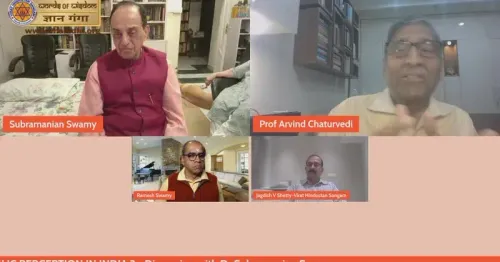
The address was delivered as a live online session, itself demonstrating the reach of social media platforms for public commentary.
Social media's role in Indian public discourse has grown significantly since the 2014 general elections , influencing electoral narratives across successive cycles.
The IT (Intermediary Guidelines and Digital Media Ethics Code) Rules, 2021 represent the central government's primary regulatory response to platform influence and misinformation concerns.
Key stakeholders include political parties , media regulators , the Ministry of Electronics and Information Technology , and hundreds of millions of Indian social media users.
Further parliamentary debate on IT Rules amendments and regulatory enforcement actions remains anticipated.
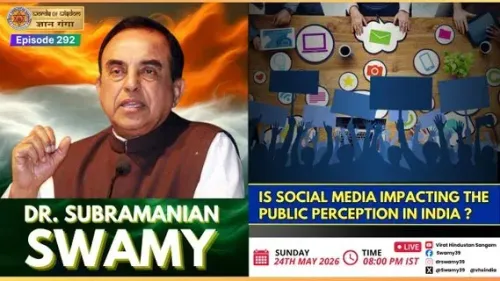
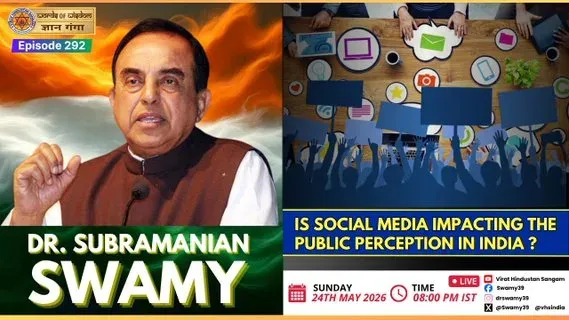
Veteran politician Dr. Subramanian Swamy, former Union Minister and Rajya Sabha MP, shared a public address on Sunday, 24 May 2026, speaking on the topic 'Is Social Media Impacting the Public Perception in India?' — a question that sits at the heart of India's evolving digital and democratic landscape.
Context
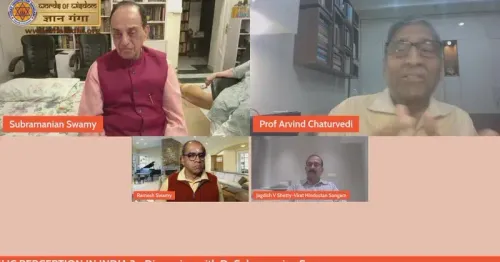
Dr. Swamy, a long-time political commentator and economist, addressed the question of whether social media platforms are reshaping how Indian citizens form political and social opinions. The address was made available as a live video, extending his commentary to a broad online audience. His intervention comes at a time when the influence of digital platforms on electoral and public discourse in India is under intense scrutiny.
Social media's footprint in Indian public life has grown dramatically since the 2014 general elections, when platforms first emerged as decisive arenas for political messaging. Since then, successive election cycles have seen parties, candidates, and commentators deploy social media as a primary tool for reaching voters, framing narratives, and countering opponents.
Policy Backdrop
The regulatory environment governing social media in India has tightened considerably in recent years. The Information Technology (Intermediary Guidelines and Digital Media Ethics Code) Rules, 2021 imposed significant compliance requirements on large platforms, including grievance redressal mechanisms, content takedown timelines, and traceability obligations for messaging services.
The central government has repeatedly cited concerns over misinformation, data privacy, and the influence of foreign-owned platforms when introducing or amending these digital rules. These domestic debates mirror wider global conversations about platform accountability versus free expression, making Dr. Swamy's engagement with the topic timely and relevant.
Stakeholders and Impact
The question Dr. Swamy addresses touches a wide set of stakeholders. Political parties across the spectrum have invested heavily in social media infrastructure, recognising its power to set agendas and mobilise supporters. Media regulators and the Ministry of Electronics and Information Technology are grappling with enforcement challenges as platform usage scales rapidly.
For ordinary social media users — numbering in the hundreds of millions in India — the stakes are equally high. Algorithmic amplification, viral misinformation, and echo chambers have been documented as factors altering how citizens perceive political events, public figures, and policy decisions. Dr. Swamy's commentary, delivered to a live online audience, itself illustrates the very dynamic under discussion.
What's Next
Parliamentary debate on further amendments to the IT Rules remains a live possibility, with lawmakers from multiple parties having flagged concerns about both over-regulation and under-enforcement. Statements from the Ministry of Electronics and Information Technology on platform compliance and enforcement actions are also anticipated as the regulatory cycle continues.
As India approaches future electoral contests, the intersection of social media influence, regulatory oversight, and public perception is likely to intensify. Voices like Dr. Swamy's — carrying institutional credibility and a history of direct public engagement — will continue to shape how these debates unfold in mainstream and digital discourse alike.
Point of View
Against a backdrop of evolving IT Rules and persistent misinformation concerns, positions this commentary within a broader arc of regulatory and democratic tension that shows no sign of resolution. Whether such public interventions accelerate or complicate legislative action on digital governance remains the defining question for India's information ecosystem.
NationPress
22 Sept 2026
Frequently Asked Questions
What did Subramanian Swamy say about social media in India?
Dr. Subramanian Swamy spoke on the topic of whether social media is impacting public perception in India, sharing his address as a live online session on 24 May 2026. The full address is available via the link he shared on his official X account.
How has social media influenced Indian elections?
Social media platforms have shaped Indian electoral narratives since the 2014 general elections, enabling parties and candidates to reach voters directly, frame issues rapidly, and counter opponents in real time, prompting ongoing regulatory responses from the central government.
What are India's rules on social media regulation?
The Information Technology (Intermediary Guidelines and Digital Media Ethics Code) Rules, 2021 are the primary framework, requiring large platforms to appoint grievance officers, comply with content takedown timelines, and provide traceability for certain communications.
Who is Subramanian Swamy and why is his opinion on social media relevant?
Dr. Subramanian Swamy is a veteran politician, former Union Minister, and former Rajya Sabha MP with a long record of public commentary on policy and governance. His views on digital platforms carry weight given his institutional background and active presence in national debates.
Is the Indian government planning to change IT Rules on social media?
Parliamentary discussions on further amendments to the IT Rules remain a live possibility, with lawmakers from multiple parties having raised concerns about both over-regulation and under-enforcement of existing digital media guidelines.