Swamy, Kishwar Question If Indian Media Meets Public Trust
Synopsis
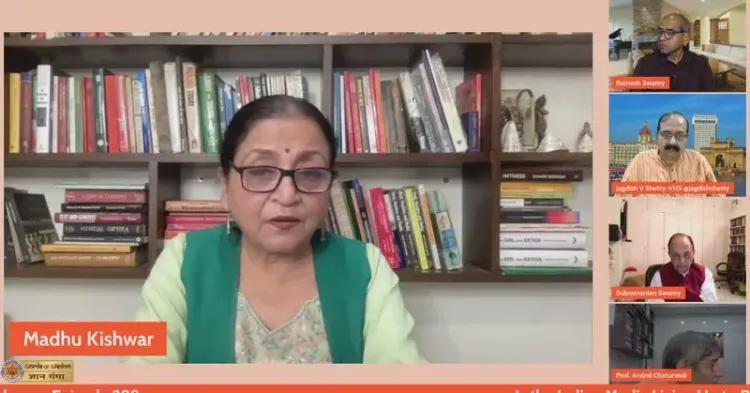
Veteran politician Dr. Subramanian Swamy and academic Madhu Purnima Kishwar held a live X broadcast on 19 July 2026 questioning whether Indian media is living up to public expectations, reigniting debate over editorial independence, journalistic standards, and the press's democratic role in India.
Key Takeaways
Subramanian Swamy and Madhu Purnima Kishwar co-hosted a live broadcast on X on 19 July 2026 examining Indian media performance.
The central question posed was whether Indian media is 'living up to its expectations' as a democratic institution.
Kishwar is the founder-editor of Manushi journal and a long-standing critic of mainstream media narratives in India .
The Press Council of India Act, 1978 remains the primary statutory framework governing journalistic standards and press freedom.
Concerns about commercial pressures and political proximity affecting editorial independence have grown since the 1991 liberalisation of private broadcasting.
The broadcast reflects a broader trend of accountability discussions migrating to open digital platforms, bypassing traditional editorial channels.
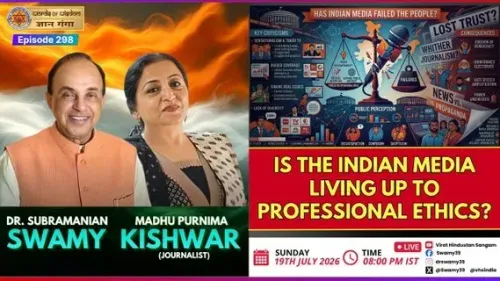
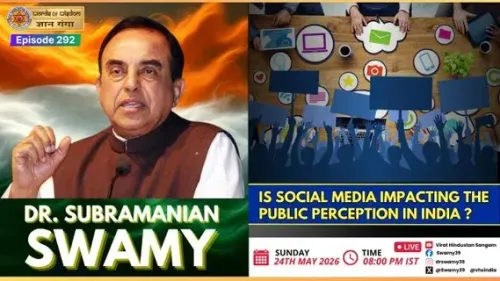
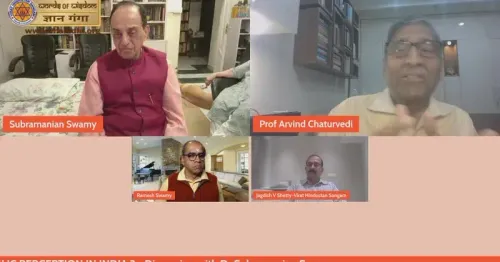
Veteran politician Dr. Subramanian Swamy on Sunday, 19 July 2026, hosted a live broadcast on X alongside academic and rights activist Madhu Purnima Kishwar, posing a pointed question to the public: 'Is the Indian Media Living Up to Its Expectations?' The session drew attention to long-standing concerns about journalistic accountability, editorial independence, and the gap between media ideals and ground reality.
Context
Dr. Swamy, a former Union Minister of Commerce as well as Law and Justice and a long-serving Rajya Sabha MP, has been a persistent voice on governance and institutional accountability. His decision to anchor a public broadcast specifically on media performance signals a deliberate effort to bring the conversation into the mainstream political discourse. Madhu Purnima Kishwar, founder-editor of the influential Manushi journal and a noted academic, has spent decades critiquing media narratives and the framing of political events in India.
The broadcast, streamed live on X (formerly Twitter), invited viewers to engage with a question that resonates deeply with a large section of the Indian public: whether the press is fulfilling its constitutional and democratic role as the fourth pillar of democracy.
Policy Backdrop
The Press Council of India Act, 1978 established a statutory body tasked with preserving press freedom while adjudicating complaints on journalistic standards and ethics. Despite this framework, critics have long argued that commercial pressures, ownership concentration, and political proximity have eroded editorial independence across both legacy print and digital platforms.
Since the expansion of private television channels following the 1991 economic reforms, Indian media has grown exponentially in reach but has also faced recurring scrutiny over accuracy, sensationalism, and coverage balance. These debates have historically intensified around general elections and major policy announcements, when questions of fairness and editorial discretion are most publicly contested.
Stakeholders and Impact
The conversation directly concerns Indian journalists, editors, media owners, and the millions of citizens who rely on the press for information. Civil society organisations and academic institutions that monitor media ethics also have a stake in how such public debates shape regulatory and public expectations.
For media consumers, particularly younger, digitally active audiences, broadcasts of this kind on open platforms like X represent an alternative avenue for scrutiny that bypasses traditional editorial gatekeeping. The choice of platform itself underscores a broader shift in where accountability conversations now take place in India.
What's Next
The broadcast could feed into wider legislative conversations, with possible references in upcoming parliamentary sessions to Press Council of India reports or proposed updates to media-related statutes. Advocacy groups focused on press freedom and media literacy are likely to amplify the discussion.
As debates over media regulation and digital platform accountability continue to evolve, interventions by senior political figures like Dr. Swamy and credible voices like Kishwar are likely to keep the question of media standards at the centre of India's democratic conversation.
Point of View
Whose credibility spans academia and civil society, lends the conversation a non-partisan intellectual weight that a purely political critique would lack. The broadcast fits a recurring pattern in Indian public life where elections and governance cycles prompt senior figures to question media framing, but the use of X as the venue rather than a formal press conference or parliamentary statement reflects how the arena for such debates has shifted. If the conversation gains traction, it could add pressure on the Press Council of India or the government to revisit media regulation frameworks that have remained largely unchanged for decades.
NationPress
20 Jul 2026
Frequently Asked Questions
What did Dr. Subramanian Swamy say about Indian media in July 2026?
Dr. Subramanian Swamy hosted a live broadcast on X on 19 July 2026 alongside Madhu Purnima Kishwar, raising the question of whether Indian media is living up to its expectations in terms of journalistic standards and accountability.
Who is Madhu Purnima Kishwar and why is she discussing Indian media?
Madhu Purnima Kishwar is an Indian academic, rights activist, and founder-editor of the Manushi journal. She has long critiqued mainstream media narratives and political discourse in India, making her a prominent voice in discussions on press accountability.
What is the Press Council of India and what does it do?
The Press Council of India is a statutory body established under the Press Council of India Act, 1978. It is tasked with preserving press freedom while adjudicating complaints related to journalistic standards and ethics.
Why is Indian media accountability a recurring debate?
Since the expansion of private television channels after India's 1991 economic reforms, concerns have grown about commercial pressures, ownership concentration, and political proximity affecting editorial independence, accuracy, and coverage balance.
Where can I watch the Swamy and Kishwar media discussion?
The live broadcast by Dr. Subramanian Swamy and Madhu Purnima Kishwar was streamed on X (formerly Twitter) and can be accessed via Dr. Swamy's official X account, @Swamy39.