CM Majhi Highlights Education Reforms for Odisha Youth
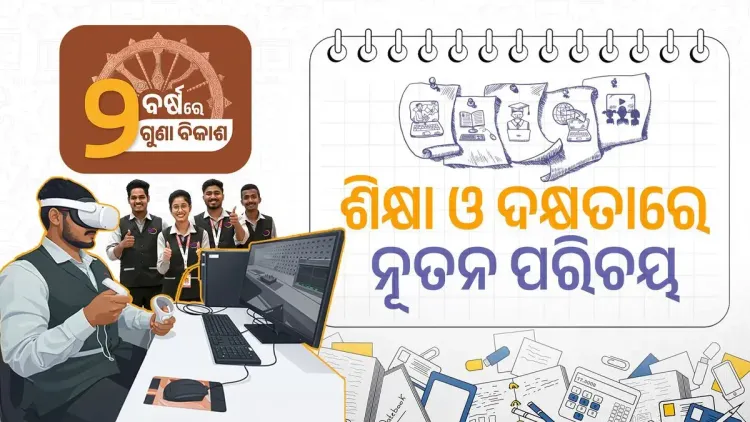
Synopsis
On the second anniversary of his government, Odisha Chief Minister Mohan Charan Majhi announced wide-ranging education and skill reforms — including PM SHRI Schools for rural areas and the Utkarsh ITI Yojana — targeting youth, women, and backward-class students for economic empowerment.
Key Takeaways
CM Mohan Charan Majhi marked two years of his government by outlining education and skill-development reforms on 22 June 2026 .
The PM SHRI Schools scheme is being implemented in rural Odisha to upgrade selected schools into model institutions.
The Utkarsh ITI Yojana is modernising Industrial Training Institutes with updated equipment and training modules.
Employment-linked apprenticeships and digital literacy programmes are being introduced at the higher-education level.
Financial incentives are being provided to students from socially and economically backward communities.
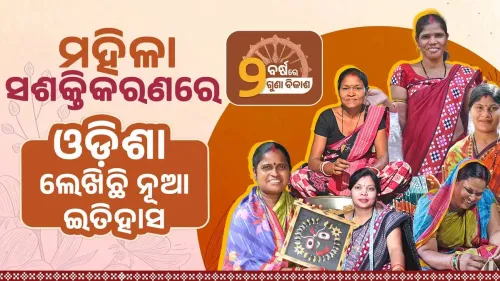
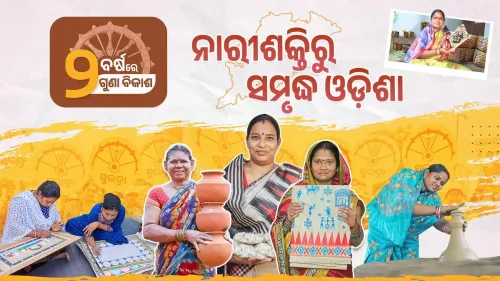
Women are a specific focus group for skill-training programmes aimed at economic self-reliance.
Odisha Chief Minister Mohan Charan Majhi on Monday, 22 June 2026 outlined a broad set of education and skill-development reforms his government is implementing, framing them as the foundation for an empowered and self-reliant younger generation in the state.
Context
Posting in Odia under the hashtags #2YearsofLokankaSarakar and #2YearsOfShikshaSanskara — marking two years of his government — CM Majhi said his administration has introduced 'comprehensive reforms in education and skill development to empower and make the youth of Odisha self-reliant.' The post coincides with the second anniversary of the BJP-led government that came to power in Odisha in June 2024.
The chief minister specifically cited two flagship programmes: PM SHRI Schools being rolled out in rural areas, and the Utkarsh ITI Yojana for modernising technical education through upgraded Industrial Training Institutes. He also pointed to a 'historic provision' in the state's education budget, though no specific figure was mentioned in the post.
Policy Backdrop
The PM SHRI Schools scheme was approved by the central government in 2022 to develop selected schools into model institutions with enhanced infrastructure. Its extension to rural Odisha aligns with the scheme's original intent of bridging the urban-rural educational divide.
The Utkarsh ITI Yojana is an Odisha state programme designed to equip Industrial Training Institutes with modern machinery and updated training modules, feeding into the broader Skill India Mission that has been expanding since 2015. Both initiatives draw from the National Education Policy 2020, which prioritises vocational training, digital literacy, and multidisciplinary learning across states.
CM Majhi also highlighted employment-linked apprenticeships at the higher-education level and digital literacy drives as key pillars, with financial incentives earmarked for students from socially and economically backward communities.
Stakeholders and Impact
The reforms as described target three primary groups: rural students who stand to benefit from upgraded school infrastructure under PM SHRI; youth from backward classes who will receive financial incentives to stay in and advance through the education system; and women, for whom dedicated skill-training programmes are being run with the stated goal of making them economically self-reliant.
The push toward employment-linked apprenticeships is aimed at narrowing the gap between higher-education enrolment and actual job placement — a persistent challenge across India's eastern states, where graduate unemployment has historically remained above the national average.
What's Next
The practical test for these reforms will lie in measurable outcomes: enrolment and completion rates at upgraded PM SHRI Schools, placement data from Utkarsh ITI Yojana graduates, and uptake of apprenticeship programmes at colleges. CM Majhi described this transformation as laying the groundwork for a 'prosperous and developed Odisha' in the years ahead.
As Odisha marks two years of the current government, the rollout milestones of these schemes and their impact on women and rural communities will be closely watched by education administrators and policy observers alike.
Point of View
Positioning the BJP government in Odisha as an active implementer of central schemes like PM SHRI while also asserting state-level initiative through programmes like Utkarsh ITI Yojana. By foregrounding women and backward-class youth, CM Majhi is signalling social inclusion alongside economic productivity — a dual message that resonates with both NEP 2020's equity goals and the party's broader political outreach in the state. The emphasis on rural schools and vocational institutes reflects an acknowledgement that Odisha's development story must be anchored in its hinterland, not just its urban centres. Whether these commitments translate into measurable outcomes will define the government's education narrative heading into the second half of its term.
NationPress
22 Jun 2026
Frequently Asked Questions
What is the Utkarsh ITI Yojana in Odisha?
The Utkarsh ITI Yojana is an Odisha state scheme aimed at modernising Industrial Training Institutes with updated equipment and training modules to improve skill development and employment prospects for youth.
What are PM SHRI Schools and how are they being implemented in Odisha?
PM SHRI Schools is a central government scheme launched in 2022 to upgrade selected schools into model institutions with better infrastructure. In Odisha, CM Mohan Charan Majhi's government is deploying them specifically in rural areas to bridge the urban-rural education gap.
What education reforms has CM Mohan Majhi announced for Odisha youth?
CM Majhi's government has highlighted PM SHRI Schools for rural areas, the Utkarsh ITI Yojana for technical education, employment-linked apprenticeships, digital literacy programmes, and financial incentives for backward-class students and skill training for women.
What is the significance of the two-year anniversary of Mohan Majhi's government?
The BJP-led government under Mohan Charan Majhi came to power in Odisha in June 2024. The second anniversary in June 2026 is being marked by a series of communications highlighting policy achievements, including in education and skill development.
How does Odisha's education policy connect to the National Education Policy 2020?
Odisha's current reforms — including vocational training through ITIs, digital literacy, and employment-linked apprenticeships — align with the National Education Policy 2020's core pillars of skill integration, multidisciplinary learning, and equity-focused education.