CM Pema Khandu backs Tawang Rhododendron Plantation Drive
Synopsis
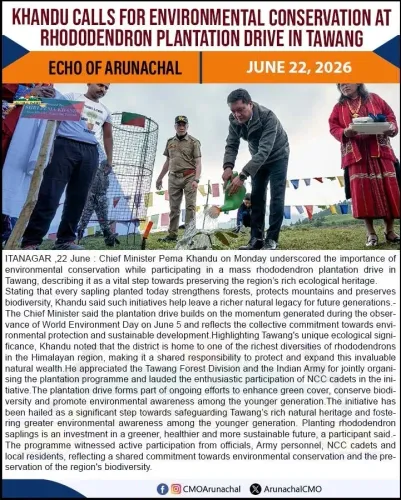
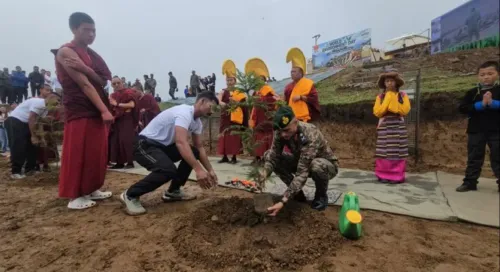
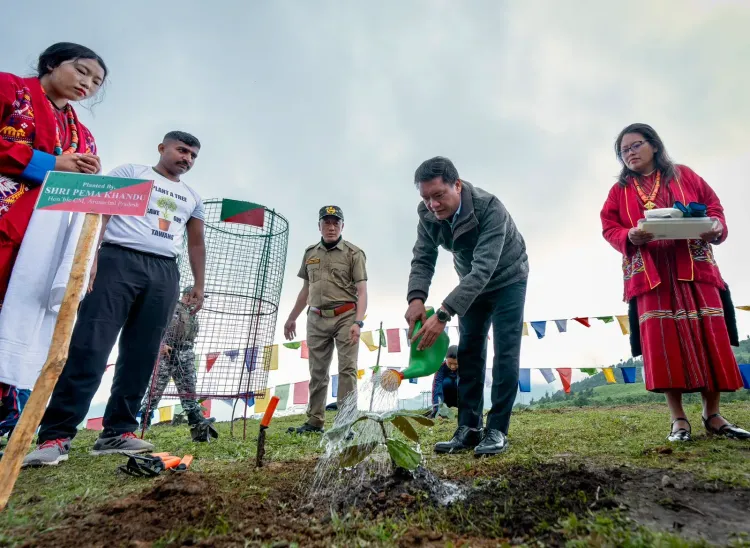
Arunachal Pradesh CM Pema Khandu on 22 June 2026 applauded a Mass Rhododendron Plantation Drive in Tawang, jointly organised by the Tawang Forest Division and the Indian Army with NCC cadets, calling it a continuation of World Environment Day momentum to protect the district's Himalayan biodiversity.
Key Takeaways
CM Pema Khandu publicly backed the Mass Rhododendron Plantation Drive in Tawang on 22 June 2026 .
The drive was jointly organised by the Tawang Forest Division and the Indian Army , with NCC cadets participating.
Tawang is described as home to one of the richest diversities of rhododendrons in the Himalayas .
The initiative follows the environmental momentum built on World Environment Day, 5 June 2026 .
Tawang's rhododendron habitats are part of the broader Indo-Burma biodiversity hotspot .
The drive aligns with India's National Mission for a Green India and national afforestation targets.
Arunachal Pradesh Chief Minister Pema Khandu on Monday, 22 June 2026, lauded a Mass Rhododendron Plantation Drive held in Tawang, calling it a continuation of the environmental momentum built on World Environment Day (5 June) and underscoring the district's exceptional Himalayan biodiversity. The drive was jointly organised by the Tawang Forest Division and the Indian Army, with active participation from National Cadet Corps (NCC) cadets.
Context
Posting on X (formerly Twitter), CM Khandu wrote: 'Every sapling we plant today strengthens our forests, protects our mountains, preserves biodiversity, and leaves a richer natural heritage for the next generation.' He described Tawang as being 'blessed with one of the richest diversities of rhododendrons in the Himalayas,' framing conservation of this natural wealth as a collective responsibility. The Chief Minister extended his appreciation to the Tawang Forest Division, the Indian Army, and the NCC cadets for their participation in the drive.
Policy Backdrop
The plantation drive fits within a broader national framework for afforestation. India has observed Van Mahotsav — an annual tree-plantation festival — every July since 1950, and the National Mission for a Green India, launched in 2014 under the National Action Plan on Climate Change, set targets to expand forest and tree cover across the country. High-altitude ecosystems such as those in Tawang face particular pressure from climate change, making targeted drives in these zones strategically significant.
Tawang's rhododendron habitats form part of the larger Indo-Burma biodiversity hotspot, one of the world's recognised centres of biological richness. Coordinated conservation efforts involving state forest departments and the armed forces have become a recurring feature of environmental governance in India's Eastern Himalayan border districts.
Stakeholders and Impact
The drive directly involves Tawang Forest Division staff, Indian Army personnel stationed in the district, and NCC cadets — a combination that signals both institutional commitment and youth engagement in conservation. Residents of Tawang stand to benefit from improved forest cover that supports watershed health, tourism linked to the district's scenic landscapes, and the preservation of culturally significant flora. Rhododendrons, the state flower of several Himalayan states, hold ecological as well as cultural value for communities in the region.
The involvement of the Indian Army in civic conservation action in a sensitive border district also reflects the military's longstanding civic-action mandate in Arunachal Pradesh, which shares an international boundary with China.
What's Next
The Arunachal Pradesh Forest Department is expected to publish follow-up plantation data and any revised targets in the months ahead, as the state works toward its forest-cover commitments under national climate goals. With Van Mahotsav approaching in July, similar drives across the state are likely. The momentum from the 5 June World Environment Day event and this 22 June Tawang drive suggests the state government intends to sustain a rolling calendar of green initiatives through the monsoon planting season — the period most conducive to successful sapling establishment in Himalayan terrain.
Point of View
Timed to the monsoon planting season when such initiatives yield the highest sapling-survival rates. The inclusion of the Indian Army alongside the state forest department in a border district carries a dual signal: conservation credibility and a reminder of the military's deep civic footprint in a geopolitically sensitive zone. Nationally, the optics align with the BJP-led government's green-cover commitments under the Paris Agreement and domestic climate action plans. Whether these drives translate into independently verified increases in forest cover will be the metric that defines their long-term policy significance.
NationPress
21 Sept 2026
Frequently Asked Questions
What is the Mass Rhododendron Plantation Drive in Tawang?
The Mass Rhododendron Plantation Drive is a conservation initiative held in Tawang, Arunachal Pradesh, jointly organised by the Tawang Forest Division and the Indian Army to expand rhododendron cover in one of the Himalayas' richest biodiversity zones.
Why is Tawang significant for rhododendrons?
Tawang district in Arunachal Pradesh is considered to have one of the richest diversities of rhododendrons in the Himalayas, making it a key site within the broader Indo-Burma biodiversity hotspot.
What did CM Pema Khandu say about the plantation drive?
CM Pema Khandu said 'every sapling we plant today strengthens our forests, protects our mountains, preserves biodiversity, and leaves a richer natural heritage for the next generation,' and appreciated the Tawang Forest Division, Indian Army, and NCC cadets for organising the drive.
Why is the Indian Army involved in a plantation drive in Tawang?
The Indian Army has a longstanding civic-action mandate in border districts of northeast India, and its participation in conservation drives in Tawang reflects this role alongside its regular security presence in the region.
How does this drive connect to national environmental policy?
The drive aligns with India's National Mission for a Green India launched in 2014 and the broader Van Mahotsav tradition since 1950, both aimed at expanding forest cover and protecting high-altitude ecosystems under national climate commitments.