Sitharaman cites 1069 CE Chola inscription to frame public health, education spending
Synopsis
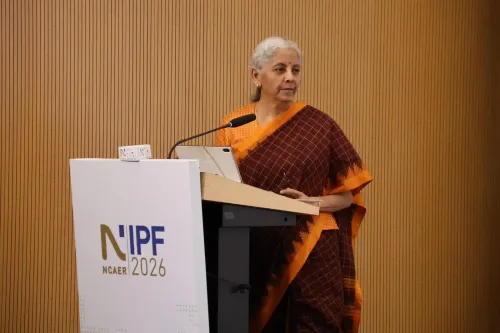
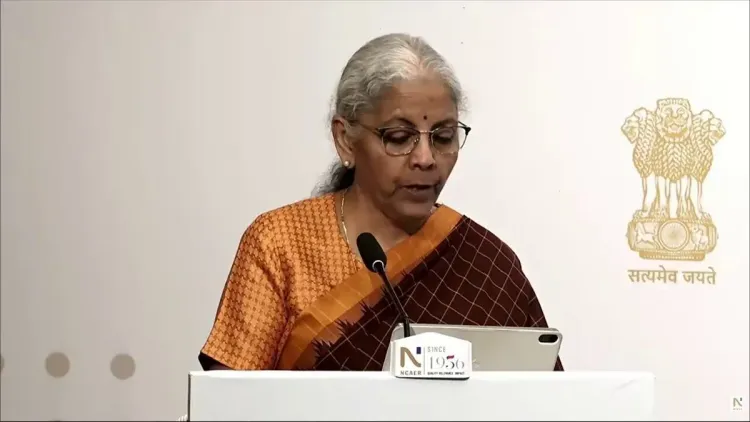
At the C.D. Deshmukh Lecture 2026 in New Delhi, Union Finance Minister Nirmala Sitharaman invoked a 1069 CE Chola-era inscription from Thirumukkudal, near Kanchipuram, detailing a 15-bed hospital and college funded by temple revenue, to argue that converting prosperity into permanent public institutions is a distinctly Indian civilisational tradition.
Key Takeaways
Union Finance Minister Nirmala Sitharaman spoke at the C.D.
Deshmukh Lecture 2026 in New Delhi on 6 August 2026 .
She cited an inscription from Thirumukkudal, near Kanchipuram , from the reign of Virarajendra Chola (1069 CE) .
The inscription records a 15-bed hospital (Vira-Cholan Hospital), a college with a hostel, named medical staff, salaries in paddy, and medicines including Brahmi and castor oil .
Land was permanently endowed for the hospital's upkeep under the designation Vaidya-bhogam .
Sitharaman's core argument: the Chola administration converted prosperity into permanent public institutions — not charity — and India's policy tradition should reflect that lineage.
She declared quality education and healthcare 'entirely non-negotiable national priorities' and an 'expression of the Indian ethos.'
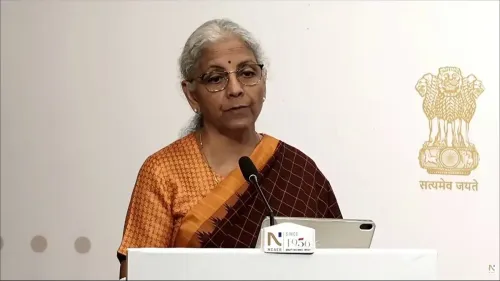
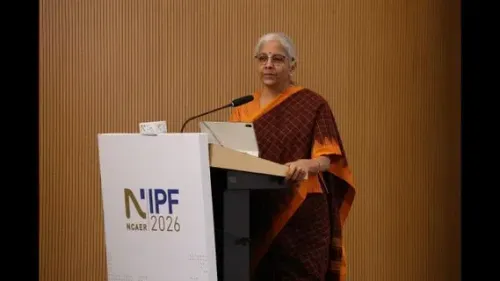
A 1,000-year-old stone inscription from a Chola-era village became the centrepiece of a policy argument on Thursday evening — and the minister making it was none other than Union Finance Minister Nirmala Sitharaman. Speaking at the C.D. Deshmukh Lecture 2026 in New Delhi on 6 August 2026, she invoked an 11th-century temple record to make the case that investing in public health and education is not a modern welfare import — it is woven into India's own civilisational fabric.
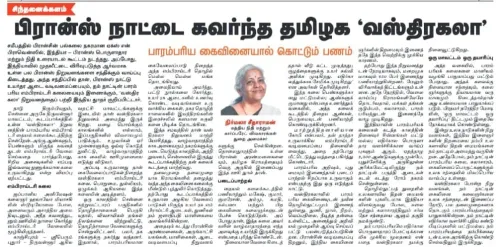
Sitharaman cited an inscription from Thirumukkudal, a village near Kanchipuram, Tamil Nadu, dating to the reign of Virarajendra Chola in 1069 CE. The record, she explained, laid out how temple revenue was to be split three ways: temple rituals, a college with a hostel, and a 15-bed hospital — the Vira-Cholan Hospital. It did not stop at the institution. It named the physicians, surgeons, and nurses. It recorded their salaries, paid in paddy. It listed medicines — including Brahmi and castor oil. And it permanently endowed land for the hospital's upkeep, designated Vaidya-bhogam (land gifted for medical use).
Why a Chola hospital inscription matters in 2026
Sitharaman was precise about what she was and was not arguing. 'The point is not that charity existed,' she said. 'It is that prosperity was consciously converted into permanent public institutions, embedded in our own tradition.' The distinction is deliberate and pointed. Charity is episodic; institutions are structural. The Chola administration, she argued, understood the difference nearly a millennium ago — and India's policy framework today should draw on that lineage. The lecture series itself carries weight. The C.D. Deshmukh Lecture is named after Chintaman Dwarkanath Deshmukh, the first Indian Governor of the Reserve Bank of India and a former Finance Minister — a figure who straddled monetary policy and nation-building in independent India's earliest years. Sitharaman, who holds the same finance portfolio today, speaking in that forum about the roots of public investment is not an accidental choice of venue.Sitharaman's framing: indigenous precedent, not imported welfare
Indian political leaders have periodically reached for pre-modern South Indian temple inscriptions and dynastic records to ground contemporary policy arguments. What is notable here is the specificity: not a vague appeal to ancient wisdom, but a named village, a named king, a named hospital, named medical staff, named medicines, and a named land-endowment category. That granularity is harder to dismiss as rhetorical flourish. Sitharaman declared that 'quality education and quality healthcare are entirely non-negotiable national priorities' and that investment in both 'is an expression of the Indian ethos.' In budget cycles where social-sector allocations are perennially contested, framing those allocations as civilisational continuity — rather than fiscal concession — is a distinct rhetorical and political move. With the next Union Budget on the horizon, the signal embedded in this lecture is worth watching: the Finance Minister is building a philosophical architecture around public spending on health and education that reaches back not to post-war welfare states, but to a 15-bed Chola hospital endowed in paddy fields a thousand years ago.Point of View
Indigenous institutional record rather than in post-war welfare-state theory, she insulates those budget lines from the charge of being foreign-imported entitlements. The specificity of the inscription — named staff, named medicines, named land grants — gives the argument empirical texture that generic appeals to 'ancient wisdom' lack. Delivered at a lecture honouring India's first indigenous RBI Governor, the framing also quietly asserts continuity between civilisational governance and modern institutional design. Ahead of the next Union Budget, it signals that social-sector spending may be presented not as fiscal generosity but as constitutional and cultural obligation.
NationPress
6 Aug 2026
Frequently Asked Questions
What did Nirmala Sitharaman say at the CD Deshmukh Lecture 2026?
At the C.D. Deshmukh Lecture 2026 in New Delhi on 6 August 2026, Sitharaman argued that quality education and healthcare are non-negotiable national priorities and cited a 1069 CE Chola inscription from Thirumukkudal, near Kanchipuram, as evidence that converting prosperity into permanent public institutions is rooted in Indian tradition.
What is the Thirumukkudal inscription about?
The Thirumukkudal inscription, from the reign of Virarajendra Chola in 1069 CE, records how temple revenue was divided three ways: for temple rituals, a college with a hostel, and a 15-bed hospital called the Vira-Cholan Hospital, with named physicians, surgeons, nurses, salaries in paddy, medicines, and permanently endowed land called Vaidya-bhogam.
What is the Vira-Cholan Hospital?
The Vira-Cholan Hospital is a 15-bed hospital referenced in the 1069 CE Chola inscription at Thirumukkudal near Kanchipuram, Tamil Nadu, notable for recording named medical staff, their paddy-based salaries, medicines including Brahmi and castor oil, and land permanently endowed for its upkeep.
What is the CD Deshmukh Lecture series?
The C.D. Deshmukh Lecture is an annual lecture series named after Chintaman Dwarkanath Deshmukh, the first Indian Governor of the Reserve Bank of India and a former Finance Minister of India.
Why did Sitharaman cite an ancient inscription in a finance lecture?
Sitharaman used the inscription to argue that investing in public health and education is not a modern welfare concept borrowed from abroad, but a practice embedded in India's own civilisational tradition — framing such expenditure as an expression of indigenous institutional heritage rather than fiscal concession.