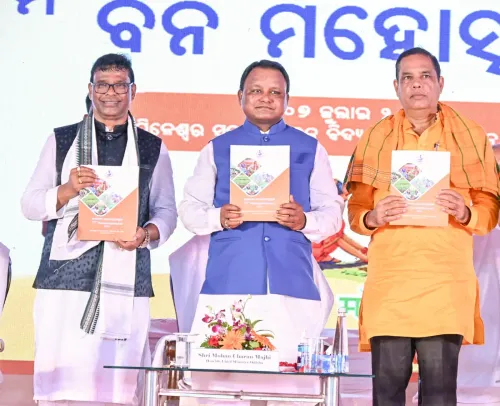
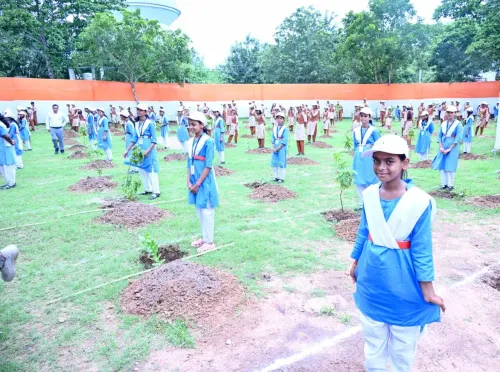
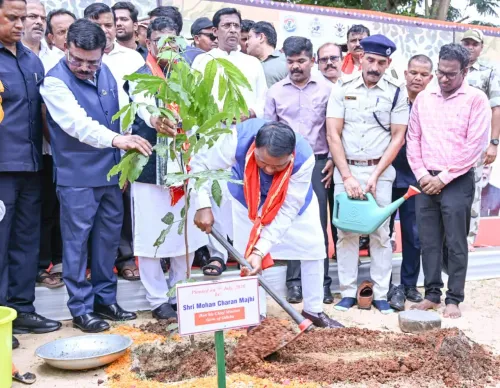
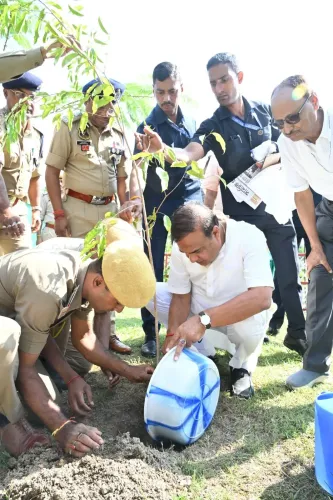
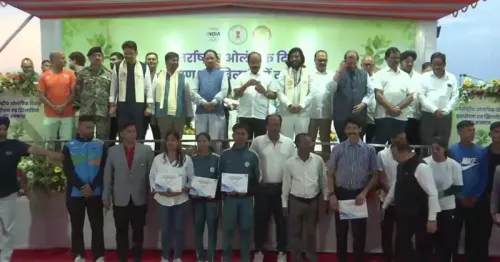
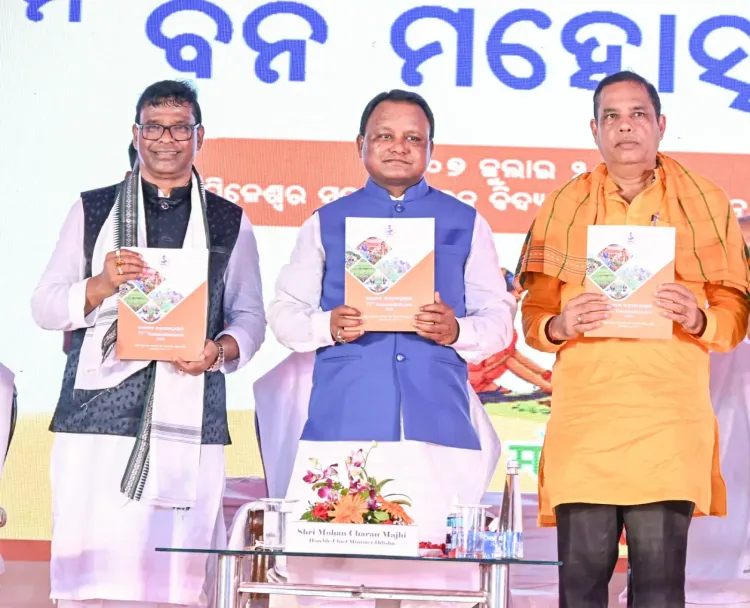
CM Majhi joins Odisha's 77th Van Mahotsav at Kapileshwar
Synopsis
Chief Minister Mohan Majhi attended the 77th Van Mahotsav at Kapileshwar on 7 July 2026, declaring that Odisha has added 558 sq km of forest and tree cover in two years, securing third place nationally, and calling large-scale tree plantation the only long-term answer to climate change.
Key Takeaways
CM Mohan Majhi attended the state-level 77th Van Mahotsav at Kapileshwar on 7 July 2026 .
Odisha claims a gain of 558 square kilometres of forest and tree cover over the past two years .
The state reportedly ranks third nationally in forest and tree cover increase, according to the Chief Minister.
CM Majhi described development and environment as 'complementary, not adversaries', signalling a dual-track policy approach.
The gains are set to be independently verified in the next India State of Forest Report by the Forest Survey of India .
Odisha's afforestation push contributes to India's Paris Agreement target of a 2.5–3 billion tonne carbon sink by 2030 .
The Chief Minister's Office of Odisha announced on Tuesday, 7 July 2026 that Chief Minister Mohan Charan Majhi attended the state-level 77th Van Mahotsav celebration held at Kapileshwar, reaffirming the state government's commitment to large-scale afforestation as a long-term response to climate change and extreme heat events.
What the CM said
Addressing the gathering, CM Majhi stated that 'widespread tree plantation is the only long-term solution to combat global climate change and severe heat waves.' He underscored that development and environment are 'not adversaries but complementary to each other' — a framing that positions Odisha's industrial ambitions alongside its green commitments.
The Chief Minister also highlighted a key milestone: Odisha has recorded a gain of 558 square kilometres of forest and tree cover over the past two years, placing the state at a third rank nationally in this category.
Context
Van Mahotsav is an annual nationwide tree-planting festival that was initiated in 1950 to promote afforestation and environmental awareness across India. Held every year during the first week of July, it has evolved from a symbolic campaign into a platform for states to announce concrete afforestation targets and report on progress.
Odisha, an eastern Indian state with substantial forest resources and a large tribal population, has historically maintained significant green cover. The state's forests are not only ecologically critical but also central to the livelihoods of millions of rural and indigenous communities.
Policy backdrop
India's National Forest Policy of 1988 set a national target of 33 per cent forest and tree cover, emphasising people's participation in afforestation efforts. Successive governments have used the Compensatory Afforestation Fund Management and Planning Authority (CAMPA), established under the 2016 CAMPA Act, to channel funds into forest restoration — a key financing mechanism that Odisha has drawn upon for its greening programmes.
India's broader climate commitments under the Paris Agreement include creating an additional carbon sink of 2.5 to 3 billion tonnes through forest and tree cover by 2030. Eastern states such as Odisha have become increasingly important contributors to this national carbon sink target through compensatory planting and community-driven programmes.
Stakeholders and impact
The gains in forest and tree cover carry direct implications for rural communities and tribal populations across Odisha, who depend on forest ecosystems for water security, livelihoods, and protection against extreme weather. A denser green cover also acts as a natural buffer against the intensifying heat waves that have struck eastern India in recent summers.
The Forest Survey of India (FSI), the government body responsible for biennial assessments through its India State of Forest Report (ISFR), tracks such gains at the national and state levels. Odisha's reported third-place ranking in forest and tree cover increase would be formally validated through the next ISFR publication.
What's next
Attention will now turn to the release of the next India State of Forest Report, which will provide an independent, verified assessment of Odisha's claimed gains. Equally significant will be the state's annual budgetary allocation for forestry and CAMPA activities, which will signal whether the current momentum in afforestation is backed by sustained financial commitment. With CM Majhi personally leading the Van Mahotsav event, the state government appears to be elevating environment policy as a political priority heading into the next phase of governance.
Point of View
Not merely an industrial destination. This is consistent with a broader pattern among state governments of using ISFR data as political capital ahead of election cycles and central funding negotiations. The 'development and environment are complementary' framing is notably aligned with the Union government's own messaging on green growth, suggesting an attempt to position Odisha favourably for central grants and CAMPA disbursements. Independent verification through the next ISFR will be the real test of whether these gains are durable or partly attributable to definitional expansions in tree cover counting.
NationPress
7 Jul 2026
Frequently Asked Questions
What is Van Mahotsav and why is it celebrated?
Van Mahotsav is an annual tree-planting festival launched in India in 1950 to promote afforestation and environmental awareness. It is observed every year in the first week of July, with states organising mass plantation drives and events to highlight green cover goals.
How much has Odisha's forest cover increased recently?
According to Chief Minister Mohan Majhi, Odisha recorded a gain of 558 square kilometres of forest and tree cover over the past two years. This figure is drawn from the Chief Minister's address at the 77th Van Mahotsav on 7 July 2026 and is pending independent verification by the Forest Survey of India.
What is Odisha's national ranking in forest cover increase?
CM Majhi stated that Odisha currently holds third place nationally in terms of forest and tree cover increase. The ranking is based on gains reported over the past two years and will be formally confirmed in the next India State of Forest Report.
Where was the 77th Van Mahotsav held in Odisha?
The state-level 77th Van Mahotsav was held at Kapileshwar in Odisha on 7 July 2026, with Chief Minister Mohan Charan Majhi attending as the chief guest.
What is CAMPA and how does it help Odisha's forests?
CAMPA, the Compensatory Afforestation Fund Management and Planning Authority, was set up under the 2016 CAMPA Act to channel funds collected from industries using forest land back into forest restoration across states. Odisha uses these funds to finance afforestation and green cover expansion programmes.