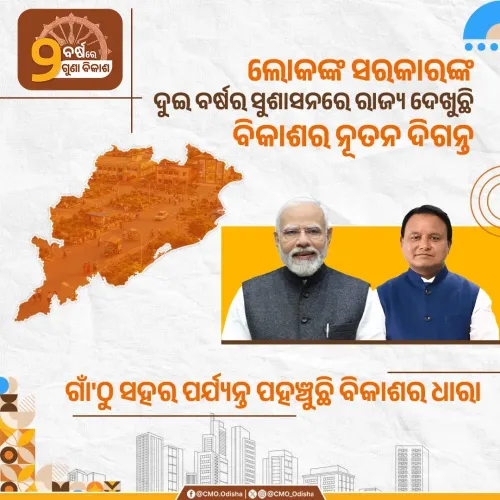
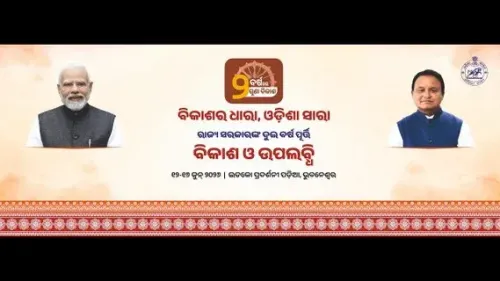
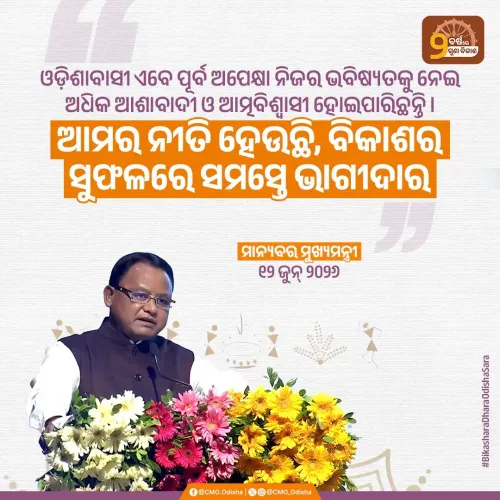
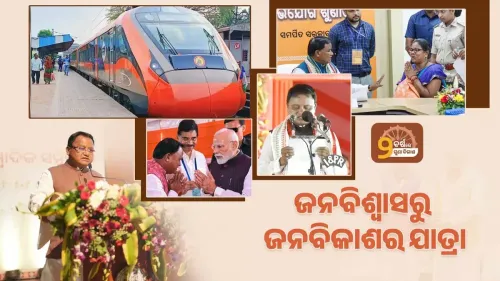
CM Majhi Marks 2 Years of Grassroots Governance in Odisha
Synopsis
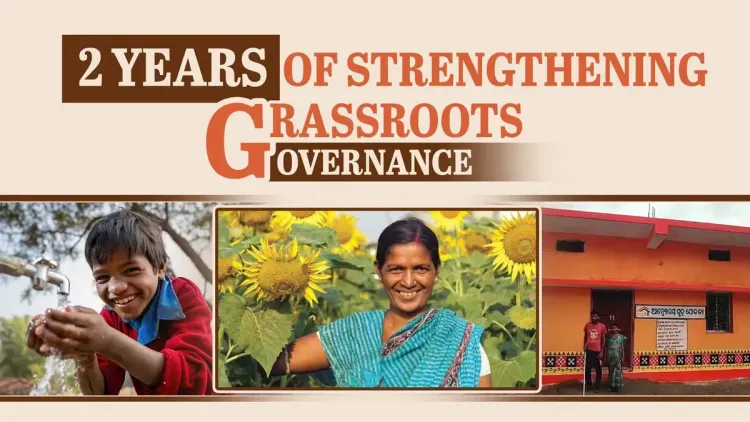
The Chief Minister's Office of Odisha on 3 July 2026 marked two years of CM Mohan Majhi's BJP-led government, citing gains in rural housing, drinking water, sanitation, and Panchayati Raj institutions as proof of its 'Lokanka Sarkar' vision for a prosperous Odisha.
Key Takeaways
The Chief Minister's Office of Odisha on 3 July 2026 commemorated two years of CM Mohan Majhi's government with a post highlighting rural development milestones.
Odisha's BJP government is the state's first after 24 years of BJD rule, having won the 2024 assembly elections.
Key focus areas cited include rural housing, village infrastructure, safe drinking water, sanitation, and Panchayati Raj institutions .
The government's 'Lokanka Sarkar' initiative aims to strengthen grassroots delivery through empowered local bodies at village, block, and district levels.
Rural programmes are being implemented through central frameworks including PMAY-G and the Jal Jeevan Mission , with state co-funding.
The next state budget and assembly review of rural scheme targets will be key tests of the government's progress claims.
The Chief Minister's Office of Odisha on Friday, 3 July 2026, highlighted two years of rural development under Chief Minister Mohan Charan Majhi, citing progress in housing, village infrastructure, drinking water, sanitation, and Panchayati Raj institutions as evidence of a commitment to inclusive, people-centric growth.
Context
The post, shared under the hashtags #2YearsofLokankaSarakar and #BikasharaDharaOdishaSara, marks the completion of two years since Mohan Majhi took oath as Chief Minister in June 2024, leading Odisha's first BJP-led government after 24 years of Biju Janata Dal rule. The official statement described these as 'transformative initiatives' reflecting the government's 'unwavering commitment' to a vision of a Samruddha Odisha — a prosperous Odisha. The CMO framed grassroots governance as the centrepiece of this two-year record.
Policy Backdrop
When Majhi assumed office, the new administration launched the Lokanka Sarkar initiative — broadly meaning a government of the people — to strengthen last-mile delivery through Panchayati Raj institutions, the constitutionally mandated three-tier rural local bodies operating at village, block, and district levels. Rural housing and safe drinking water efforts have been channelled through centrally sponsored frameworks such as Pradhan Mantri Awaas Yojana-Gramin (PMAY-G) and the Jal Jeevan Mission, both active since the 2010s, with state co-funding and implementation. Sanitation coverage has similarly continued under the broader Swachh Bharat Mission architecture.
Odisha's approach mirrors a wider national pattern: newly formed state governments across India have accelerated rural infrastructure spending since the 2024 general and assembly elections, using Panchayati Raj empowerment as a visible signal of decentralisation and grassroots accountability.
Stakeholders and Impact
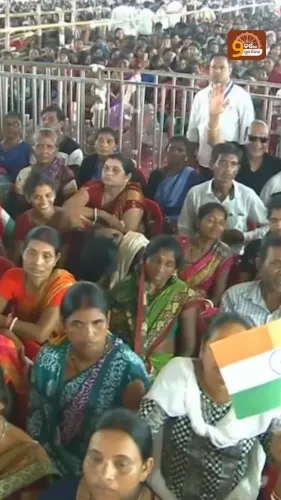
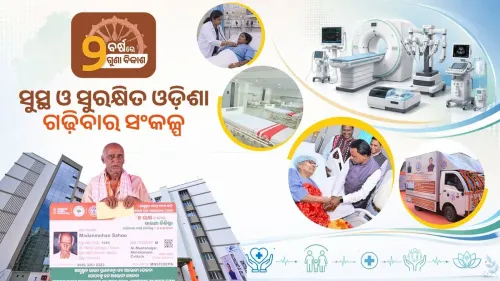
Rural households, panchayat functionaries, and village communities across Odisha are the primary beneficiaries of the programmes cited. Strengthening Panchayati Raj institutions means elected representatives at the gram panchayat level gain greater administrative capacity and resources to plan and execute local development works. Access to safe drinking water and improved sanitation directly affects public health outcomes, particularly for women and children in remote habitations.
The framing of these two years as a 'Lokanka Sarkar' — a people's government — also carries political significance for a party consolidating its first-ever majority in a state where rural voters were decisive in the 2024 mandate shift.
What's Next
Attention will now turn to the next Odisha state budget and any mid-term review of rural scheme targets in the state assembly, which will offer the first detailed accounting of expenditure and physical progress under these programmes. Independent assessments of housing completion rates, functional household tap connections, and panchayat capacity-building outcomes will be critical benchmarks. The government's ability to sustain momentum beyond the two-year milestone will shape its rural governance narrative heading into the second half of its term.
Point of View
Using the 'Lokanka Sarkar' brand to anchor the BJP's identity in Odisha as a grassroots, people-first administration — a direct contrast to the centralised style associated with the outgoing BJD era. By foregrounding Panchayati Raj empowerment alongside housing and water, the government signals alignment with national decentralisation priorities while building local political capital. The absence of specific numbers in the post is notable: it keeps the narrative aspirational and shields the government from immediate fact-checking on targets versus achievements. The real test will come when budget documents and scheme progress reports are tabled in the Odisha assembly, offering a harder look at whether the 'transformative' label holds up.
NationPress
3 Jul 2026
Frequently Asked Questions
Who is the Chief Minister of Odisha in 2026?
Mohan Charan Majhi is the Chief Minister of Odisha. He took office in June 2024 after the BJP won the state assembly elections, ending 24 years of BJD rule.
What is Lokanka Sarkar in Odisha?
'Lokanka Sarkar' — broadly meaning 'people's government' — is the brand name the Odisha BJP government uses for its grassroots governance initiative, focused on strengthening Panchayati Raj institutions and improving last-mile delivery of rural services.
What is the vision of Samruddha Odisha?
Samruddha Odisha translates to 'prosperous Odisha' and is the overarching development vision articulated by CM Mohan Majhi's government, centred on inclusive, people-centric growth through rural infrastructure and local governance.
What rural schemes is the Odisha government implementing?
The Odisha government is implementing rural housing under PMAY-G , safe drinking water under the Jal Jeevan Mission , and sanitation under the Swachh Bharat Mission , alongside investments in village infrastructure and Panchayati Raj bodies.
How long has the BJP been in power in Odisha?
The BJP completed two years in power in Odisha in June 2026 . It formed the government in June 2024 after winning the assembly elections, marking the party's first-ever majority government in the state.