CM Majhi: Odisha Rescues Livestock in Cyclone Akban Relief Push
Synopsis
Odisha CM Mohan Charan Majhi confirms active rescue and relief operations against Cyclone Akban, highlighting the state's distinctive focus on evacuating livestock alongside people from danger-prone coastal zones.
Key Takeaways
Odisha CM Mohan Charan Majhi confirmed rescue and relief operations are ongoing as Cyclone Akban threatens the coast.
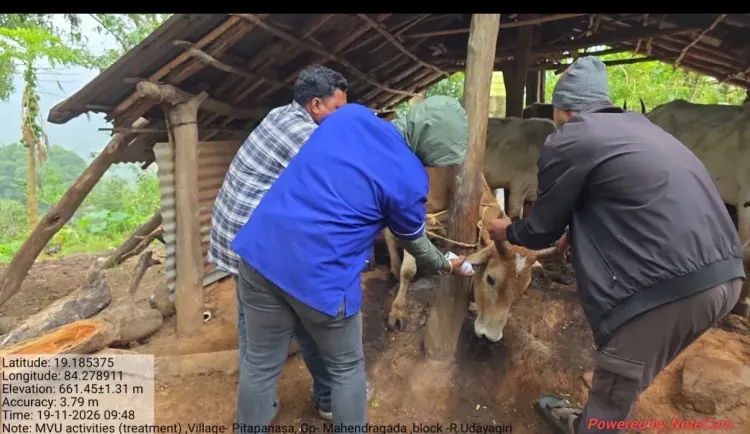
Authorities are evacuating livestock from vulnerable zones alongside residents, treating animal protection as a formal relief priority.
Odisha built its disaster-response framework after the 1999 Super Cyclone killed over 10,000 people .
During Cyclone Fani (2019) , more than 1.2 million people were evacuated — a benchmark operation for the state's protocols.
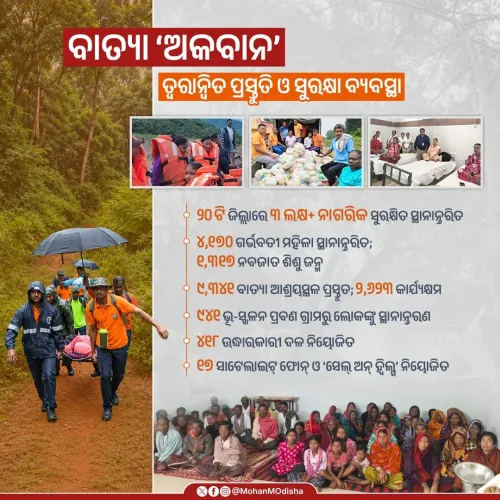
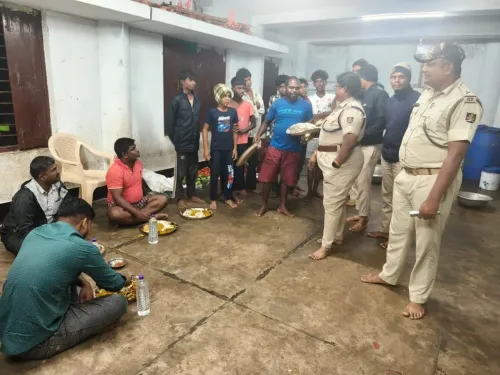
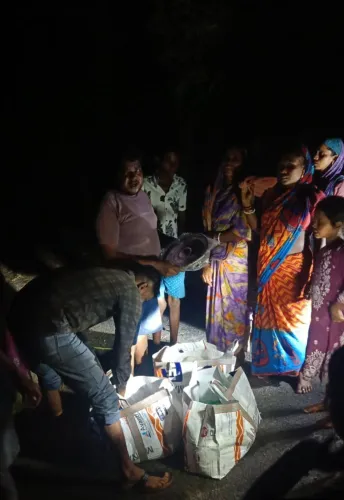
The CM posted four images from active operations, signalling ground-level coordination is already in motion.
As Cyclone Akban bears down on Odisha's coast, the state's relief machinery has gone beyond saving lives — it is also pulling animals out of harm's way. Odisha Chief Minister Mohan Charan Majhi posted on Friday, 20 November 2026, confirming that rescue and relief operations are actively underway, with livestock being evacuated from vulnerable zones alongside residents.
Posting in Odia, CM Majhi said: 'Rescue and relief work is continuing to deal with Cyclone Akban. Along with this, animals are also being safely rescued from danger-prone areas. Along with the safety of the public, the protection of animal wealth is also being given importance.'
A Two-Decade Playbook Being Executed Again
Odisha did not arrive at this level of preparedness by accident. The catastrophic 1999 Super Cyclone — which killed more than 10,000 people — forced a complete overhaul of the state's disaster architecture. The Odisha State Disaster Management Authority was established, an extensive network of cyclone shelters was constructed, and early-warning systems were wired into coastal districts. The result was visible during Cyclone Fani in 2019, when authorities evacuated more than 1.2 million people in a single operation, drawing international attention as a model for large-scale pre-emptive disaster response.
What has evolved steadily since then is the explicit inclusion of livestock in standard operating procedures. For coastal Odisha's farming and fishing communities, cattle and other animals are not incidental — they are economic lifelines. Losing them to a cyclone can push households into multi-year debt spirals. Evacuating animals is, in that frame, as much an economic intervention as a humanitarian one.
What the Four Images Signal on the Ground
The Chief Minister's post carried four images — a visual dispatch from active operations rather than a prepared press briefing. The imagery underlines the ground-level coordination already in motion: relief teams deployed, animals being moved, and the administrative machinery visibly in gear. NDRF teams and state emergency personnel are expected to be central to the ongoing response in affected coastal districts.
Odisha's approach has long set a benchmark that other cyclone-exposed states in India have been urged to study. The question now is not whether the system will respond — it is how quickly it can contain damage in the most exposed pockets of the coast. With operations confirmed live, the CM's message is unambiguous: nothing that can be saved will be left behind.
Point of View
Publicly foregrounding animal rescue serves a dual purpose: it signals administrative thoroughness to a coastal electorate for whom cattle represent tangible wealth, and it reinforces the BJP-led government's claim to continuity with Odisha's internationally recognised disaster-management legacy. The real test, as always, is not in the announcement but in how equitably relief reaches the most remote and exposed communities once the storm passes.
NationPress
20 Nov 2026
Frequently Asked Questions
What is Cyclone Akban and where is it hitting in India?
Cyclone Akban is a tropical cyclone threatening the coast of Odisha, an eastern Indian state on the Bay of Bengal, as of November 2026 . Odisha is one of India's most cyclone-exposed states.
What relief measures has Odisha taken for Cyclone Akban?
Odisha has launched active rescue and relief operations, evacuating both people and livestock from danger-prone coastal areas. CM Mohan Charan Majhi confirmed operations are underway as of 20 November 2026 .
Why is Odisha also rescuing animals during the cyclone?
Livestock are a key economic asset for coastal and farming communities in Odisha. Losing animals to a cyclone can push households into prolonged debt, so animal evacuation has been built into Odisha's standard disaster-response procedures.
How has Odisha handled past cyclones?
After the devastating 1999 Super Cyclone that killed over 10,000 people , Odisha built cyclone shelters and early-warning systems. During Cyclone Fani in 2019 , authorities evacuated more than 1.2 million people , earning international recognition.
Who is Odisha Chief Minister Mohan Charan Majhi?
Mohan Charan Majhi is the Chief Minister of Odisha and a BJP leader who took office in June 2024 after the party won the state assembly election.