CM Majhi Inaugurates 14th MAMSG Meeting in Odisha
Synopsis
Odisha Chief Minister Mohan Charan Majhi on 24 June 2026 inaugurated the 14th Multi Agency Maritime Security Group Policy Meeting in Bhubaneswar — the first outside New Delhi — invoking Odisha's ancient Kalinga maritime legacy and pledging support for SAGAR, Act East Policy, and BIMSTEC as India expands its Indo-Pacific maritime role.
Key Takeaways
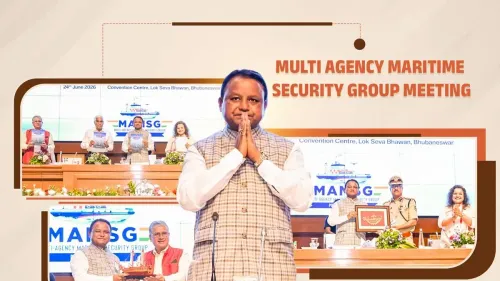
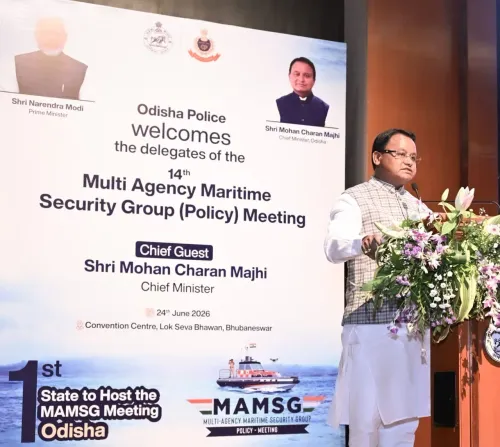
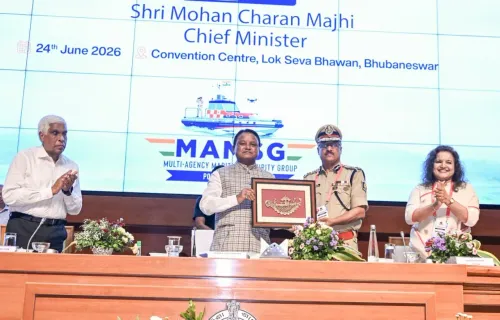
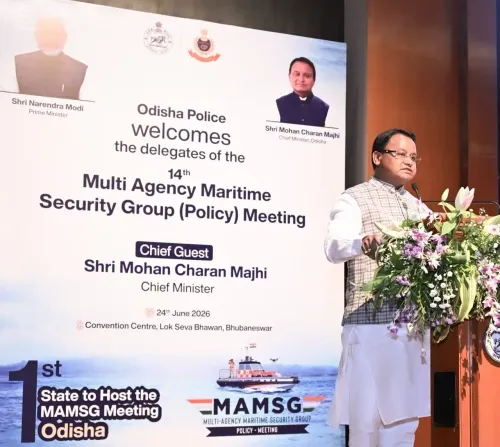
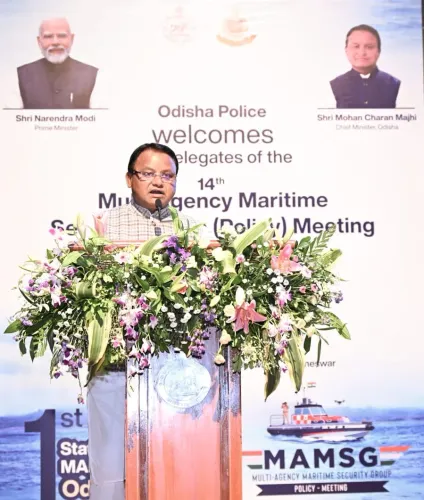
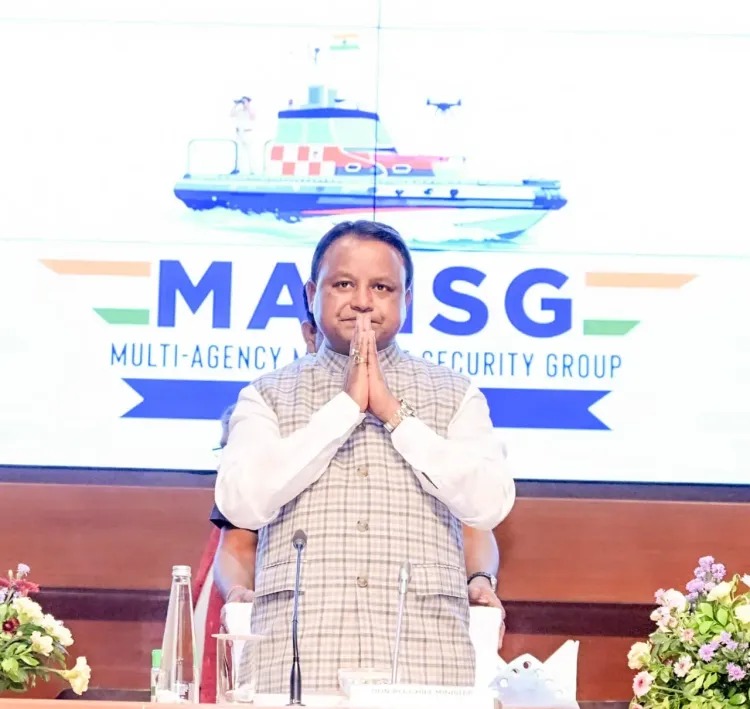
CM Mohan Charan Majhi inaugurated the 14th MAMSG Policy Meeting at Lok Seva Bhavan, Bhubaneswar on 24 June 2026 .
This is the first time the national maritime security coordination meeting has been held outside New Delhi .
Majhi linked the event to Odisha's ancient Sadhaba maritime heritage and the festival of Bali Jatra .
Odisha reaffirmed commitment to SAGAR , the Act East Policy , and BIMSTEC as pillars of India's Indo-Pacific strategy.
Emerging technologies including AI , unmanned systems, and NABHMITRA transponders were cited as tools for strengthening the Blue Economy .
The hosting reflects Cooperative Federalism , with coastal states playing a larger role in national maritime security governance.
Odisha Chief Minister Mohan Charan Majhi inaugurated the 14th Multi Agency Maritime Security Group (Policy) Meeting at Lok Seva Bhavan, Bhubaneswar, on Wednesday, 24 June 2026, marking the first time this national-level security coordination meeting has been held outside New Delhi. The event drew on Odisha's deep maritime heritage, with Majhi invoking the ancient Kalinga seafarers known as the Sadhabas to frame the state's contemporary role in India's Indo-Pacific ambitions.
Context
In his address, CM Majhi described the sea — referred to in Odia tradition as Mahodadhi (the great ocean) — as 'an integral part of Odisha's identity, culture and civilisation.' He highlighted Bali Jatra, the annual festival commemorating ancient Kalinga voyages to Southeast Asia, as a living symbol of the state's enduring maritime bond. The choice of Odisha as host, he said, 'reflects the spirit of Cooperative Federalism under the visionary leadership of Prime Minister Narendra Modi.'
The MAMSG is a national-level inter-agency forum that coordinates maritime security policy across central and state stakeholders. Hosting it in Odisha for the first time signals the central government's intent to draw coastal states more actively into the national maritime security architecture.
Policy Backdrop
India's maritime strategy rests on three interlocking pillars that CM Majhi explicitly endorsed: SAGAR (Security and Growth for All in the Region), unveiled by Prime Minister Modi in Mauritius in 2015; the Act East Policy, formally launched at the 2014 ASEAN Summit in Myanmar; and BIMSTEC, the Bay of Bengal regional forum established in 1997 linking South and Southeast Asian nations. Together, these frameworks position India as the pre-eminent security and economic partner across the Indian Ocean and Bay of Bengal littoral.
Majhi broadened the definition of maritime security to include 'protection of critical infrastructure, cybersecurity, disaster preparedness, environmental sustainability and the security of maritime trade routes' — language that aligns with the expanded scope India has been advocating in multilateral forums. He also referenced emerging tools such as Artificial Intelligence, unmanned systems, NABHMITRA transponders, and the Coastal Vibrant Village Programme as instruments for building a stronger Blue Economy.
Stakeholders and Impact
Odisha's 480-kilometre coastline supports millions of fishing and coastal communities whose livelihoods depend directly on maritime security and environmental stability. The Blue Economy sectors — fisheries, ports, tourism, and offshore energy — stand to benefit from the enhanced inter-agency coordination that the MAMSG framework is designed to deliver.
For the broader Indo-Pacific region, the meeting's location underscores Odisha's strategic relevance as a gateway to Southeast Asia — a corridor the ancient Sadhabas once navigated and that modern trade routes continue to traverse. State-level adoption of technologies such as NABHMITRA transponders could improve real-time coastal surveillance and directly protect fishing communities at sea.
What's Next
Observers will track whether the outcomes of the 14th MAMSG meeting translate into concrete state-level action plans on cybersecurity, disaster preparedness, and transponder deployment along Odisha's coast. Progress on BIMSTEC maritime security deliverables and the rollout of the Coastal Vibrant Village Programme in Odisha will be key indicators of follow-through. The meeting also sets a precedent for other coastal states to host future MAMSG rounds, deepening the cooperative federalism model in national security governance.
Point of View
Not merely a beneficiary of central policy. By anchoring contemporary maritime security discourse in the cultural memory of the Kalinga Sadhabas, CM Majhi crafts a narrative that legitimises defence cooperation through regional identity — a playbook increasingly common among coastal BJP-governed states. The move also advances the Cooperative Federalism brand that the Modi government has cultivated, distributing the prestige of national security forums beyond the capital. Whether the meeting produces actionable state-level deliverables, or remains largely ceremonial, will determine how much substantive weight Odisha carries in the next phase of India's Blue Economy push.
NationPress
22 Sept 2026
Frequently Asked Questions
What is the MAMSG meeting and why was it held in Odisha?
The Multi Agency Maritime Security Group (MAMSG) is a national inter-agency forum that coordinates India's maritime security policy. The 14th edition was held in Bhubaneswar on 24 June 2026 — the first time outside New Delhi — to reflect Odisha's strategic coastal importance and the Cooperative Federalism model championed by the central government.
What is Bali Jatra and how is it connected to maritime security?
Bali Jatra is an annual Odisha festival that commemorates the ancient Kalinga seafarers, called Sadhabas, who sailed to Southeast Asia. CM Majhi invoked it to draw a cultural line from Odisha's maritime heritage to India's present-day Indo-Pacific and Blue Economy ambitions.
What is India's SAGAR policy?
SAGAR stands for Security and Growth for All in the Region. It is India's maritime doctrine unveiled by Prime Minister Narendra Modi in Mauritius in 2015, aimed at fostering security cooperation and economic development across the Indian Ocean region.
What is the NABHMITRA transponder programme?
NABHMITRA is a transponder-based communication and distress alert system designed to improve safety and tracking for fishing vessels along India's coast. CM Majhi cited it as one of the emerging technologies Odisha is embracing to strengthen coastal security and protect fishing communities.
How does BIMSTEC relate to Odisha's maritime role?
BIMSTEC, founded in 1997, links South and Southeast Asian nations around the Bay of Bengal — a sea corridor historically navigated by Odisha's Kalinga traders. Odisha's geographic position makes it a natural hub for India's BIMSTEC maritime security and trade-route commitments.