Jitendra Singh dedicates Prakriti Gyan Dham Eco-Hub in Lucknow
Synopsis
Union Science Minister Dr. Jitendra Singh dedicated the Prakriti Gyan Dham Eco-Educational Hub in Lucknow on August 8, 2026, calling for digital and cross-institutional science outreach, and citing NBRI's famous 108-petal lotus as a model for public engagement.
Key Takeaways
Prakriti Gyan Dham was dedicated to the nation in Lucknow on August 8, 2026 by Union Minister Dr.
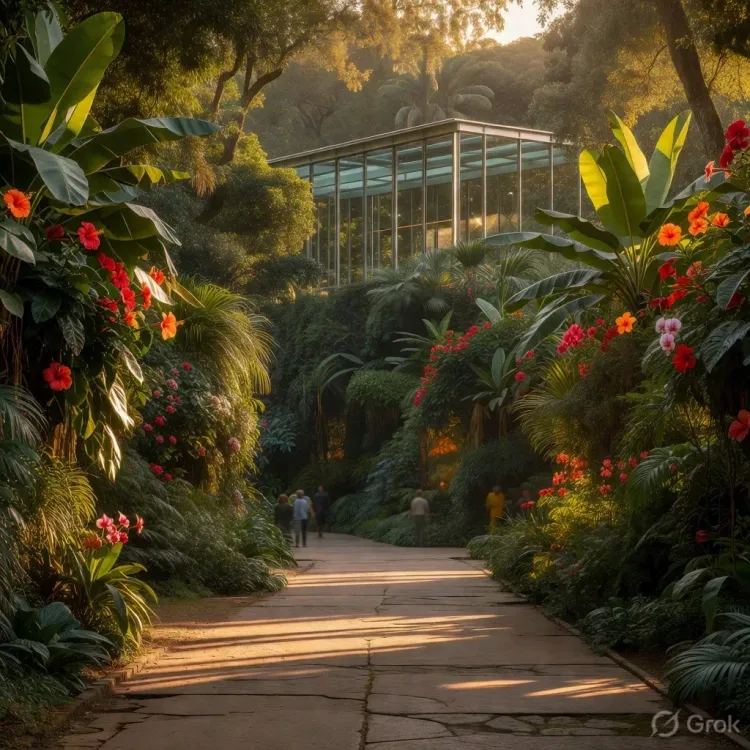
The hub combines living botanical collections, heritage trails, digital interpretation, and scientific outreach for public engagement.
National Botanical Research Institute (NBRI) , a CSIR lab in Lucknow, is the institutional anchor of the hub.
NBRI's 108-petal lotus — which appeared on Kaun Banega Crorepati — was cited as a benchmark for effective science communication.
Singh emphasised outreach through social media and digital platforms 'in the language understood' by citizens.
The minister called for integrated collaboration across departments, ministries, and industry where objectives are aligned.
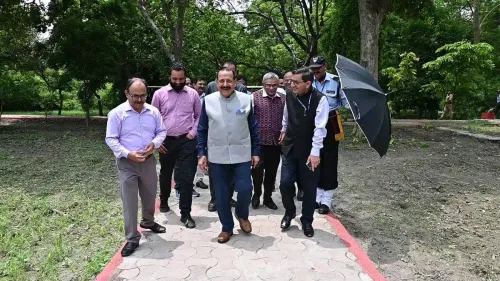
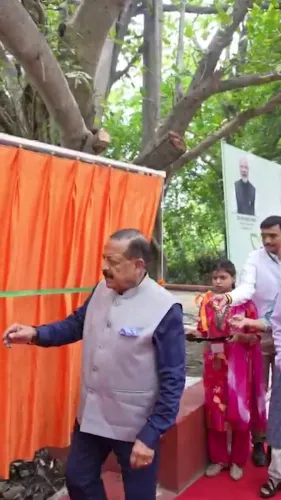
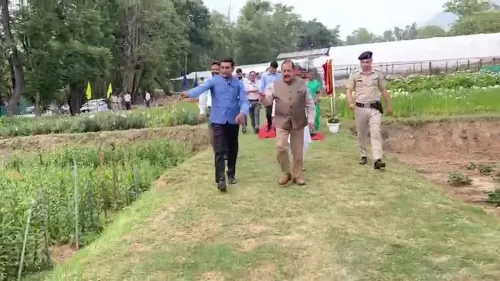
A botanical garden that once quietly nurtured a 108-petal lotus — a variety so striking it landed on primetime television — now sits at the heart of a bold new vision for science communication in India. Union Science and Technology Minister Dr. Jitendra Singh on Saturday, August 8, 2026, dedicated the 'Prakriti Gyan Dham' Eco-Educational Hub to the nation in Lucknow, calling it a national destination where people do not just read about nature — they experience it.
What Prakriti Gyan Dham actually is
The hub, anchored at the National Botanical Research Institute (NBRI) in Lucknow, is designed to weave together living plant collections, heritage trails, digital interpretation, and technology-driven outreach under one roof. The idea is deceptively simple: bring citizens — students, families, industry professionals — into direct contact with the science that already shapes their lives, and do it in a format they will actually engage with.
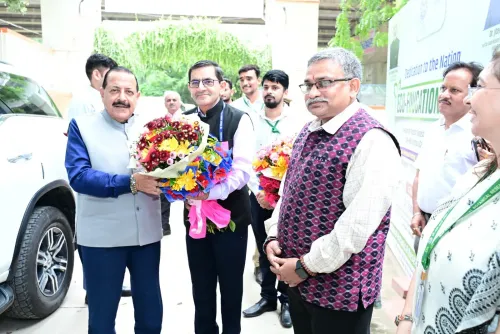
Dr. Singh, addressing faculty, students, and industry representatives after the dedication, described the hub as 'a unique concept envisaging a national destination for experiential learning and public engagement, bringing together botanical diversity, environmental conservation, cultural heritage and scientific outreach.' The emphasis, he stressed, is on the interface between scientific institutions and society — a gap that formal research often struggles to close.
The 108-petal lotus and the KBC moment that made a case
The minister reached for a vivid, local proof point to anchor his argument. It was NBRI Lucknow that developed the celebrated 108-petal lotus — a horticultural achievement that eventually found its way onto Kaun Banega Crorepati, one of India's most-watched television programmes. The anecdote was not nostalgia. It was a blueprint: if a botanical breakthrough can captivate a prime-time audience, the communication machinery around science just needs to be built more deliberately.
'Need to systematically showcase to the stakeholders and the public at large, technologies, success stories and societal applications through the medium accessed, in the language understood,' Dr. Singh said — 'be it social media, digital platforms etc.'
Cross-ministry alignment as the operating principle
Beyond the hub itself, the minister flagged a structural imperative: integrated work across departments, ministries, and institutions, especially where project objectives already align. The call mirrors a recurring theme in India's science policy — that research excellence locked inside laboratory silos rarely translates into public or policy impact at the scale it deserves.
NBRI, a CSIR laboratory, has long been a centre of plant science and conservation research. The Prakriti Gyan Dham positions it as a public-facing institution as much as a research one — a model the Science Ministry appears keen to replicate elsewhere.
India's science communication infrastructure has historically lagged behind its research output. If Lucknow's new hub demonstrates that experiential learning sites can genuinely move public engagement numbers, expect the blueprint to travel fast.
Point of View
Not just research silos. Dr. Singh's invocation of the 108-petal lotus and KBC signals a deliberate strategy: use popular culture moments to legitimise science outreach as a policy priority. The call for cross-ministry integration is a familiar refrain in Indian science governance, but anchoring it to a physical, experiential hub gives it a concrete test case. If the Lucknow model scales, it could redefine how India's scientific infrastructure justifies itself to a non-specialist public.
NationPress
8 Aug 2026
Frequently Asked Questions
What is Prakriti Gyan Dham in Lucknow?
Prakriti Gyan Dham is an Eco-Educational Hub dedicated in Lucknow by Union Minister Dr. Jitendra Singh, combining botanical collections, heritage trails, digital interpretation and scientific outreach to promote experiential learning and public engagement with nature and science.
Who inaugurated the Prakriti Gyan Dham Eco-Educational Hub?
Union Minister of State (Independent Charge) for Science and Technology, Dr. Jitendra Singh, dedicated the Prakriti Gyan Dham Eco-Educational Hub to the nation on August 8, 2026, in Lucknow.
What is the 108-petal lotus developed by NBRI Lucknow?
The 108-petal lotus is a distinctive floral variety developed by the National Botanical Research Institute (NBRI) in Lucknow. It gained wide public attention after being featured as a question on the popular television programme Kaun Banega Crorepati.
What is the National Botanical Research Institute (NBRI)?
NBRI is a CSIR laboratory based in Lucknow, Uttar Pradesh, known for plant science research, botanical conservation, and the development of unique plant varieties. It serves as the institutional base for the new Prakriti Gyan Dham hub.
What did Jitendra Singh say about science communication in India?
Dr. Singh called for systematically showcasing scientific technologies and success stories through platforms people actually use — including social media and digital channels — and in languages they understand, while stressing integrated collaboration across ministries and institutions.