CM Majhi Opens 14th Maritime Security Meet in Bhubaneswar
Synopsis
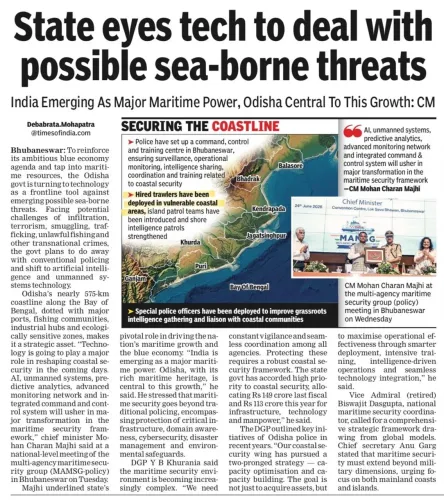
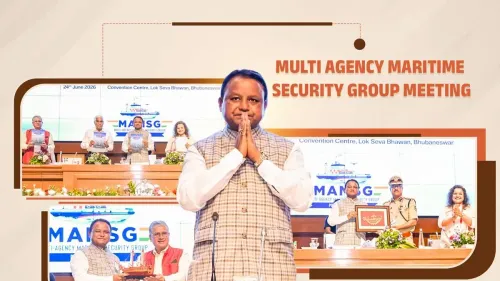
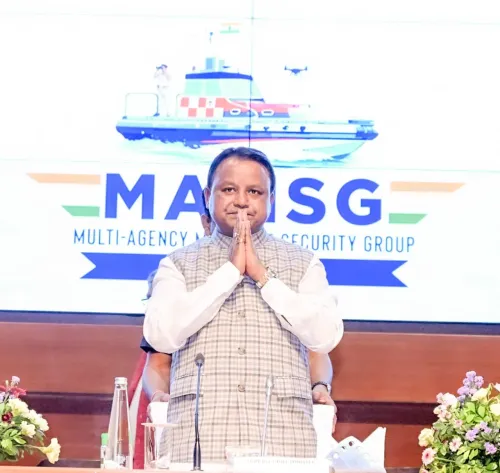
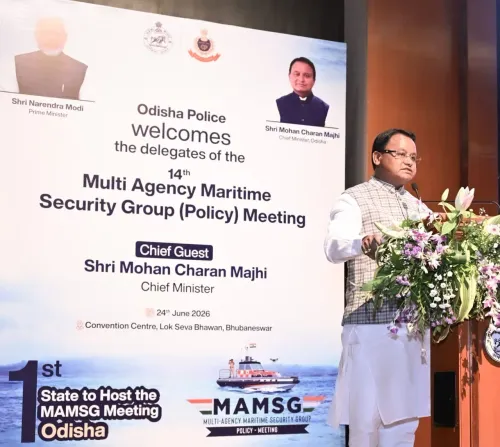
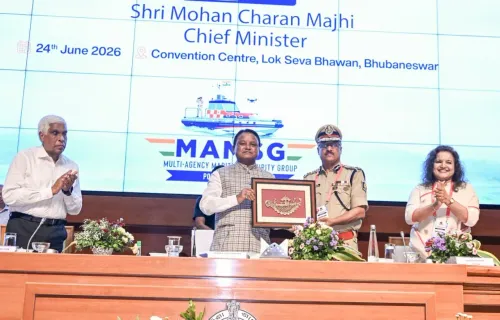
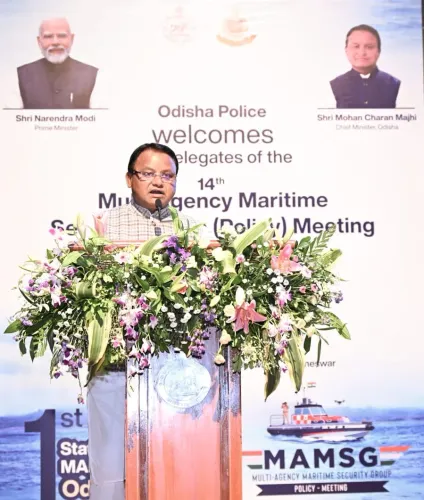
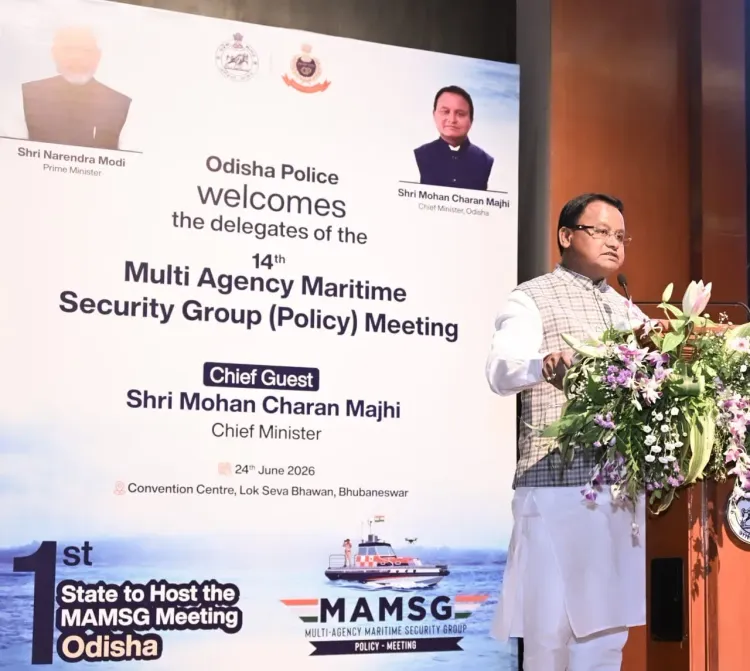
Chief Minister Mohan Charan Majhi inaugurated the 14th Multi Agency Maritime Security Group (Policy) meeting in Bhubaneswar on June 24, 2026, calling India's oceans a gateway to opportunity, prosperity, and international partnership — not merely a geographical boundary.
Key Takeaways
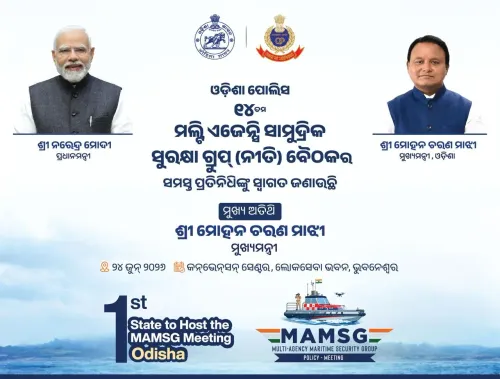
CM Mohan Charan Majhi inaugurated the 14th Multi Agency Maritime Security Group (Policy) meeting on June 24, 2026 .
The event was held at Lok Seva Bhavan , Bhubaneswar, Odisha's state administrative headquarters.
Majhi described India's oceans as 'a gateway to vast opportunities, prosperity, and international partnership,' not just a security boundary.
The Multi Agency Maritime Security Group coordinates maritime security across central agencies, defence forces, and coastal states.
Odisha's long coastline on the Bay of Bengal makes it a key participant in national maritime security frameworks.
The post tagged @PMOIndia , indicating the meeting's relevance to Union government maritime priorities.
Chief Minister Mohan Charan Majhi of Odisha inaugurated the 14th Multi Agency Maritime Security Group (Policy) meeting in Bhubaneswar on Wednesday, June 24, 2026, underscoring the state's role in India's coastal security architecture. The event was held at Lok Seva Bhavan, the seat of Odisha's state administration, and was attended by central and state maritime stakeholders.
Context
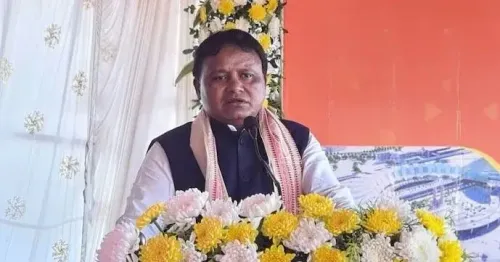
Addressing the gathering, CM Majhi stated that 'our oceans are not merely a geographical boundary; they are a gateway to vast opportunities, prosperity, and international partnership.' The remark signals Odisha's intent to position its coastline not only as a security perimeter but as an economic and diplomatic asset. The Chief Minister's Office shared the post tagging @PMOIndia, indicating the meeting's relevance to national-level maritime policy.
Policy Backdrop
The Multi Agency Maritime Security Group (Policy) is an inter-agency body established to coordinate maritime security across central ministries, defence forces, and coastal state governments. India significantly strengthened such coordination mechanisms following the 2008 Mumbai attacks, which exposed critical gaps in coastal surveillance and inter-agency communication. The group's policy-level meetings bring together diverse stakeholders to align priorities, share intelligence frameworks, and review coastal security protocols.
Odisha's participation is structurally significant: the state has a long coastline along the Bay of Bengal, encompassing major ports, fishing communities, and offshore economic zones. The state's coastline also lies along strategically important sea lanes in the Indian Ocean Region. CM Majhi's framing of the ocean as a 'gateway to opportunities and international partnership' mirrors the broader SAGAR (Security and Growth for All in the Region) doctrine, which blends maritime security with blue economy development.
Stakeholders and Impact
The meeting draws participation from coastal states, the Indian Navy, the Coast Guard, and multiple central agencies responsible for port security, fisheries, and customs. For Odisha, this platform offers direct engagement with national policymakers on issues ranging from anti-piracy measures to disaster response along its coast. Fishing communities, port operators, and offshore industry players are among the indirect stakeholders whose livelihoods depend on stable and secure maritime conditions.
The involvement of @PMOIndia in the post's mention suggests the meeting carries weight at the highest levels of the Union government, reinforcing that maritime security is a shared centre-state responsibility rather than a peripheral concern.
What's Next
Policy outputs and action plans emerging from the 14th session will be closely watched by coastal states and maritime security analysts in the months ahead. Odisha's active hosting role could translate into greater state-level investment in coastal surveillance infrastructure and blue economy initiatives. The alignment of state-level priorities with national maritime frameworks will be a key indicator of the meeting's practical impact.
Point of View
Not merely a passive coastal state. His framing of the ocean as an economic and diplomatic gateway rather than just a security frontier aligns Odisha's messaging with the Union government's SAGAR doctrine and blue economy push. For a first-term BJP chief minister, visibility on a defence-adjacent national platform also carries political value, demonstrating administrative seriousness beyond state-level welfare schemes. The meeting's outcomes, if translated into concrete coastal infrastructure or surveillance upgrades, could set a template for how other coastal states engage with this inter-agency mechanism.
NationPress
22 Sept 2026
Frequently Asked Questions
What is the Multi Agency Maritime Security Group (Policy)?
The Multi Agency Maritime Security Group (Policy) is an inter-agency body that coordinates maritime security policy across central ministries, defence forces, and coastal state governments in India. It was strengthened after the 2008 Mumbai attacks to address gaps in coastal surveillance and inter-agency coordination.
Who is Mohan Charan Majhi?
Mohan Charan Majhi is the Chief Minister of Odisha, in office since June 2024 and the state's first BJP chief minister. He represented Odisha at the 14th MAMSG (Policy) meeting in Bhubaneswar on June 24, 2026.
Where was the 14th Maritime Security Group meeting held?
The 14th Multi Agency Maritime Security Group (Policy) meeting was held at Lok Seva Bhavan in Bhubaneswar, the capital of Odisha.
Why is Odisha important for India's maritime security?
Odisha has a long coastline along the Bay of Bengal, encompassing major ports, fishing zones, and offshore economic areas. This makes the state a significant participant in national coastal surveillance, disaster response, and blue economy frameworks.
What did CM Majhi say at the maritime security meeting?
CM Majhi stated that India's oceans are 'not merely a geographical boundary' but 'a gateway to vast opportunities, prosperity, and international partnership,' reflecting the dual security-and-growth approach central to India's maritime policy.