CM Majhi Pushes Rural Roads, Bridges for Samruddha Odisha
Synopsis
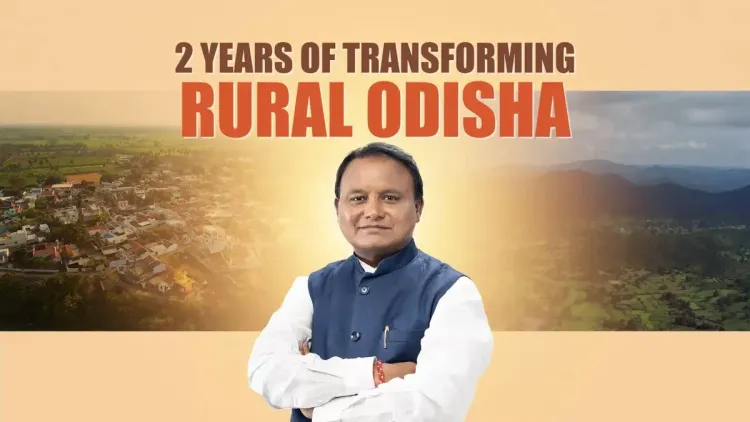
Odisha Chief Minister Mohan Charan Majhi on 28 June 2026 reaffirmed his government's rural-first agenda, citing ahead-of-schedule bridge completions, expanding road networks, and flagship schemes Mission PoWaR and Gramodaya as the pillars of a Samruddha Odisha.
Key Takeaways
CM Mohan Charan Majhi stated on 28 June 2026 that rural development is the 'ultimate key' to a prosperous Odisha.
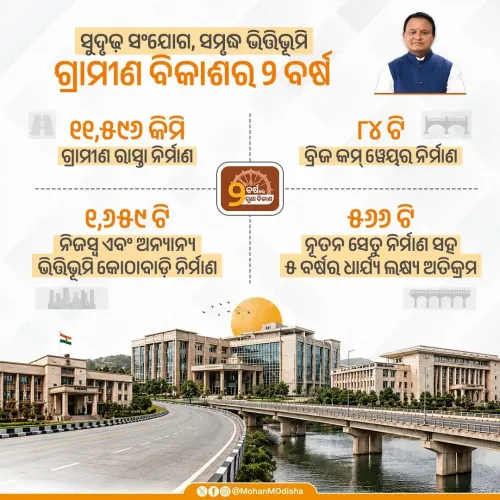
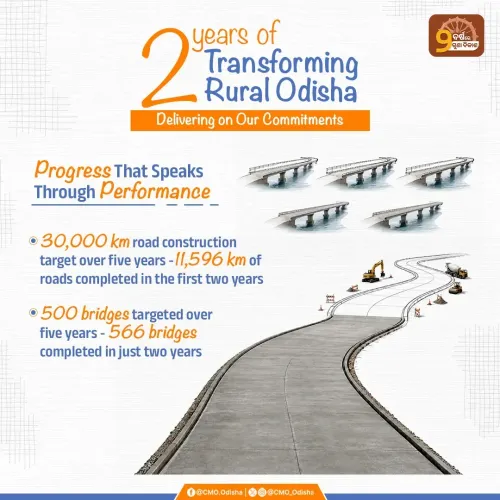
The state is completing long-term bridge-building goals ahead of schedule , according to the Chief Minister.
Mission PoWaR and Gramodaya are the two named flagship schemes driving rural connectivity and livelihood upgrades.
Bridge-cum-weirs — dual-purpose structures combining road crossings with water retention — are being deployed as a strategic infrastructure tool.
The government's stated goal is to ensure no community is left behind , with high-quality infrastructure reaching every corner of Odisha.
Modern public hubs are also being established as part of the broader rural infrastructure rollout across the state.
Odisha Chief Minister Mohan Charan Majhi on Sunday, 28 June 2026, outlined his government's rural infrastructure push, stating that expanding road networks and completing bridge-building targets ahead of schedule are central to achieving a Samruddha Odisha (Prosperous Odisha). The Chief Minister emphasised that inclusive, holistic growth rooted in village-level development remains the core mission of his administration.
Context
In his post, CM Majhi declared that 'true progress begins in our villages,' framing rural development as the 'ultimate key' to a prosperous Odisha. He specifically highlighted the rapid expansion of road networks and the early completion of long-term bridge-building goals, describing these as markers of a broader commitment to reaching 'every corner of the state.' The post also referenced the rollout of 'modern public hubs' and 'strategic bridge-cum-weirs' as part of the state's high-quality infrastructure drive.
The Chief Minister's remarks come as Odisha continues to pursue accelerated rural connectivity under his BJP-led government, which came to power in the state in 2024. Majhi has consistently positioned village-centric development as a defining plank of his administration's agenda since taking office.
Policy Backdrop
Mission PoWaR (Power of Water and Roads) and Gramodaya are the two flagship schemes named by CM Majhi as the primary vehicles for linking remote habitations to economic opportunities. Mission PoWaR focuses on water and road connectivity in underserved areas, while Gramodaya — meaning 'village awakening' — targets the holistic uplift of rural communities through infrastructure, livelihoods, and social development.
Bridge-cum-weirs, a dual-purpose civil infrastructure combining road crossings with water retention structures, have been highlighted as a strategic tool for both rural connectivity and water resource management in Odisha's interior districts. The emphasis on completing bridge-building goals 'way ahead of schedule' signals an intent to accelerate timelines that may have lagged under previous administrations.
Stakeholders and Impact
The communities most directly affected are residents of remote and semi-urban habitations across Odisha, particularly in tribal-dominated districts where road and bridge connectivity has historically been limited. Improved rural road networks are widely associated with better access to markets, healthcare, and education — translating directly into livelihood upgrades for farming and daily-wage households.
The construction and infrastructure sector in the state stands to see continued public investment, as the government's stated commitment to ahead-of-schedule delivery implies sustained budgetary allocation and project monitoring. Local self-government bodies and gram panchayats are also key stakeholders, as schemes like Gramodaya are typically implemented through decentralised administrative structures.
What's Next
The Majhi government is expected to release further progress updates on Mission PoWaR and Gramodaya milestones as the state moves through its infrastructure delivery calendar. The framing of bridge and road targets being completed 'ahead of schedule' suggests formal completion ceremonies or government reviews may be forthcoming in the near term.
Whether the pace of rural infrastructure delivery translates into measurable improvements in rural income and connectivity indices will be a key benchmark for the administration's broader Samruddha Odisha vision — and a metric that both opposition parties and civil society groups are likely to scrutinise closely.
Point of View
Majhi is building a performance narrative ahead of future electoral cycles. The emphasis on bridge-cum-weirs — which serve both connectivity and water management functions — also signals an attempt to address multiple rural grievances simultaneously. If delivery timelines hold, this infrastructure-first posture could become one of the administration's most durable political assets.
NationPress
28 Jun 2026
Frequently Asked Questions
What is Mission PoWaR in Odisha?
Mission PoWaR stands for Power of Water and Roads, an Odisha government scheme focused on improving water and road connectivity in remote and underserved areas of the state.
What is the Gramodaya scheme in Odisha?
Gramodaya, meaning 'village awakening,' is an Odisha government initiative aimed at the holistic development of rural communities through infrastructure upgrades, livelihood support, and social programmes.
What is Samruddha Odisha?
Samruddha Odisha translates to 'Prosperous Odisha' and is the overarching development vision articulated by Chief Minister Mohan Charan Majhi for the state, with rural development as its central pillar.
What are bridge-cum-weirs and why is Odisha building them?
Bridge-cum-weirs are dual-purpose civil structures that combine a road bridge with a water-retention weir. Odisha is deploying them to simultaneously improve rural road connectivity and manage water resources in interior districts.
What has CM Mohan Charan Majhi said about rural roads in Odisha?
CM Majhi stated on 28 June 2026 that Odisha is rapidly expanding its road networks and completing bridge-building goals ahead of schedule as part of a commitment to inclusive, holistic rural growth.