CM Majhi Puts Odisha Flood Relief on War Footing

Synopsis
Odisha Chief Minister Mohan Charan Majhi on July 31, 2026 declared that flood rescue and relief operations are running on a war footing, with the state prioritising the safety and assistance of every affected family amid the monsoon flood situation.
Key Takeaways
CM Mohan Charan Majhi posted on July 31, 2026 confirming flood rescue and relief operations are on a war footing in Odisha .
The Chief Minister stated that reaching assistance to every family is the state's top priority.
Odisha is among India's most flood-prone states due to its coastal location and dense river systems.
The Odisha State Disaster Management Authority , established after the devastating 1999 super cyclone , underpins the state's rapid-response infrastructure.
Watchers should track potential NDRF or Army deployments and formal requests for central government assistance in the coming days.
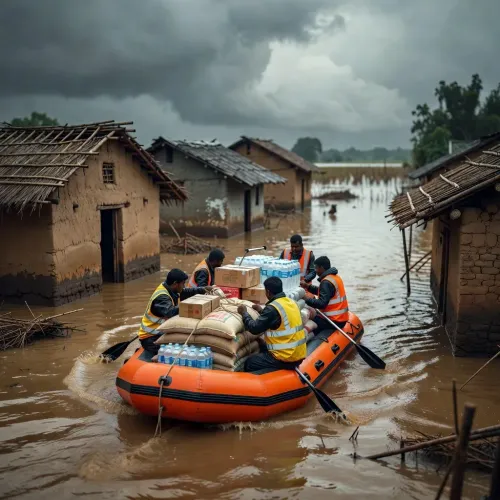
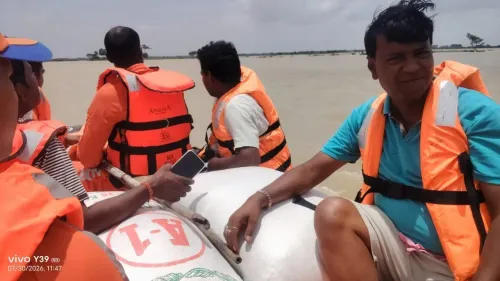
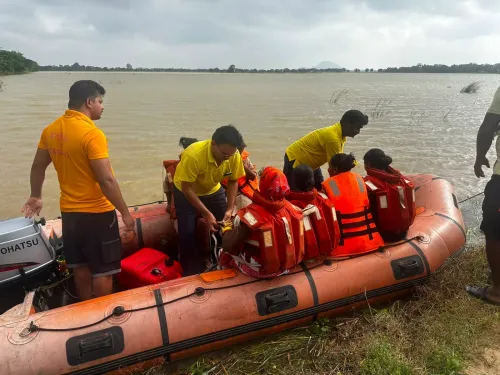
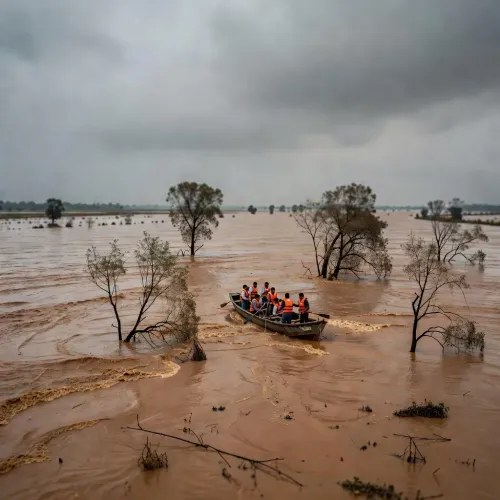
Every flood season, Odisha races against its own rivers — and on Friday, July 31, 2026, Odisha Chief Minister Mohan Charan Majhi signalled that the state machinery is fully mobilised, vowing that rescue and relief operations are being conducted on a war footing with the safety of every affected family as the top priority.
Posting in Odia, CM Majhi wrote: 'ବନ୍ୟା ପରିସ୍ଥିତିରେ ଲୋକଙ୍କ ସୁରକ୍ଷା ଓ ତ୍ୱରିତ ସହାୟତାକୁ ସର୍ବୋଚ୍� ପ୍ରାଥମିକତା ଦିଆଯାଉଛି' — 'In the flood situation, the protection of people and immediate assistance is being given the highest priority. Rescue and relief work is continuing on a war footing. All our efforts to reach assistance to every family are ongoing.'
Why Odisha's Monsoon Floods Demand This Response
Odisha sits at one of India's most hydrologically vulnerable addresses — a coastal eastern state laced with river systems that swell dangerously every monsoon. The memory of the 1999 super cyclone, which killed over ten thousand people, fundamentally reshaped how the state manages disasters. Out of that catastrophe came the Odisha State Disaster Management Authority, early-warning networks, and a culture of rapid evacuation that successive governments have built upon.
The result is a state that, while still battered annually, responds faster and more systematically than most. The 'war footing' language CM Majhi invokes is not rhetorical flourish — it is the established operational register for flood response in Bhubaneswar, signalling round-the-clock deployment of personnel, boats, and relief material.
Flood-Affected Families at the Centre
The Chief Minister's explicit framing — reaching 'every family' — places individual households, not aggregate statistics, at the centre of the relief mandate. This is consistent with Odisha's post-1999 doctrine: granular, last-mile delivery of food packets, medicine, and evacuation support, not just district-level headline figures.
Key indicators to watch in the coming days include formal requests for central government assistance, deployment of National Disaster Response Force (NDRF) or Army columns, and district-wise accounting of relief material distribution across affected river basins.
Point of View
Important for a BJP government still consolidating its administrative identity in Odisha after the 2024 election win. The 'war footing' framing aligns with Odisha's post-1999 disaster-management doctrine and is designed to reassure constituents that the state is not caught flat-footed. If central resources such as NDRF columns or funds are requested in the coming days, the Centre-state coordination dynamic will be worth watching. The emphasis on reaching every family, rather than district-level metrics, reflects a retail-politics instinct that has become standard in Indian disaster communication.
NationPress
1 Aug 2026
Frequently Asked Questions
What is the flood situation in Odisha in July 2026?
Odisha Chief Minister Mohan Charan Majhi confirmed on July 31, 2026 that the state is dealing with a flood situation and that rescue and relief operations are running on a war footing, though specific district-level details have not been officially detailed in this communication.
What did CM Mohan Charan Majhi say about flood relief?
CM Majhi stated that protecting people and delivering immediate assistance is the highest priority, that rescue and relief work is continuing on a war footing, and that all efforts are ongoing to reach assistance to every affected family.
What is Odisha's disaster management history?
Following the catastrophic 1999 super cyclone, Odisha established the Odisha State Disaster Management Authority and built early-warning and rapid-evacuation systems that are now regarded as among the most effective in India.
Will NDRF be deployed in Odisha floods?
NDRF deployment has not been confirmed in this communication, but it is a key indicator to watch — Odisha routinely requests NDRF columns during major flood events and such deployments are part of the state's standard crisis protocol.
Who is Mohan Charan Majhi?
Mohan Charan Majhi is the Chief Minister of Odisha and a BJP leader who assumed office after the BJP's victory in the 2024 Odisha state assembly elections.