Vivek Ramaswamy on cutting property taxes while improving schools

Synopsis
At a county fair in Hamilton, Ohio, Vivek Ramaswamy fielded a recurring voter question: how to cut property taxes and improve schools simultaneously. The tension echoes Ohio's decades-long school funding dispute and the broader Republican push for school choice as a fiscal and educational fix.
Key Takeaways
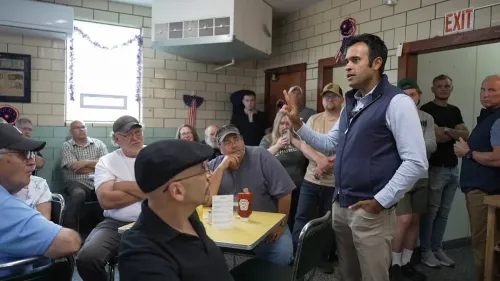
Entrepreneur Vivek Ramaswamy was approached by at least two voters at a Hamilton, Ohio county fair with the same question: how to cut property taxes and improve education simultaneously.
Ohio's school funding system was ruled unconstitutional by the state Supreme Court in DeRolph v.
State (1997) for its over-reliance on local property taxes.
Republican candidates, including Ramaswamy, typically point to school choice mechanisms — vouchers, charter expansion, education savings accounts — as a way to decouple school quality from property tax revenue.
Ramaswamy previously served as co-lead of the Department of Government Efficiency (DOGE) advisory effort and ran for the Republican presidential nomination in 2024 .
County fairs in Ohio serve as key retail-politics venues, and Ramaswamy's engagement there signals an active ground-level campaign operation.
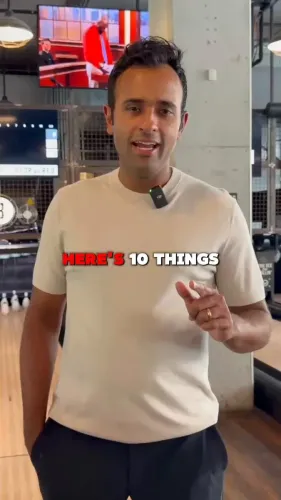
At a county fair in Hamilton, Ohio, entrepreneur Vivek Ramaswamy fielded a question that cuts to the heart of one of America's most stubborn policy knots — and he says he has an answer.
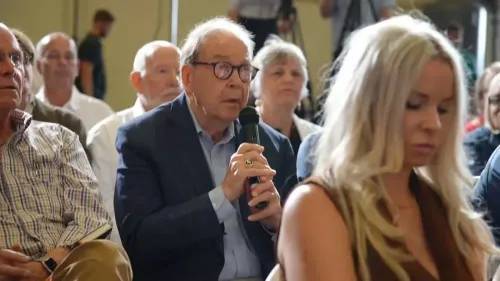
Ramaswamy recounted that Jillian from Hamilton posed the same question a second voter had already raised earlier at the fair: how can government simultaneously reduce property taxes and improve public education? The fact that two unconnected voters surfaced the same question at a single event signals how acutely the tension is felt on the ground in Ohio.
Ohio's decades-old school funding problem
The friction is not new. Ohio's Supreme Court ruled in DeRolph v. State (1997) — and reaffirmed in successive rulings — that the state's heavy reliance on local property taxes to fund public schools was unconstitutional and produced deep inequities between wealthy and poorer districts. Nearly three decades later, the structural bind remains: wealthier neighbourhoods generate more school revenue through property taxes, while reform efforts to decouple school funding from property wealth have stalled repeatedly in the legislature. For homeowners, especially in mid-sized cities like Hamilton — a city in southwest Ohio near Cincinnati — property tax bills are a direct and visible burden, making any candidate's promise to cut them politically potent.The Republican school-choice playbook
Republican candidates have long argued that the answer to this dual demand lies in redirecting public education dollars through mechanisms such as vouchers, charter school expansion, and education savings accounts. The logic: inject competition into schooling, allow state-level funding to follow the student rather than the district, and reduce the fiscal pressure on local property tax bases. Ramaswamy, who built his national profile as a 2024 Republican presidential candidate and later as co-lead of the Department of Government Efficiency (DOGE) advisory effort, has consistently positioned government efficiency and school choice as complementary levers. The post does not spell out the specific answer he gave Jillian — and the research cannot verify the details of his remarks at the fair — but the framing itself is a deliberate campaign signal: that cutting taxes and raising educational outcomes are not a trade-off but a package.County fairs as policy stages
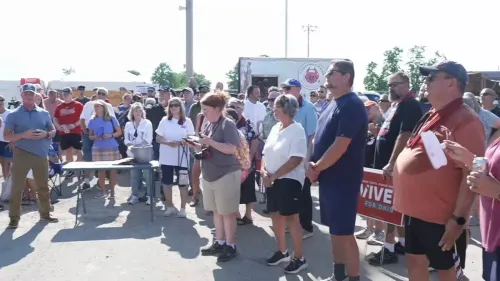
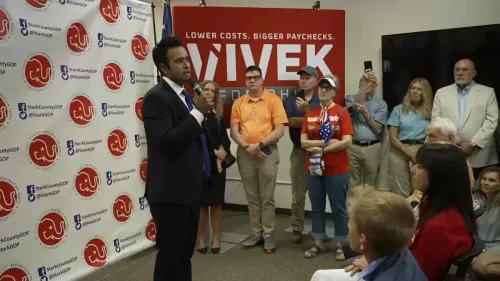
The setting matters. County fairs in Ohio are a classic retail-politics venue — accessible, informal, and drawing a cross-section of working and middle-class voters who rarely attend town halls. The fact that Ramaswamy is working the fair circuit and logging voter questions by name suggests an active ground operation, with Hamilton and the broader Butler County region serving as a testing ground for his education-tax message. With state legislative sessions across the country increasingly eyeing property tax relief paired with education funding restructuring, the question Jillian asked in Hamilton is one that will echo well beyond Ohio.Point of View
Not contradictory — is a well-worn Republican thesis, but it lands with fresh force in Ohio, a state where courts have repeatedly found the property-tax-school-funding link to be both inequitable and unconstitutional. His retail approach, logging individual voter names and questions at a fair, mirrors the ground-game discipline of a candidate building toward a specific electoral contest rather than simply maintaining a public profile. The unresolved question is whether his answer at the fair moved beyond the standard school-choice playbook; until those specifics emerge, the post reads as a teaser designed to drive engagement rather than a policy disclosure. Whichever direction he takes it, the dual demand Jillian articulated — lower taxes, better schools — is precisely the fiscal squeeze that will define education politics in swing states through the next legislative cycle.
NationPress
1 Aug 2026
Frequently Asked Questions
What did Vivek Ramaswamy say about property taxes and education at the Ohio fair?
Ramaswamy said he has an answer to the question of how to cut property taxes while also improving education, after two voters at a Hamilton, Ohio fair asked him the same thing. The specific details of his answer were not disclosed in the post.
Why is school funding tied to property taxes in Ohio?
Ohio, like most US states, historically funds public schools primarily through local property taxes. The Ohio Supreme Court ruled this system unconstitutional in DeRolph v. State (1997) because it creates large funding gaps between wealthy and poorer districts, but the structure has not been fully reformed.
What is Vivek Ramaswamy's background in education and government policy?
Ramaswamy is the founder of Strive Asset Management , a 2024 Republican presidential candidate, and former co-lead of the DOGE government efficiency advisory effort. He has consistently advocated for school choice and government spending efficiency as linked policy goals.
What is Hamilton, Ohio known for in the context of education debates?
Hamilton is a mid-sized city in southwest Ohio near Cincinnati. It sits within a state that has struggled for decades to reform a school funding model the courts have repeatedly found inequitable, making it a representative venue for debates about property taxes and public education.
What is the Republican approach to cutting property taxes without harming schools?
Republican candidates typically propose redirecting public education funding through vouchers, charter schools, and education savings accounts , arguing that school choice introduces competition that raises outcomes while reducing the fiscal burden on local property tax bases.