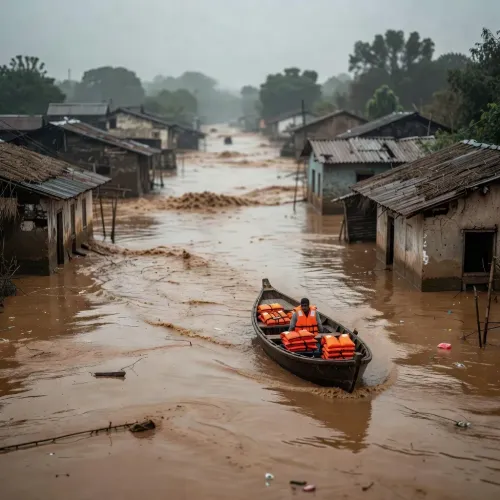
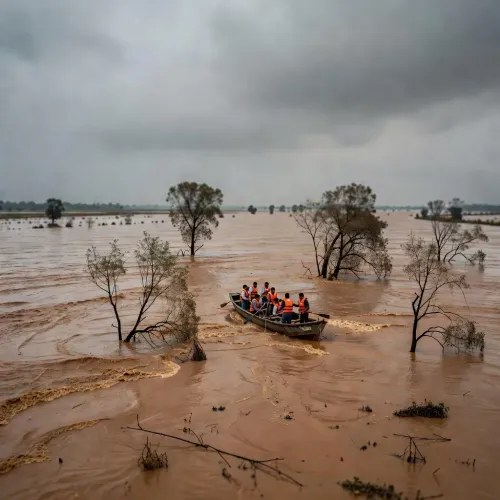
CM Majhi Reviews Heavy Rain Crisis, Orders War-Footing Relief
Synopsis
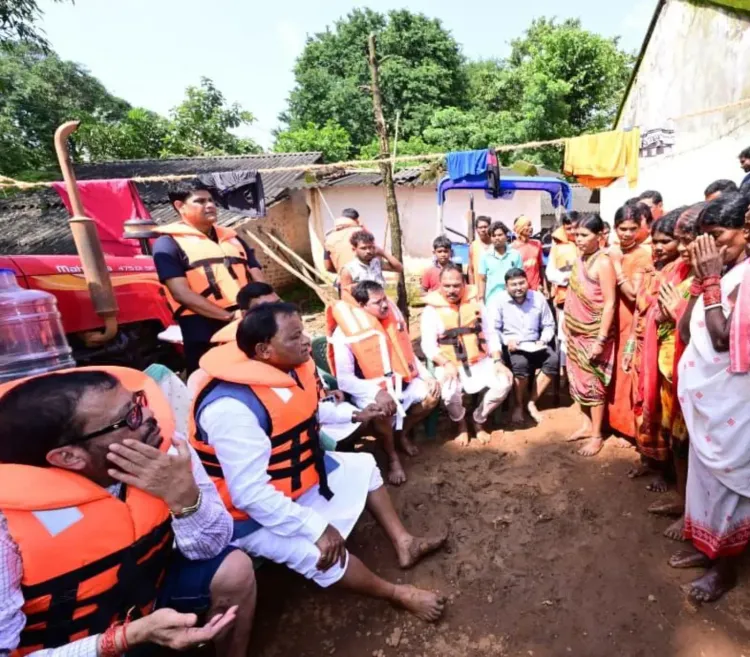
Chief Minister Mohan Charan Majhi reviewed rain-devastated areas in Odisha on 27 September 2026 and directed district administrations to deliver relief, rescue, drinking water, and health services on a war-footing basis to all affected residents.
Key Takeaways
CM Mohan Charan Majhi personally reviewed conditions in areas hit by heavy depression-linked rainfall on 27 September 2026 .
Relief distribution, rescue operations, drinking water supply, and health services have been ordered to run on a war-footing basis .
District administrations and all relevant departments received explicit directives to prioritise last-mile delivery of assistance.
Odisha's disaster response framework traces back to the 1999 Super Cyclone and the establishment of the Odisha State Disaster Management Authority .
Official damage assessment and distribution statistics from affected districts are expected to follow in the coming hours and days.
With monsoon depressions battering large parts of Odisha, Chief Minister Mohan Charan Majhi personally reviewed the situation in rain-hit areas on Sunday, 27 September 2026 — and put every district administration on a war footing to rush relief to those affected. The Chief Minister's Office made the directives public, signalling that the state's emergency machinery is fully activated.
What Majhi's directives cover on the ground
The Chief Minister's Office confirmed that relief distribution, rescue operations, drinking water supply, and health services are all running on a yuddhakalin bhitti (war-footing basis) across affected regions. CM Majhi has issued explicit orders to district administrations and relevant departments to ensure that assistance reaches affected residents on a priority basis without delay.
A state built for crisis response
Odisha's institutional muscle for disaster response was forged in the crucible of the 1999 Super Cyclone, one of the deadliest natural disasters in India's post-independence history. In its aftermath, the state built the Odisha State Disaster Management Authority (OSDMA) — a framework widely regarded as a model for rapid mobilisation of rescue, relief, and inter-departmental coordination. Every monsoon season since has tested and refined that machinery.
Odisha's coastal and low-lying geography makes it perennially vulnerable to monsoon depressions, and successive governments have invested in pre-positioning relief materials, trained personnel, and communication links across flood-prone districts. CM Majhi, who took office in June 2024 following the BJP's victory in the state assembly elections, now commands that system in one of its active deployments.
What to watch as assessments come in
Damage assessment reports, official tallies of displaced persons, and data on relief material distribution are expected to emerge from the affected districts over the coming hours and days. The key test for any administration during a rain emergency is speed and last-mile delivery — whether relief packets, potable water, and medical teams reach isolated villages before conditions worsen. The direction from the Chief Minister's Office on Sunday puts that accountability on record.
Point of View
Demonstrating competent disaster management is an opportunity to consolidate trust in a state where voters have historically rewarded governments that respond swiftly. The 'war-footing' framing is a deliberate signal to bureaucrats that delays will have consequences — a language Odisha's disaster apparatus has been conditioned to respond to since 1999. The real measure of the directive's impact will be visible in whether relief reaches the most isolated and vulnerable communities before the next wave of rainfall.
NationPress
27 Sept 2026
Frequently Asked Questions
What action did CM Mohan Charan Majhi take during the Odisha heavy rain crisis on 27 September 2026?
CM Mohan Charan Majhi reviewed the situation in rain-affected areas and directed district administrations and relevant departments to deliver relief, rescue operations, drinking water, and health services on a war-footing basis to all affected residents.
Which areas of Odisha were affected by heavy rain on 27 September 2026?
The Chief Minister's Office confirmed that areas affected by a monsoon depression were under review, but specific districts have not been officially detailed in the immediate announcement.
What is Odisha's disaster management framework?
Odisha has maintained a structured disaster response framework since the devastating 1999 Super Cyclone, including the Odisha State Disaster Management Authority (OSDMA), which coordinates rapid relief, evacuation, and inter-departmental response during emergencies.
Who is the Chief Minister of Odisha in 2026?
Mohan Charan Majhi has been the Chief Minister of Odisha since June 2024, representing the Bharatiya Janata Party following the 2024 state assembly elections.
What relief measures are being provided to flood-affected people in Odisha?
As per CM Majhi's orders, relief distribution, rescue operations, drinking water supply, and health services are being provided to affected residents on a priority and war-footing basis across impacted districts.