CM Sai rallies Chhattisgarh behind Moringa drive after PM Modi's Mann Ki Baat nod
Synopsis
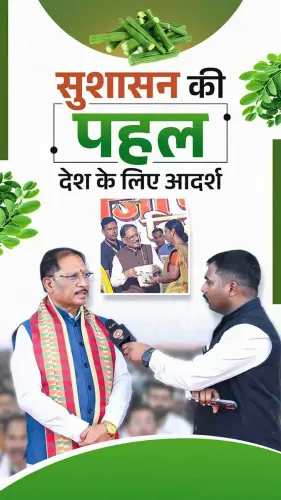
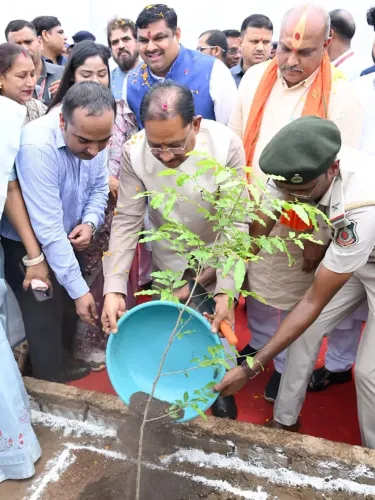
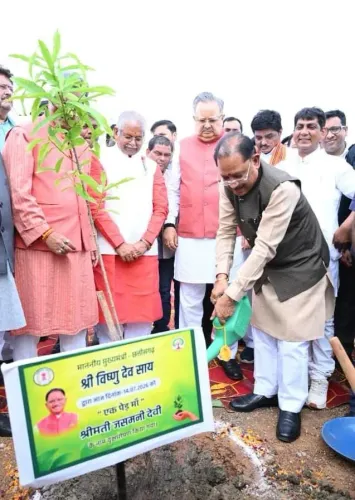
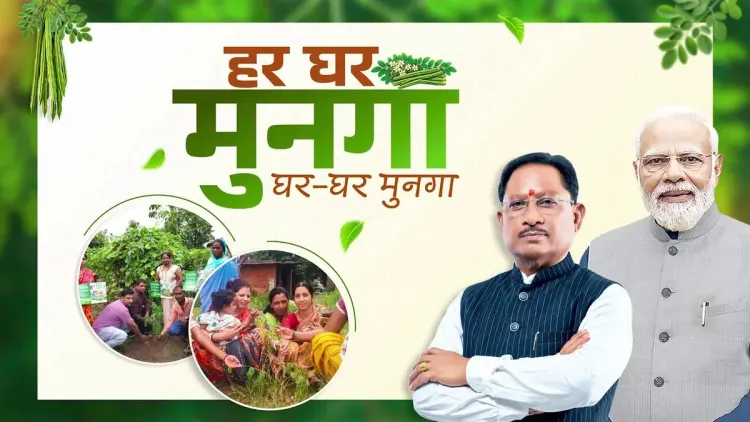
Chhattisgarh CM Vishnu Deo Sai has called on every household in the state to plant a Moringa tree after PM Modi highlighted the 'Har Ghar Munga, Ghar-Ghar Munga' campaign on Mann Ki Baat, framing it as a jan bhagidari push toward a malnutrition-free Chhattisgarh.
Key Takeaways
CM Vishnu Deo Sai amplified the 'Har Ghar Munga, Ghar-Ghar Munga' campaign on 27 September 2026 after PM Modi's Mann Ki Baat mention.
The campaign asks every Chhattisgarh household to plant a Moringa (Munga) tree in its courtyard for improved household nutrition.
Moringa is rich in iron, calcium, vitamins A and C, and protein — making it a low-cost, high-impact nutritional intervention.
Chhattisgarh has historically faced high child malnutrition rates, especially in rural and tribal districts.
The initiative aligns with the national POSHAN Abhiyan framework launched in 2018 to reduce malnutrition through community action and local foods.
CM Sai framed the drive around jan bhagidari (people's participation), positioning it as a collective state-building effort rather than a top-down directive.
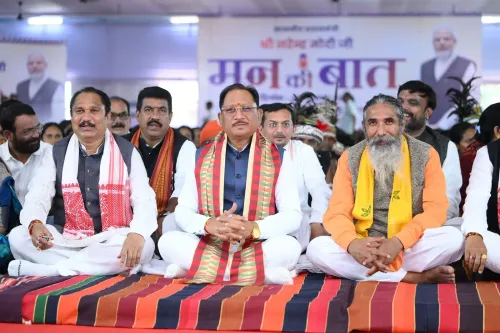
When the Prime Minister names your state on national radio, you amplify — fast. Chhattisgarh Chief Minister Vishnu Deo Sai seized the moment on Sunday, 27 September 2026, calling on every household in the state to plant a Moringa tree after Prime Minister Narendra Modi spotlighted the state's 'Har Ghar Munga, Ghar-Ghar Munga' campaign in his monthly Mann Ki Baat radio address.
What the campaign actually asks families to do
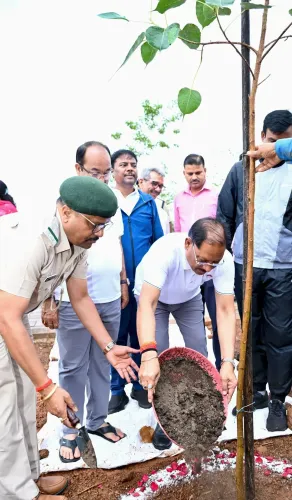
The name says it plainly: 'Har Ghar Munga, Ghar-Ghar Munga' — 'Moringa in every home, Moringa in every household.' CM Sai framed the drive not as a government directive but as a community compact, using the phrase jan bhagidari (people's participation) to describe how the state intends to achieve a 'malnutrition-free Chhattisgarh.' Families are encouraged to plant the tree in their courtyards and doorstep gardens — an ask that costs almost nothing but delivers year-round access to one of the most nutrient-dense plants found in Indian kitchens.
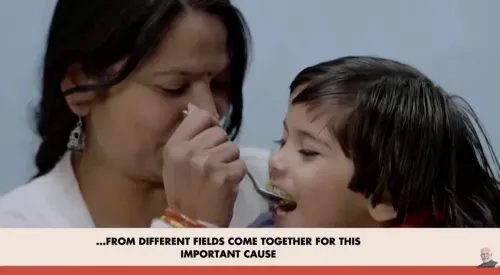
Moringa — called Munga or Sahjan across central and north India — is rich in iron, calcium, vitamins A and C, and protein. A single tree, once established, requires minimal care and produces edible leaves, pods, and flowers across multiple harvests. For a state where a significant share of the population is rural, tribal, and historically underserved by formal healthcare, a kitchen-garden intervention like this carries outsized nutritional leverage.
Why a Mann Ki Baat mention matters politically and practically
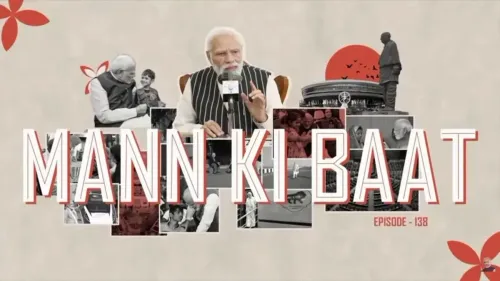
PM Modi's Mann Ki Baat programme reaches tens of millions of listeners across radio and digital platforms every month. When a state-level initiative earns a mention, it signals both central approval and potential replication value for other states. For the BJP-governed Chhattisgarh administration, the shout-out threads the campaign into the national POSHAN Abhiyan framework — India's flagship nutrition programme launched in 2018 — lending it policy credibility well beyond its grassroots optics.
CM Sai called the PM's acknowledgement 'a matter of pride and enthusiasm for all of us in the state,' framing the moment as collective validation rather than personal credit — a deliberate rhetorical choice that keeps the jan bhagidari framing intact.
Chhattisgarh's malnutrition challenge — and why Moringa is a fit
Chhattisgarh has historically recorded some of the highest child malnutrition rates among Indian states, driven by a large tribal population, geographic remoteness, and dietary gaps. State-level interventions under POSHAN Abhiyan have worked to integrate locally available, culturally familiar foods into nutrition strategies — precisely the logic behind Munga. Unlike imported supplements, a Moringa tree in the courtyard is self-replenishing, visible, and already part of the local culinary vocabulary in much of the state.
Indian states including Andhra Pradesh, Tamil Nadu, and Odisha have run similar Moringa promotion drives over the past decade, often citing rapid measurable improvements in household micronutrient intake in pilot districts. Chhattisgarh's version now has the added tailwind of national visibility.
The metric that will define whether this lands
Awareness campaigns are easy to launch; malnutrition curves are hard to bend. The real test will come in household Moringa planting numbers and, eventually, district-level nutrition surveys measuring whether stunting and anaemia rates — particularly among children under five — shift in the campaign's wake. CM Sai's administration has staked both health credibility and political branding on that arc.
A tree in every courtyard is a promise. The data will say whether it became a meal on every plate.
Point of View
Giving the Chhattisgarh government a high-visibility platform to deepen the POSHAN Abhiyan's community-action logic. For the BJP in Chhattisgarh — a state with stubborn malnutrition indicators and a large tribal electorate — 'Har Ghar Munga' is both a public-health lever and a grassroots governance signal ahead of continued administrative scrutiny. The jan bhagidari framing is deliberate: it distributes both the credit and the execution responsibility to households, reducing the campaign's dependence on state delivery capacity. The longer arc here is whether nutrition drives anchored in local plants can move the needle on district-level stunting and anaemia data in ways that formal supplement programmes have struggled to achieve.
NationPress
27 Sept 2026
Frequently Asked Questions
What is the 'Har Ghar Munga' campaign in Chhattisgarh?
'Har Ghar Munga, Ghar-Ghar Munga' is a Chhattisgarh government campaign that encourages every household to plant a Moringa (Munga) tree in its courtyard or garden as a low-cost way to improve daily nutrition and combat malnutrition in the state.
Why did PM Modi mention the Chhattisgarh Munga campaign on Mann Ki Baat?
PM Narendra Modi highlighted the 'Har Ghar Munga' campaign during his Mann Ki Baat radio programme as an example of a state-level community-driven nutrition initiative worth national attention. The exact episode date has not been officially confirmed.
What are the health benefits of Moringa (Munga)?
Moringa is exceptionally nutrient-dense, containing high levels of iron, calcium, vitamins A and C, and plant-based protein. Its leaves, pods, and flowers are edible and can improve micronutrient intake for children and families, making it especially valuable in areas with limited dietary diversity.
How does the Chhattisgarh Munga drive relate to POSHAN Abhiyan?
POSHAN Abhiyan, India's flagship national nutrition programme launched in 2018, promotes community action and locally available foods to reduce malnutrition. The 'Har Ghar Munga' campaign aligns with this framework by using a familiar local plant to address nutritional gaps at the household level.
What is Chhattisgarh's malnutrition situation?
Chhattisgarh has historically recorded high child malnutrition rates, particularly in rural and tribal areas. Geographic remoteness and dietary gaps have been key drivers, making community-based, low-cost interventions like household Moringa planting a strategic fit for the state.