PM Modi lauds Chhattisgarh's 'Har Ghar Munga' drive on Mann Ki Baat
Synopsis
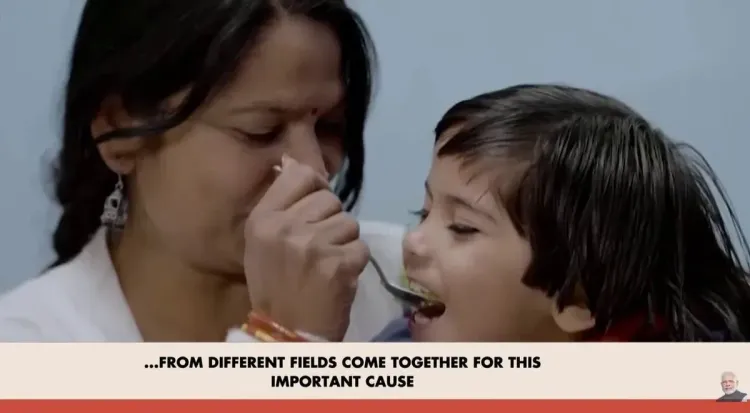
PM Modi spotlighted Chhattisgarh's 'Har Ghar Munga' campaign on Mann Ki Baat, praising the state's Anganwadi-led Moringa plant distribution drive targeting malnutrition and anaemia in children aged 3-6, directed by CM Vishnu Deo Sai.
Key Takeaways
PM Narendra Modi praised Chhattisgarh's 'Har Ghar Munga, Ghar-Ghar Munga' campaign in his Mann Ki Baat radio address on 27 September 2026 .
The campaign, directed by CM Vishnu Deo Sai , distributes Moringa saplings through Anganwadi centres to children aged 3–6 years and their families.
Moringa is being used as a low-cost, nutrient-dense intervention against malnutrition and anaemia in the state.
The initiative is designed on a community-participation (Jan Bhagidari) model, aligning with the national Poshan Abhiyan launched in 2018 .
A prime-ministerial callout on Mann Ki Baat signals the campaign as a potential national replication model for other states.
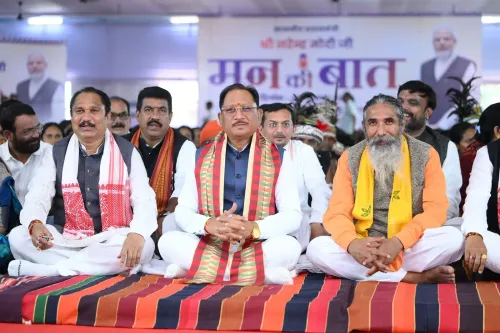
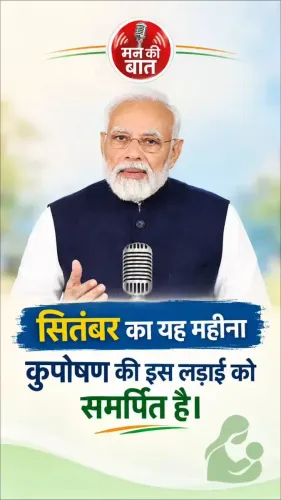
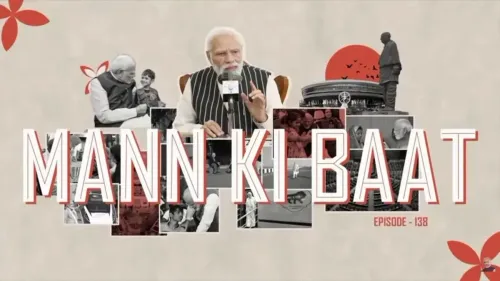
A plant that grows wild across central India's villages may be Chhattisgarh's sharpest weapon yet against childhood malnutrition — and now, Prime Minister Narendra Modi has put it in the national spotlight. On Sunday, 27 September 2026, the Chief Minister's Office of Chhattisgarh announced that PM Modi referenced the state's 'Har Ghar Munga, Ghar-Ghar Munga' ('Moringa in every home, Moringa home to home') campaign in his popular monthly radio address, Mann Ki Baat, calling out the initiative as an innovative grassroots effort against malnutrition and anaemia.
What the 'Har Ghar Munga' campaign actually does
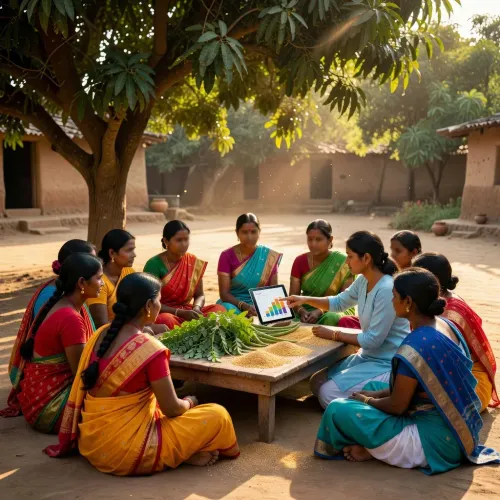
Directed by Chief Minister Vishnu Deo Sai, the campaign works through the state's existing Anganwadi centre network — the frontline of India's child-care architecture. Under the scheme, children aged 3 to 6 years and their families receive Moringa saplings, bringing a nutrient-dense plant directly into household courtyards. Moringa — the munga of Chhattisgarhi households — is rich in iron, calcium, and vitamins, making it a low-cost, culturally familiar counter to the twin burdens of stunting and anaemia.
The design is deliberately participatory: rather than distributing supplements through a clinic, the campaign converts each family into an active producer of its own nutrition. That community-ownership model mirrors the philosophy behind the national Poshan Abhiyan, launched in 2018, which set out to cut undernutrition through inter-ministerial coordination and Jan Bhagidari — people's participation.
Why a Mann Ki Baat mention carries weight
Modi has used Mann Ki Baat consistently as a discovery engine for state-level innovations, shining a national beam on local pilots to encourage replication elsewhere. Several Indian states have independently promoted Moringa cultivation within health schemes, but a prime-ministerial callout transforms a state initiative into a model others are expected to study. For Chhattisgarh, a state that has historically carried high tribal-district malnutrition burdens, the recognition lands as both validation and pressure — proof of concept, and a signal that outcomes will be watched.
The CMO post put it plainly: 'Kuposhan harega, Chhattisgarh jeetega' — 'Malnutrition will lose, Chhattisgarh will win.' That single line captures the campaign's ambition — a state betting that a backyard sapling, scaled through Anganwadi reach and community will, can move district-level health indicators.
The road the sapling still has to travel
The real test, as health analysts note, is whether plant distribution translates into measurable change in anaemia prevalence and stunting rates at the district level. National nutrition surveys have repeatedly flagged Chhattisgarh among states needing accelerated progress; the Moringa drive, if adoption holds, could feed directly into the next round of indicator tracking. Whether the model travels to other states — as Mann Ki Baat mentions often encourage — will depend on what Chhattisgarh's own data shows in the coming months.
A sapling planted today in a Raipur Anganwadi could, within two growing seasons, become the data point that rewrites a national playbook on nutrition.
Point of View
The recognition arrives at a politically useful moment, framing Chhattisgarh's tribal-belt governance story around visible welfare delivery rather than purely administrative metrics. The deeper policy signal is that India's nutrition establishment is increasingly leaning on agri-horticultural interventions — plants over pills — as a scalable, low-cost complement to supplementary feeding programmes. Whether that bet pays off will be visible in the next national family health survey cycle.
NationPress
27 Sept 2026
Frequently Asked Questions
What is the 'Har Ghar Munga' campaign in Chhattisgarh?
'Har Ghar Munga, Ghar-Ghar Munga' is a Chhattisgarh government campaign that distributes Moringa (munga) saplings through Anganwadi centres to children aged 3–6 and their families to fight malnutrition and anaemia using a community-participation model.
Why did PM Modi mention Chhattisgarh's Munga campaign on Mann Ki Baat?
PM Modi referenced the campaign in his monthly Mann Ki Baat radio address as an innovative, grassroots example of tackling malnutrition and anaemia, a practice he has used to encourage other states to replicate successful local models.
What is Moringa and why is it used for nutrition?
Moringa (munga) is a plant rich in iron, calcium, and vitamins, making it a low-cost, locally available superfood. Chhattisgarh is distributing its saplings as a sustainable household-level intervention against stunting and anaemia.
Who is running the Har Ghar Munga scheme in Chhattisgarh?
The campaign is directed by Chief Minister Vishnu Deo Sai and is implemented through the state's Anganwadi centre network as part of a broader community-participation nutrition push aligned with the national Poshan Abhiyan.
What is Poshan Abhiyan and how does this campaign relate to it?
Poshan Abhiyan is India's national nutrition mission launched in 2018 to reduce stunting, undernutrition, and anaemia through community outreach and inter-ministerial coordination. Chhattisgarh's Har Ghar Munga drive extends that philosophy at the state level by using Moringa plant distribution as its core tool.