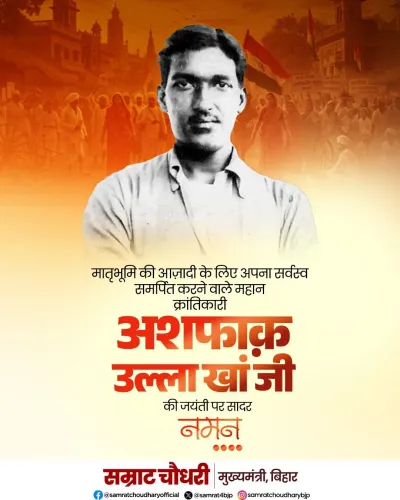
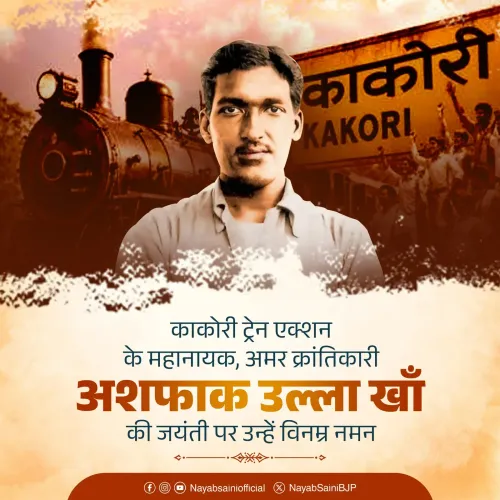
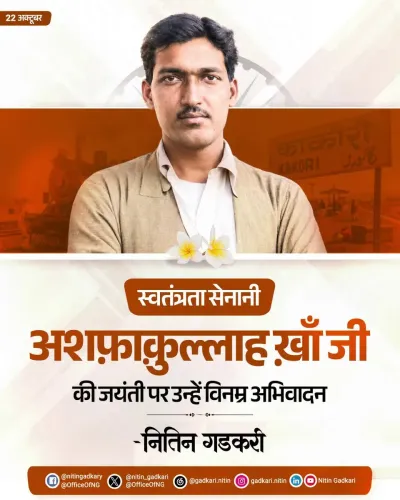
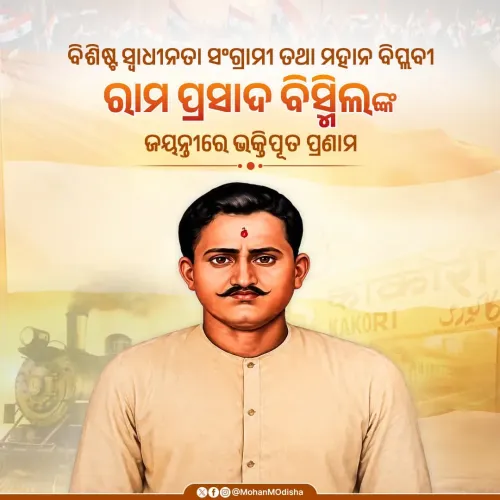
CM Majhi pays tribute to Ashfaqullah Khan on birth anniversary
Synopsis
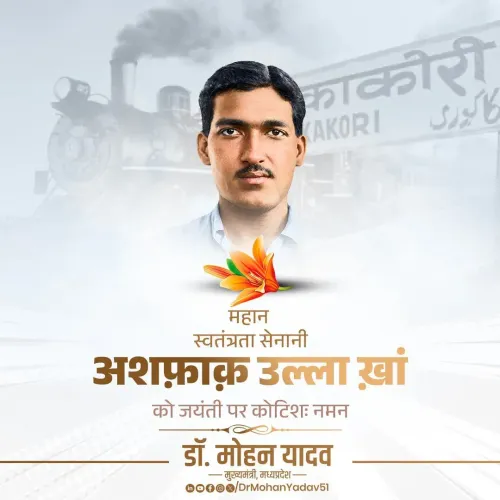
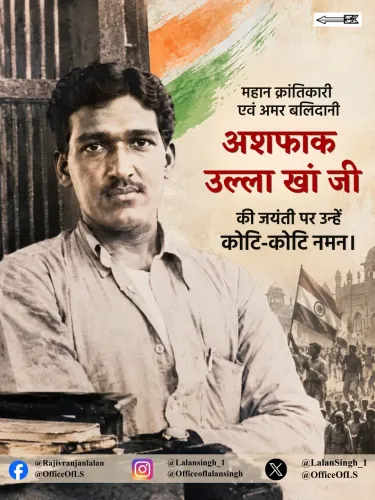
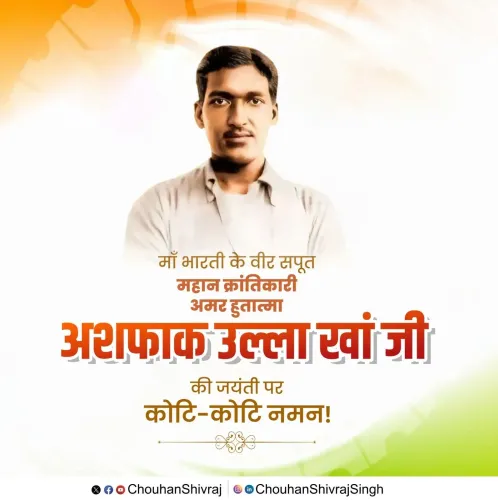
Odisha Chief Minister Mohan Charan Majhi paid tribute to revolutionary freedom fighter Ashfaqullah Khan on his birth anniversary on 22 October 2026, honouring his sacrifice in the Kakori train robbery of 1925 and his execution by British authorities in 1927.
Key Takeaways
Odisha CM Mohan Charan Majhi posted a tribute on 22 October 2026 marking Ashfaqullah Khan 's birth anniversary.
Ashfaqullah Khan was born on 22 October 1900 in Shahjahanpur, Uttar Pradesh .
He was a key member of the Hindustan Republican Association (HRA) and a principal participant in the Kakori train robbery of 1925 .
Khan was executed by British authorities at Faizabad Jail on 19 December 1927 , aged 27.
CM Majhi's tribute, written in Odia, described Khan's sacrifice, patriotism and ideals as a perennial source of inspiration.
A revolutionary who walked to the gallows at 27 still commands reverence across India's political spectrum — and on Thursday, 22 October 2026, Odisha Chief Minister Mohan Charan Majhi joined that chorus, offering a heartfelt salute to freedom fighter Ashfaqullah Khan on his birth anniversary.
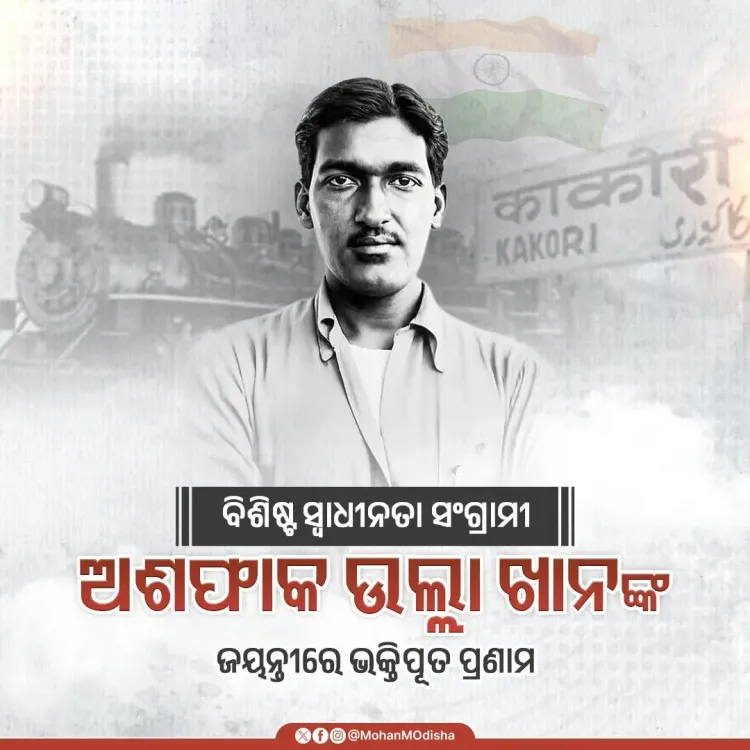
Writing in Odia, CM Majhi offered what translates as: 'ବିଶିଷ୍ଟ ସ୍ୱାଧୀନତା ସଂଗ୍ରାମୀ ଅଶଫାକ ଉଲ୍ଲା ଖାନଙ୍କ ଜୟନ୍ତୀରେ ଭକ୍ତିପୂତ ପ୍ରଣାମ' — 'Devout salutations on the birth anniversary of distinguished freedom fighter Ashfaqullah Khan. His sacrifice, patriotism and ideals will forever remain a source of inspiration for us.'
The revolutionary who defied an empire — and its executioners
Ashfaqullah Khan was born on 22 October 1900 in Shahjahanpur, Uttar Pradesh. A poet, a rifleman, and a dreamer of a free India, he became one of the most celebrated members of the Hindustan Republican Association (HRA) — the underground network of young revolutionaries who believed that armed resistance was the only language the British Raj would understand.
On 9 August 1925, Khan and his comrades — most famously Ram Prasad Bismil — stopped a train at Kakori in present-day Uttar Pradesh and seized government treasury funds earmarked for colonial administration. The Kakori train robbery, as it became known, electrified nationalist India and sent shockwaves through the colonial establishment. British authorities launched a sweeping crackdown. Khan was captured, tried, and hanged at Faizabad Jail on 19 December 1927 — just two years after the daring heist that made him a legend.
Why his legacy still travels across state lines
What makes CM Majhi's tribute notable is its geography. Khan has no particular connection to Odisha; his story belongs to the Gangetic plains of northern India. Yet the tribute arrives in Odia, from a BJP chief minister on the state's eastern seaboard — a small but telling illustration of how independence-era martyrs have become shared national symbols, claimed with equal conviction across regions, parties, and communities.
Indian political leaders regularly mark such anniversaries on social media, keeping the memory of the revolutionary generation alive in the public square. For Ashfaqullah Khan specifically — a Muslim revolutionary executed alongside Hindu comrades, bound by the single idea of a free India — the annual commemorations carry an additional resonance about the composite character of the independence movement.
Point of View
Cutting across party lines and regional boundaries. CM Majhi's homage to Ashfaqullah Khan — a figure rooted in Uttar Pradesh's history — from Odisha signals how the BJP, like its rivals, actively draws on the composite nationalist legacy to frame its own patriotic credentials. Khan's particular story, a Muslim revolutionary martyred alongside Hindu comrades, lends these tributes a soft communal-harmony subtext that leaders across the spectrum find politically useful. Expect similar commemorations to recur with identical fidelity on Khan's death anniversary in December.
NationPress
22 Oct 2026
Frequently Asked Questions
Who was Ashfaqullah Khan?
Ashfaqullah Khan was an Indian revolutionary freedom fighter born on 22 October 1900 in Shahjahanpur, Uttar Pradesh. He was a member of the Hindustan Republican Association and a key participant in the Kakori train robbery of 1925, for which he was executed by the British on 19 December 1927.
What was the Kakori train robbery?
The Kakori train robbery took place on 9 August 1925 when members of the Hindustan Republican Association, including Ashfaqullah Khan and Ram Prasad Bismil, stopped a train near Kakori in present-day Uttar Pradesh and seized British government funds. The incident led to a major British crackdown on the revolutionary movement.
Why did Odisha CM Mohan Charan Majhi pay tribute to Ashfaqullah Khan?
22 October marks Ashfaqullah Khan's birth anniversary. CM Majhi posted on X to honour the revolutionary's sacrifice and patriotism, a practice common among Indian political leaders who mark birth anniversaries of independence-era figures on social media.
When is Ashfaqullah Khan's birth anniversary?
Ashfaqullah Khan's birth anniversary falls on 22 October. He was born on 22 October 1900 in Shahjahanpur, Uttar Pradesh.
What did Mohan Charan Majhi say about Ashfaqullah Khan?
CM Majhi wrote in Odia that he offered 'devout salutations' to the 'distinguished freedom fighter' on his birth anniversary, adding that Khan's sacrifice, patriotism and ideals would 'forever remain a source of inspiration' for the people.